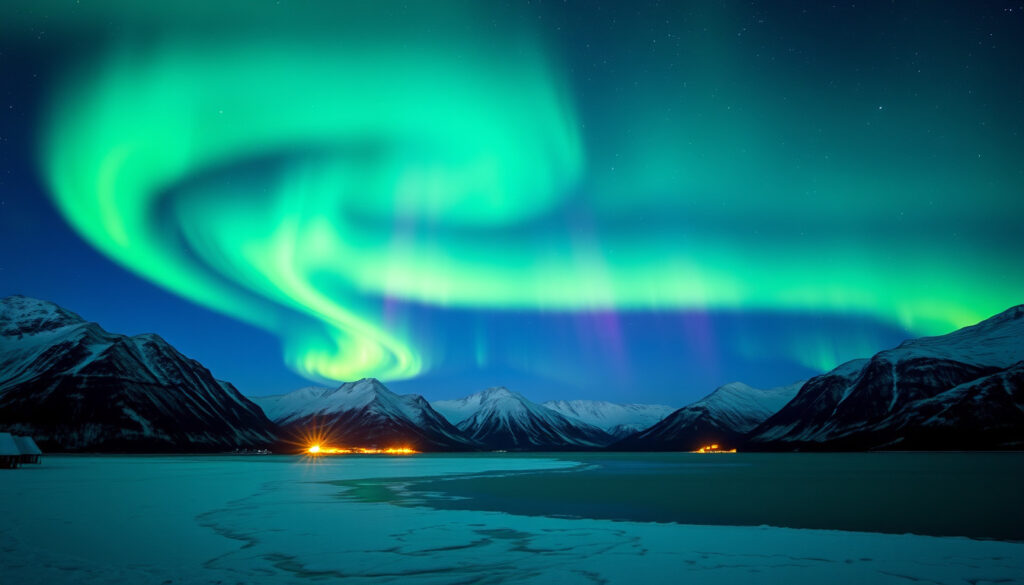
What Are the Northern Lights? Causes, Viewing & Myths
If you caught sight of the Northern Lights in Ireland lately, you are not alone — recent geomagnetic storms pushed sightings as far south as Mayo and the South Coast, areas not typically within aurora range. The dancing lights have fascinated humanity for centuries, drawing visitors north and prompting curious newcomers to ask what exactly they are looking at. This article explains the science behind the display, why southern locations like Ireland now get lucky, and how myths and folklore from across the world have shaped what people believe about the phenomenon.
Caused by: charged particles from the Sun colliding with Earth’s atmosphere · Primary colors: green, red, purple · Best viewing months: September to March · Visible from: high latitudes like Iceland, Norway, Alaska · Duration per display: minutes to hours
Quick snapshot
- Caused by solar particles — NASA verified this mechanism
- Exact duration varies by solar activity levels
- Solar Cycle 25 peaks expected through 2025
- Increased aurora frequency expected as solar maximum approaches
The table below consolidates key aurora parameters for quick reference during planning.
| Fact | Detail |
|---|---|
| Scientific name | Aurora borealis |
| Height in sky | 80–500 km above Earth |
| Frequency | Near poles nightly during peaks |
| Southern counterpart | Aurora australis |
What actually causes the northern lights?
The Northern Lights begin roughly 150 million kilometers away, on the surface of the Sun. Our star constantly emits a stream of charged particles known as solar wind, and when that wind reaches Earth, it interacts with our planet’s magnetic field. That invisible shield deflects most particles, but some slip through at the poles, where magnetic field lines concentrate. Those particles collide with gases in Earth’s upper atmosphere — primarily oxygen and nitrogen — and release energy as light (Icelandia). The scientific term, aurora borealis, translates to “dawn of the north,” a nod to its resemblance to early morning light (Culturally Ours).
Solar particles and Earth’s magnetic field
Earth’s magnetosphere acts as a protective bubble, but near the poles the field lines funnel charged particles downward into the atmosphere. The collisions that follow are not random — the type of gas determines the color. Oxygen atoms emit green or red light depending on altitude; nitrogen produces blue or purple hues (Icelandia). This is why Northern Lights often appear in layers of different colors.
Altitude determines which wavelengths dominate, making color a diagnostic tool for atmospheric scientists tracking solar wind density.
Why colors like green and red appear
The green glow that dominates most aurora displays comes from oxygen atoms at altitudes between 100 and 300 kilometers. Red light, rarer and usually appearing at higher altitudes, requires a different excitation process. Nitrogen produces blue and purple tones that tend to appear at lower altitudes and are often masked by brighter green emissions.
The implication: color tells scientists roughly where in the atmosphere the interaction occurred, giving researchers real-time data about solar wind density without sending a probe.
Why is Ireland seeing the northern lights?
For most of history, Ireland sat too far south for reliable aurora sightings — the phenomenon clusters near the Arctic Circle. That has changed noticeably in recent years as solar activity ramps up. Stronger geomagnetic storms push the auroral oval farther from the poles, making displays visible at lower latitudes across the British Isles (RTE Brainstorm).
Recent solar activity boosts
Solar Cycle 25, which began in December 2019, is trending stronger than predictions suggested. Sunspot counts and solar flare frequency have increased faster than models forecast, intensifying the solar wind that drives aurora formation. When a coronal mass ejection — a massive eruption of charged particles — reaches Earth, it can trigger geomagnetic storms that push auroras hundreds of kilometers south of their usual range.
Visibility from Mayo to Waterford
Irish skywatchers reported sightings in Mayo and along the South Coast during geomagnetic storm events, with reports shared widely on social media. Historic records from Irish newspapers and scientific journals confirm that auroras appeared over Ireland for centuries, including during the massive solar storm of August–September 1859 that disrupted telegraph services globally and reportedly affected Irish telegraph operations (RTE Brainstorm). More recently, a major aurora event in 1938 disrupted Irish Post Office radio-telephone services and was reported in period newspapers (RTE Brainstorm).
Solar Cycle 25 is producing more frequent and intense solar storms than expected, extending displays far beyond traditional viewing zones.
What this means: locations like County Mayo and the South Coast, once considered too far south for aurora, now have a realistic chance of catching a display during major solar events — and that opportunity may last for years as the solar maximum approaches.
What month is best to see the northern lights?
The prime Northern Lights season runs from September to March, when nights are longest and skies darkest across the Northern Hemisphere. Summer months near the poles suffer from the midnight sun, which floods the sky with ambient light that drowns out auroras. Winter darkness, combined with increased solar activity during this period, creates the optimal conditions for viewing.
Winter peak season
December through February typically offer the darkest skies and longest nights. In Scandinavian countries and Iceland, December and January feature only a few hours of twilight, meaning auroras — if present — are visible for most of the night. Northern Lights tourism peaks in February specifically, when operators report the highest success rates for sightings.
Factors like darkness and solar cycle
Darkness is necessary but not sufficient. The solar cycle determines overall activity levels; auroras are simply more frequent and brighter when solar activity peaks. Clear skies matter enormously — cloud cover defeats even the most spectacular display. That is why apps and forecasting services track both geomagnetic activity (measured by Kp index) and weather patterns. Ireland, with its notoriously variable weather, requires patience and frequent monitoring to catch a clear night during an active period.
The catch: even with perfect conditions, auroras are inherently unpredictable. A forecast may show promising activity, but displays can fizzle within minutes or surge unexpectedly after midnight.
Are the northern lights safe?
Yes. Northern Lights are completely harmless to view directly. The aurora forms in the upper atmosphere, 80 to 500 kilometers above the surface — far too high and with insufficient energy to affect human tissue. Standing outside watching a display carries no health risk whatsoever (Polartours).
No harm to humans
Despite persistent folklore warnings, the charged particles in aurora light are absorbed by the upper atmosphere long before they reach the ground. Astronauts at altitude receive higher exposure, but visitors on Earth’s surface experience nothing more than a visual show. The particles involved lack the energy to penetrate skin or cause radiation damage.
Common myths debunked
Old folklore from communities across Europe included warnings about dangers from auroras. Some Scottish Gaelic traditions associated displays with battles in the sky; certain Norse traditions warned against waving at the lights. None of these beliefs have any scientific basis. The lights are purely atmospheric and pose no physical threat.
The verdict: Northern Lights are a visual phenomenon only. There is no credible mechanism by which they could harm humans on the ground, and decades of scientific monitoring confirm that atmospheric auroras are entirely safe for observers.
What myths surround the Northern Lights?
Before science explained auroras, cultures across the Northern Hemisphere invented explanations rooted in spirits, weather, and divine messages. These myths reveal as much about the societies that created them as about the lights themselves.
Whistling taboo
One of the most widespread beliefs held that whistling at the Northern Lights was dangerous — it would summon the spirits responsible for the display. In some traditions, the lights were thought to reach down and take people who whistled. Sami and Finnish folklore both contain warnings against making noise during auroras (Polartours). Scientifically, there is no connection between sound and light; auroras are silent events occurring far too high for sound waves to reach ground observers.
“The aurora is a reminder of how our ancestors processed the unexplained — with mythology, not measurement.”
— RTE Brainstorm, on Irish aurora folklore traditions
Irish legends
Irish folklore offers distinctive traditions. Irish geologist Richard Kirwan studied aurora-weather correlations in his 1788 meteorological journal, reflecting a broader folk belief that auroras predicted coming weather — specifically rain, frost, or storms (RTE Brainstorm). Schools project records from the 1930s called auroras “streamers” and linked sightings to forecasts of bad weather. In Ardara, County Donegal, folklore held that matter falling from the sky after Northern Lights could cure burns — a belief that apparently originated from an actual meteorite fall coinciding with an aurora display (RTE Brainstorm).
The pattern: Irish aurora folklore focused on practical concerns — weather forecasting and folk remedies — reflecting a rural, agricultural society that depended on weather prediction and local cures.
Why can’t we whistle at the Northern Lights?
The whistling taboo stands among the oldest and most widespread aurora myths across Northern cultures. From Sami traditions in Scandinavia to Finnish folklore, warning against making noise during displays persisted for generations.
Ancestral communities believed the lights were alive — spirits, fire foxes, or the souls of the departed moving across the sky. Whistling, shouting, or clapping was thought to attract their attention, even summon them down to take the noisemaker away. Some accounts described the aurora reaching with luminous hands to pluck up those who disobeyed the taboo.
Modern science explains why the taboo arose independently across so many cultures: the aurora sits roughly 100 kilometers overhead, far beyond any sound reach. With no mechanism for sound to travel from the lights to listeners, and no mechanism for lights to reach down, the belief persisted simply because the phenomenon looked like it could respond to human action.
“In northern Finland, they called the lights ‘revontulet’ — fox fires — believing an arctic fox swept snow into the sky with its tail, creating sparks that became auroras. The connection to sound came naturally: if the lights were alive, surely they could hear.”
— Polartours, on Finnish aurora mythology
What this means: the whistling taboo tells us more about human psychology than atmospheric physics — we project agency onto mysterious phenomena even when observation offers no evidence for it.
How long do the Northern Lights last?
Northern Lights displays vary enormously in duration. A minor aurora might last 15 to 30 minutes before fading. Major geomagnetic storms can produce auroras that persist for hours, sometimes all night. The 1859 solar storm reportedly produced auroras visible almost continuously for two nights across large portions of the Northern Hemisphere (RTE Brainstorm).
Do auroras affect humans?
Beyond being safe to watch, auroras do not affect human biology under normal conditions. Some speculative research has examined whether geomagnetic activity influences sleep or mood, but no peer-reviewed study has demonstrated a causal link. The lights are purely visual — a consequence of atmospheric physics, not a force that acts on human bodies.
Are the northern lights good or bad?
Auroras themselves are neither good nor bad — they are a natural atmospheric phenomenon with no capacity for intention. However, their effects on human systems split into two very different categories.
On the positive side, auroras draw tourists, inspire scientific curiosity, and produce genuine wonder. Northern Lights tourism generates hundreds of millions of euros annually for Iceland, Norway, and Finland, while the phenomenon connects modern viewers to centuries of cultural heritage. For skywatchers in previously unlikely locations like Ireland, a visible aurora offers a free spectacle that costs nothing to observe.
On the challenging side, the solar storms that create dramatic auroras can disrupt technology. Intense geomagnetic activity affects power grids, satellite operations, and radio communications. The 1859 Carrington Event disrupted telegraph systems globally; a modern equivalent could cause widespread electrical grid failures. So while the lights themselves remain harmless, the solar activity producing them carries real infrastructure risk.
The implication: auroras serve as a visible indicator of solar weather that matters far beyond aesthetics — the same activity that creates a pretty light show can threaten the power grid your home depends on.
What are the northern lights today?
Tonight’s aurora potential depends on current solar activity and local weather. Several services provide real-time aurora forecasts: NOAA’s Space Weather Prediction Center issues geomagnetic storm watches, and apps like My Aurora Forecast track conditions globally. For Ireland specifically, Met Éireann’s cloud cover forecasts matter as much as solar activity levels — clear skies are essential to see a display.
Reading aurora forecasts
The Kp index measures geomagnetic activity on a scale of 0 to 9, with higher numbers indicating stronger disturbances and more equatorward visibility. A Kp of 5 means minor storm conditions capable of pushing auroras into northern Ireland; Kp 7 or higher can make displays visible as far south as central Ireland.
Checking three to five days ahead gives you the best planning window — coronal mass ejections take two to three days to travel from the Sun to Earth, so forecasts can anticipate major events before they arrive.
Upsides
- Completely safe to observe with naked eye
- Free to watch from anywhere with dark skies and clear weather
- Solar Cycle 25 increases frequency of southern visibility
- No radiation or health risk to ground observers
Downsides
- Unpredictable — forecasts often miss actual displays
- Ireland’s cloud cover frequently blocks views
- Light pollution from cities eliminates sightings
- Solar activity can affect power and communications infrastructure
What this means: aurora chasers in Ireland should monitor both NOAA’s Kp index and Met Éireann cloud forecasts, ideally checking three to five days ahead when coronal mass ejections are announced.
Related reading: Ireland Winter Forecast Snow – 2024/25 Met Éireann Review · Restaurants in Reykjavik Iceland Menus: Prices & Tips
thetipperaryantiquarian.blogspot.com, nathab.com, folklorethursday.com
Frequently asked questions
How long do the Northern Lights last?
Displays can last anywhere from minutes to hours. Minor auroras typically fade within 15–30 minutes, while major geomagnetic storms can produce visible lights for most of the night. The 1859 Carrington Event reportedly generated auroras visible nearly continuously for two nights.
Do auroras affect humans?
No — auroras have no effect on human health or biology. The charged particles interact with atmospheric gases in the upper atmosphere, far above ground level, and carry insufficient energy to affect human tissue.
How often are the northern lights?
Near the poles, auroras occur nearly nightly during solar maximum. In Ireland, visibility depends on solar activity intensity; stronger geomagnetic storms push auroras farther south, making sightings more likely. Solar Cycle 25 is expected to peak through approximately 2025, increasing frequency.
What are the Northern lights for kids?
The Northern Lights are colored lights in the night sky, caused by tiny particles from the Sun hitting gases in Earth’s atmosphere high above us. The Sun sends out a constant wind of invisible particles, and when that wind gets stronger, some of those particles get caught by Earth’s invisible magnetic shield and fall into the atmosphere, lighting up like a neon sign.
Are the northern lights dangerous?
Not for people on the ground — they are completely safe to watch directly. The lights are formed in the upper atmosphere and cannot harm humans. However, the solar storms that create dramatic auroras can affect power grids, satellites, and radio communications.
More related posts
 Le Beau Le Parfum – Fresh Woody Notes for Men
 Value My Car Ireland Free: Best Websites & Scrap Value
 Cat Deeley New Boyfriend: Separating Fact from Fiction
 Ballygunner vs Éire Óg: Munster Final Result 2025
 Diageo Guinness Price Increase 2026: Pint Costs Rise
 Signs of Low Iron: Symptoms, Causes, and Treatment
 Opticians Open Near Me in Ireland: Costs, Free Tests & Fast Glasses