Where is Cape Verde? Location, Facts & Travel Tips
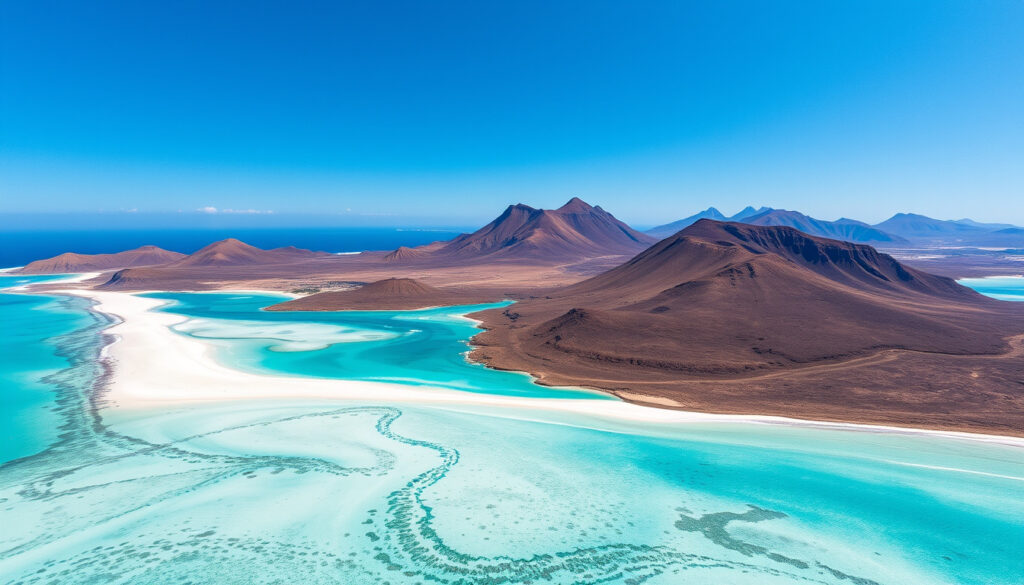
Cape Verde is one of those places that sounds familiar until you’re asked to point it out on a map. This small archipelago of 10 volcanic islands sits 570 km off the coast of West Africa, an independent nation with a distinct Portuguese-African blend. Whether you’re planning a holiday or just satisfying a geography curiosity, a few key facts will clear up the confusion.
Capital: Praia ·
Official language: Portuguese ·
Population (2024 est.): 590,000 ·
Currency: Cape Verdean escudo (CVE) ·
Location: Atlantic Ocean, 570 km off West Africa
Quick snapshot
- Archipelago of 10 volcanic islands and 8 islets. (Australian DFAT – official country brief)
- Located 570 km off the coast of Senegal, West Africa. (Australian DFAT)
- Time zone: Cape Verde Time (UTC‑1). (Australian DFAT – official country brief)
- Population: ~590,000 (2024). (World Bank – press release)
- Official language: Portuguese; local language: Cape Verdean Creole (Kriolu). (Australian DFAT)
- Majority Christian (Roman Catholic). (EBSCO Research Starters)
- Currency: Cape Verdean escudo (CVE). (Australian DFAT)
- Voltage: 230 V / 50 Hz, plug types C and F. (Australian DFAT)
- Visa‑free for many nationalities (up to 30 days). (U.S. Department of State)
- Tap water not safe; drink bottled water. (Government of Canada – travel advice)
- Petty crime moderate; safeguard valuables. (U.S. Department of State)
- No required vaccinations, but mosquito‑borne diseases present. (Government of Canada)
The table below pulls together the core reference data for Cape Verde, drawn from government and international sources. The comparison shows how the country stacks up against a key alternative.
| Label | Value |
|---|---|
| Official name | Republic of Cabo Verde (Australian DFAT) |
| Capital | Praia (Australian DFAT) |
| Largest city | Praia |
| Official language | Portuguese (Australian DFAT) |
| Recognized national language | Cape Verdean Creole (Intura Travel) |
| Government | Unitary semi‑presidential republic |
| Independence from Portugal | 5 July 1975 |
| Area | 4,033 km² (1,557 sq mi) |
| Population (2024 est.) | 590,000 (World Bank) |
| Currency | Cape Verdean escudo (CVE) |
| Calling code | +238 |
| ISO 3166 code | CV |
What country does Cape Verde belong to?
Cape Verde is an independent, sovereign country—it does not belong to any other nation. The archipelago gained independence from Portugal on 5 July 1975 after centuries of colonial rule. Today it is a member of the African Union and the Community of Portuguese Language Countries. (Australian DFAT)
Is Cape Verde part of Portugal?
No. Cape Verde was a Portuguese colony from the 15th century until 1975, but it is now fully independent. The two countries maintain close diplomatic and cultural ties, including shared language and cooperation within the CPLP. (EBSCO Research Starters)
Is Cape Verde in Africa?
Yes, Cape Verde is geographically part of Africa. It sits 570 km off the coast of Senegal in the Atlantic Ocean and is considered part of the West African region. Politically it is a member of the African Union. (Australian DFAT)
Many travelers assume Cape Verde is a European territory because of its Portuguese name and colonial heritage. The reality: it’s an African nation with its own government, currency, and growing role in regional politics.
How do I get to Cape Verde from Ireland?
Getting from Ireland to Cape Verde is straightforward, though options depend on the season and your preferred island. The two main entry points are Amílcar Cabral International Airport on Sal (SID) and Rabil Airport on Boa Vista (BVC).
- Direct flights: Seasonal direct services operate from Dublin to Sal and Boa Vista, typically running from November to March. Flight time is about 6‑7 hours. (U.S. International Trade Administration – tourism report)
- Connecting flights: Year‑round connections are available via Lisbon (TAP Air Portugal) or the Canary Islands (Binter Canarias). Total journey time varies from 9 to 14 hours depending on layover.
- Visa: Irish passport holders do not need a visa for stays up to 30 days. A tourist card is issued on arrival. (U.S. Department of State)
How long is the flight from Ireland to Cape Verde?
A direct flight from Dublin to Sal or Boa Vista takes approximately 6‑7 hours. Connecting flights via Lisbon add 2‑4 hours plus layover time. (U.S. International Trade Administration)
Are there direct flights to Cape Verde from Ireland?
Seasonal direct flights are available, mainly during the European winter (November–March). Outside those months, travelers must connect through Lisbon or the Canary Islands. (U.S. International Trade Administration)
Direct flights save time but are limited to peak tourist season. For year‑round flexibility, a connection via Lisbon adds hours but opens up more scheduling options.
What to be careful of in Cape Verde?
Cape Verde is generally considered a safe destination, but like any tourist hotspot it has risks. Official travel advisories highlight petty crime, road safety, and health precautions. (U.S. Department of State)
Is Cape Verde safe for tourists?
The U.S. State Department notes that petty crime—pickpocketing, bag snatching, burglary—occurs in Praia and some tourist areas. Armed robbery has been reported occasionally. The Government of Canada specifically advises avoiding hillside staircases alone or at night. (Government of Canada)
What are common scams in Cape Verde?
Common schemes include overcharging by taxi drivers, fake tour guides, and offers that seem too good to be true. Travelers should use official taxis, negotiate fares in advance, and book tours through reputable agencies. (U.S. Department of State)
“Petty crime such as pickpocketing and bag snatching occurs in tourist areas. Travelers should maintain situational awareness and secure their belongings.”
— U.S. Department of State, travel advisory
“Avoid using hillside staircases alone or at night. Violent crime is relatively rare but can occur.”
— Government of Canada, travel advice
The biggest practical risk is petty theft, especially in crowded markets and on public transport. Leave valuables in your hotel safe and carry only the cash you need for the day.
What language is spoken in Cape Verde?
Portuguese is the official language, used in government, education, and media. But the language you’ll hear most on the streets is Cape Verdean Creole (Kriolu), a Portuguese‑based creole spoken by virtually the entire population. (Australian DFAT)
Do Cape Verde speak English?
English is not widely spoken outside tourist resorts and hotels. In rural areas and local markets, Portuguese and Kriolu dominate. A few basic Portuguese phrases go a long way. For translation help, check our guide to Best English to Portuguese Translators: Google, DeepL & More.
Is Portuguese widely spoken in Cape Verde?
Yes, Portuguese is the language of instruction in schools and official business. About 70% of the population speaks it fluently, though Kriolu is the default for everyday conversation. (Intura Travel)
Is Cape Verde a rich or poor country?
Cape Verde is classified as a lower‑middle‑income country by the World Bank, with a GDP per capita around $3,700. The economy relies heavily on tourism, services, and remittances from the diaspora. In 2025 it was reclassified as upper‑middle‑income, reflecting consistent growth. (World Bank)
Is Cape Verde expensive?
For tourists, Cape Verde is moderately priced. Accommodation and dining are reasonable by European standards, but imported goods—electronics, wine, certain foods—carry a premium. A typical meal costs $10‑15; a budget double room runs $50‑80 per night. (U.S. International Trade Administration)
What is the economy of Cape Verde like?
The economy is service‑oriented, with tourism accounting for roughly 25% of GDP. Agriculture (fishing, coffee, sugarcane) and remittances from the diaspora also play a role. Real GDP grew 7.3% in 2024, driven by a strong tourism rebound. (World Bank)
| Factor | Cape Verde | Canary Islands |
|---|---|---|
| Location | 570 km off West Africa | 100 km off NW Africa |
| Political status | Independent country | Spanish autonomous community |
| Official language | Portuguese | Spanish |
| Tourist safety (petty crime) | Moderate (theft common in Praia) | Low to moderate (tourist areas safe) |
| Cost for a week (budget) | ~€500‑700 | ~€600‑900 |
The key difference: Cape Verde offers a more remote, less commercialized experience but with fewer infrastructure safeguards than the Canaries. The pattern is clear: choose Cape Verde for authenticity, the Canaries for convenience. (U.S. International Trade Administration)
Upsides
- Visa‑free entry for many nationalities (30 days).
- Warm climate year‑round, less crowded than Canaries.
- Rich Creole culture and music (morna).
- Direct flights from Ireland (seasonal).
- Affordable accommodation and food.
Downsides
- Petty crime risk in urban areas.
- Limited English outside resorts.
- Tap water not drinkable.
- Road conditions poor on some islands.
- Imported goods expensive.
How to get to Cape Verde from Ireland (Step by Step)
- Check flight season: Direct flights only run November–March. If traveling outside these months, plan for a connection.
- Choose your island: Most flights land on Sal (SID) or Boa Vista (BVC). For other islands, book a domestic connection via TICV or BestFly.
- Book early: Seats fill quickly during peak season. Prices range €300–€600 round trip.
- Prepare documents: Valid passport (6 months validity), no visa needed for Irish citizens for stays under 30 days. (U.S. Department of State)
- Pack smart: Light clothing, insect repellent, reusable water bottle. Check health advice for dengue and Zika. (Government of Canada)
Confirmed facts
- Cape Verde is an independent country in Africa.
- It does not belong to any other country.
- The capital is Praia.
- Portuguese is the official language.
- The currency is the escudo.
What’s unclear
- Exact population figures vary slightly by source (~590,000–600,000).
- Future flight routes from Ireland may expand or change seasonally.
“Real GDP in Cabo Verde grew by 7.3% in 2024, supported by robust tourism activity and a modest recovery in agriculture.”
— World Bank, press release (June 2025)
For Irish travelers, Cape Verde offers a warm‑weather escape that’s easier to reach than many Caribbean islands. The trade‑off is a destination with moderate safety concerns and limited infrastructure outside resort areas. The advice: prepare for petty theft, carry cash, and learn a few phrases in Portuguese — and you’ll find an archipelago with genuine character.
Related reading: Map of South America: Countries, Safety, and Geography Guide · Best English to Portuguese Translators: Google, DeepL & More
thehabarinetwork.com, roafly.com, data360.worldbank.org, gov.uk, instagram.com
For a more detailed guide on Cape Verde’s location and practical travel tips, check out this detailed guide on Cape Verdes location.
Frequently asked questions
What is the best time to visit Cape Verde?
The dry season (November–June) offers the best weather, with temperatures around 24–28°C. July–October is rainier and hotter, but still pleasant. (U.S. International Trade Administration)
Do I need a visa for Cape Verde?
Nationals of the EU, US, Canada, and many other countries do not need a visa for stays up to 30 days. A tourist card is issued on arrival. (U.S. Department of State)
What is the weather like in Cape Verde?
Warm year‑round, with average highs of 25–29°C. The dry season (Nov–Jun) has little rain; the wet season (Jul–Oct) brings brief downpours. (Australian DFAT)
Is Cape Verde part of the European Union?
No. Cape Verde is an independent African country and not part of the EU. It has partnership agreements but no EU membership.
What is the typical food in Cape Verde?
Seafood, maize, beans, and rice are staples. Cachupa (a slow‑cooked stew of corn, beans, and fish or meat) is the national dish. (Intura Travel)
Can I use credit cards in Cape Verde?
Credit cards are accepted in major hotels and restaurants in tourist areas, but cash is king in local markets and rural areas. ATMs are available in cities. (U.S. International Trade Administration)
Is Cape Verde safe for solo female travelers?
Solo female travelers report a generally safe experience, but should take standard precautions: avoid walking alone at night in quiet areas, use registered taxis, and keep accommodation secure. (U.S. Department of State)
More related posts
 How to Start a Morning Routine: Simple Expert Steps
 Vinnie Jones in the Country Season 3: Release Date & Streaming
 Best Workouts for Home: Evidence-Based Bodyweight Routines
 AA Insurance Phone Number – Official NZ Contacts and Hours
 Glow For It Lash Serum Review: Does It Work? Ingredients & Results
 An Po t Current Account Ireland: Fee , Feature & How to Open
 Red Is the Rose Lyrics – Jethro Tull Facts and Context
 Killruddery House and Gardens: Hours, Tickets & Filming