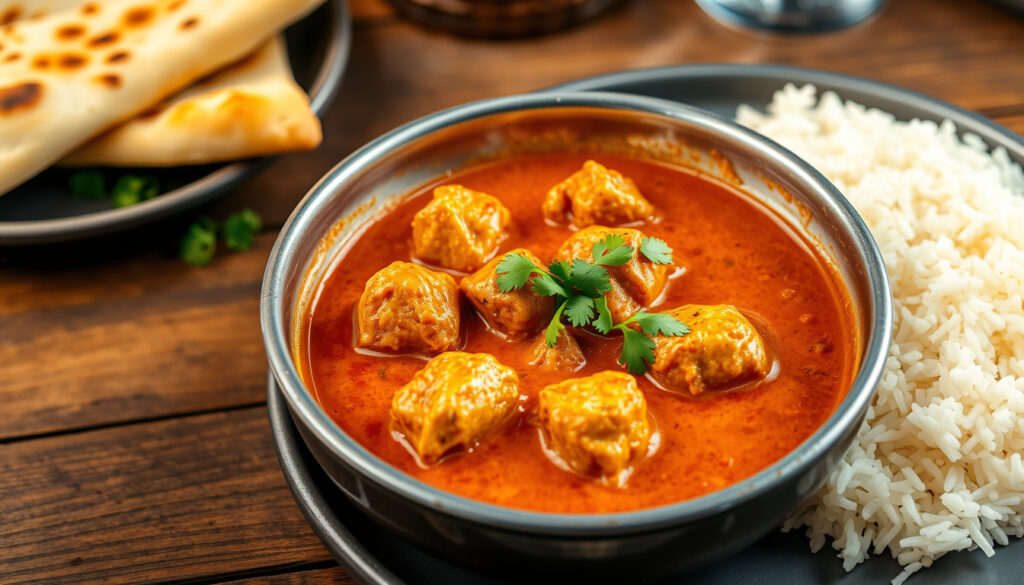
Chicken Tikka Masala Recipe: Restaurant-Quality Guide
Chicken tikka masala has earned its reputation as a restaurant benchmark — charred chicken suspended in a silky tomato-cream sauce that rivals any takeaway version. This guide walks through a tested approach that brings together techniques from professional kitchens, adapted for a standard home setup without requiring a commercial kitchen or a tandoor.
Serves: 4 ·
Prep Time: 30 mins ·
Cook Time: 1 hr ·
Total Time: 1 hr 30 mins ·
Key Base: Tomato curry
Quick snapshot
- Marinated grilled chicken (MasterClass)
- Creamy tomato sauce (MasterClass)
- Serves 4 (MasterClass)
- Quick prep under 30 minutes
- Coconut milk substitution
- Milder flavor profile
- Yogurt base replaces cream
- Diabetic-friendly adjustments
- Reduced calorie count
- Hands-off cooking method
- Tangy rich sauce
- Family-friendly portions
Four core approaches define how home cooks tackle chicken tikka masala, from quick stovetop versions to traditional grilled methods.
| Key Fact | Detail |
|---|---|
| Primary Protein | Boneless chicken |
| Sauce Base | Onions, tomatoes, cream |
| Typical Origin Note | Curried dish popular in UK |
| Common Cooking Method | Marinate then grill/simmer |
“Ramsay’s easy version skips marination entirely and blends the sauce smooth, delivering restaurant-quality results in about 30 minutes of active cooking.” — Tasting Table
What are the ingredients for chicken tikka masala?
Breaking down chicken tikka masala into its two components — the tikka (marinated chicken) and the masala (spiced sauce) — makes the recipe far less intimidating. Most versions center on boneless chicken, ground spices, onions, tomatoes, cream, and fresh herbs.
Marinade ingredients
- Boneless chicken breasts or thighs (1 lb/450g), cut into bite-sized pieces (NorthEast Nosh)
- 1 cup plain yogurt for coating
- Spices: turmeric, cumin, garam masala, chili powder
- Marination time: minimum 30 minutes, ideally 4-6 hours for flavor penetration (MasterClass)
Sauce ingredients
- 1 large white onion, diced small, fried until soft and fragrant (Pepper Bento)
- 1 inch piece ginger, chopped
- 3 garlic cloves (optional in some transcriptions)
- 400g tin of tomatoes or 14 oz diced tomatoes
- 1 tablespoon brown sugar, 1 tablespoon tomato purée
- Spices: ½ teaspoon red chilli powder, 1 teaspoon turmeric, 2 teaspoons garam masala
- 4-6 tablespoons natural yoghurt or cream for finishing (Pepper Bento)
- 10 dried curry leaves
What’s the secret to a great tikka masala?
The difference between a middling tikka masala and a restaurant-quality one comes down to three techniques: proper marination, careful sauce building, and the final finishing touch. Each step contributes a distinct layer of flavor that makes the dish greater than the sum of its parts.
Marination tips
- Pat chicken dry before marinating — moisture dilutes the yogurt spice paste
- Let it sit at least 30 minutes, though overnight in the refrigerator yields maximum flavor (NorthEast Nosh)
- Traditional versions use tandoor-style grilling, but broiling in the oven works at home
Sauce building
The sauce is where most home cooks cut corners, and that’s where the magic gets lost. Gordon Ramsay’s approach involves frying aromatics until deeply fragrant, then blitzing the tomato mixture smooth for a cohesive texture (Gordon Ramsay YouTube). The sequence matters: cook onions slowly, bloom the spices in fat, add tomatoes, simmer, then blend. Skipping any step produces a flat result.
Traditional tikka masala involves grilling marinated chicken tandoori-style before sauce — a two-step process that adds time but also adds char depth that the quick version sacrifices for convenience (MasterClass).
What are some common mistakes to avoid when making chicken tikka masala?
Even experienced cooks trip up on tikka masala. Knowing the pitfalls in advance lets you sidestep them entirely, protecting both your time in the kitchen and the quality of the final dish.
Overcooking chicken
Chicken breasts dry out faster than thighs, and once overcooked, they turn stringy in the sauce. If using breasts, brown them separately then add to the sauce for only 10 minutes — enough to finish cooking without losing moisture (Pepper Bento). Thighs tolerate longer simmering and offer more juiciness as a trade-off.
Skipping marination
The yogurt marinade does more than add flavor — it tenderizes the chicken through acidity and creates a protective layer during cooking. Rushing this step produces less tender results, though Ramsay’s quick version proves you can skip it entirely and still get a decent dish with a blended sauce approach.
Improper spice balance
- Avoid rushing onions — they need 15-20 minutes of low heat to caramelize properly (Pepper Bento)
- Bloom spices in hot oil before adding liquid — this activates fat-soluble compounds
- Taste and adjust after the sauce simmers; spice levels mellow as it cooks
“Chicken tikka masala originated as a UK-Indian fusion dish, not purely authentic Indian — which explains why Ramsay’s quick stovetop version feels perfectly legitimate despite departing from traditional tandoor technique.” — Tasting Table
The implication for home cooks is clear: you can achieve respectable results without a commercial kitchen, but the method you choose determines how much char depth or weeknight convenience you trade for.
How to make chicken tikka masala Gordon Ramsay?
Ramsay’s approach strips away the complexity of traditional tikka masala without sacrificing the flavor profile. His method prioritizes efficiency — making it possible to produce a credible version in around 30 minutes of active work.
Step-by-step instructions
- Build the base: Heat 3 tablespoons vegetable oil in a large pan. Fry 1 large diced onion until soft, about 5-7 minutes (Pepper Bento)
- Add aromatics: Toss in chopped chili and ginger, crush in garlic, cook until fragrant — Ramsay’s video shows him adding these directly into the pan (Gordon Ramsay YouTube)
- Bloom spices: Stir in ½ teaspoon chili powder, 1 teaspoon turmeric, 2 teaspoons garam masala, and 1 tablespoon brown sugar. Let it sizzle for 30 seconds
- Sauce foundation: Add 1 tablespoon tomato purée, then pour in the 400g tin of tomatoes. Stir to combine and let it bubble
- Blitz: Remove from heat, transfer to a blender, and purée until smooth — this step creates the signature creamy texture (Gordon Ramsay YouTube)
- Cook chicken: Return sauce to pan, add 4 chicken breasts cut into bite-sized pieces. Pour in blended mixture, add 10 curry leaves, cover and simmer 10-15 minutes until chicken is cooked through (NorthEast Nosh)
- Finish: Stir in 4-6 tablespoons natural yoghurt or cream, garnish with fresh coriander (Pepper Bento)
Grilling the chicken
For a more traditional tikka experience, Ramsay’s butter chicken recipe uses a two-step marination with overnight soaking — a technique that differs significantly from his quick tikka masala version. The quick version avoids grilling entirely, relying on the sauce to carry the dish (Tasting Table). For home cooks without a grill, the stovetop method produces satisfying results.
How to make a healthy chicken tikka masala recipe?
Traditional tikka masala leans heavy on cream and butter, but lighter adaptations exist without gutting the flavor. Swapping ingredients and managing portions lets you enjoy this dish even on a calorie-conscious or diabetic-friendly plan.
Diabetic-friendly adjustments
- Replace heavy cream with full-fat Greek yogurt — it provides tanginess and body while cutting saturated fat
- Watch portion sizes: a single serving (about ½ cup) fits better into controlled carbohydrate intake
- Use skinless chicken breasts to reduce fat content further
- Control added sugars — the 1 tablespoon brown sugar in some recipes adds up; consider reducing or omitting
Lower calorie options
- Coconut milk as a dairy-free alternative offers medium-chain triglycerides but watch the fat content
- Tomato-based sauces without cream still taste rich when you balance acidity with sweetness
- Bulk up with extra vegetables: bell peppers, spinach, or cauliflower rice add fiber without many calories
- Slow cooker versions often require less added fat since the chicken releases its own moisture during low-and-slow cooking (MasterClass)
The calorie trade-off becomes real when you weigh a yogurt-based version (roughly 300-400 per serving) against a cream-laden restaurant portion (500-700 per serving). For diabetics, the carbohydrate content matters more than calories; pair smaller portions with non-starchy vegetables to balance the meal.
Related reading: Pozole Blanco Near Me – Best Spots, Recipes and Guide · Restaurants in Cork City – Michelin Stars and Market Gems
Frequently asked questions
How long should I marinate chicken for tikka masala?
Minimum 30 minutes works in a pinch, but 4-6 hours produces noticeably better flavor penetration. Traditional recipes call for overnight marination — the yogurt acidity needs time to tenderize the protein and bond with the spices.
Can I use coconut milk in chicken tikka masala?
Yes. Coconut milk creates a dairy-free version with a slightly sweet undertone. It works particularly well in the Ramsay-style quick method where the blended sauce provides the base. Replace heavy cream with coconut milk cup-for-cup in the finishing step.
What rice pairs best with chicken tikka masala?
Basmati rice is the standard — its floral aroma and dry texture balance the rich sauce. Ramsay’s version cooks 200g basmati with 300ml water, 2 cardamom pods, and 1 star anise for 10 minutes, then rests 5 minutes (Pepper Bento). Naan bread or poppadoms round out a complete meal.
Is chicken tikka masala spicy?
It varies. UK versions like Ramsay’s tend toward milder, with yogurt and cream taming the heat. Traditional Indian preparations lean spicier with a more assertive tomato base. Control the chili powder quantity to adjust heat to your preference.
How to store leftover chicken tikka masala?
Refrigerate in an airtight container up to 4 days. The sauce actually improves the next day as flavors meld. Freeze for up to 3 months — thaw overnight in the refrigerator and reheat gently on the stovetop, adding a splash of water if the sauce has thickened.
Can I make chicken tikka masala vegetarian?
Substitute paneer, tofu, or chickpeas for the chicken. The sauce recipe works identically — just build it without the meat. Paneer holds up best to simmering; add it in the last 10 minutes to prevent it from breaking apart.
What yogurt to use for marinade?
Plain full-fat Greek yogurt works best — the fat content carries flavor and the thick texture adheres well to chicken pieces. Avoid flavored or low-fat yogurts, which add unwanted sweetness or lack the protein structure needed for proper marination.
More related posts
 An Po t Current Account Ireland: Fee , Feature & How to Open
 One Foot in the Grave: Meaning, Cast, Episodes, FAQs
 Monopoly Go Free Rolls: Daily Dice Links & Redeem Guide
 Can You Bring Food Through Airport Security? 2026 Rules
 How Much Magnesium Per Day for a Woman? Dosage Guide by Age
 What Time Is It in New York? EDT vs EST & Current Time
 Sunderland A.F.C. vs Leeds United Lineups for Pre-Season 2025