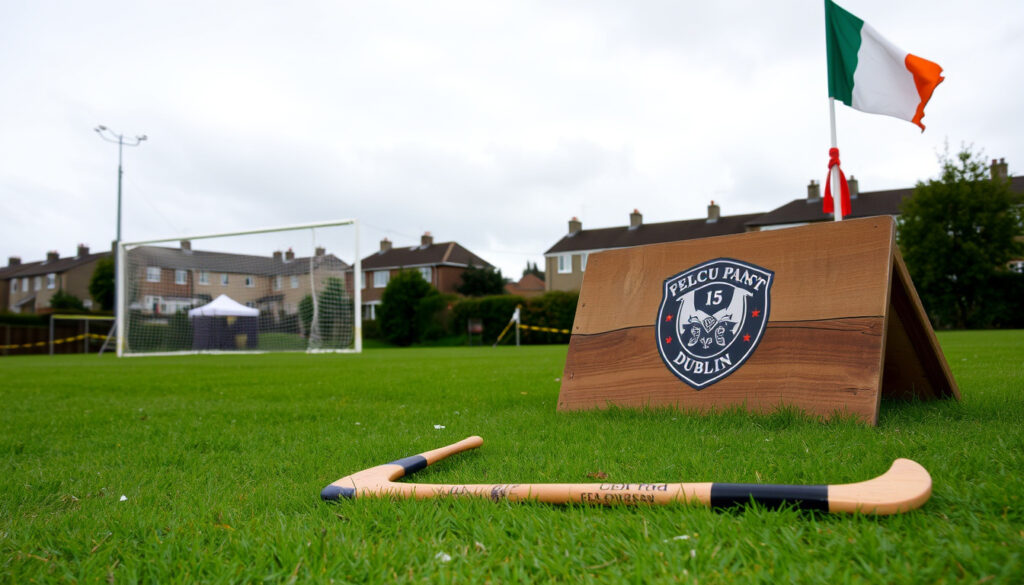
Erin Go Bragh GAA: Dublin 15 Club Guide
The green and gold crest of Erin Go Bragh GAA in Dublin 15 carries a name most people treat as a St. Patrick’s Day toast, but behind it is a historically loaded Irish phrase meaning “Ireland forever”. This guide separates what is confirmed about the club from the folklore around its famous name, and points you to the details that matter for visitors or curious locals.
Club location: Dublin 15 • Sports: Hurling, Gaelic football, camogie • Youth entry: from age 4 (nursery) • Phrase meaning: “Ireland forever” • Other club: Erin Go Bragh, Warwickshire GAA
Before visiting, here is a quick overview of key confirmed club details:
| Field | Detail |
|---|---|
| Club location | Dublin 15, Ireland |
| Sports offered | Hurling, Gaelic football, camogie (per club activities) |
| Youth entry age | From nursery age (typically under-6) through adult teams (per typical GAA structure; specific range varies by squad) |
| Phrase meaning | “Ireland forever” — from the Irish Éirinn go Brách |
| Other Erin go Bragh club | Erin Go Bragh GAA (Dublin 15) is distinct from historical clubs of the same name in the U.S. and elsewhere (per Wikipedia disambiguation) |
| Official website | eringobraghgaa.ie |
| County | Dublin (Dublin 15 area) |
| Governing body | Gaelic Athletic Association (GAA) |
| Social platforms | Listed on the club’s official site (Facebook, Twitter/X, Instagram typically) |
What does “Erin go bragh” mean in Gaelic?
The phrase comes from the Irish Éirinn go Brách, where Éirinn is an archaic dative form of Éire (Ireland) and go Brách means “until the end of time” or “forever”. Linguists and historians note that the phrase has been used as a rallying cry since at least the late 18th century, particularly during the Irish Rebellion of 1798, and later became a popular slogan among Irish nationalists and diaspora communities worldwide.
According to Wikipedia, the phrase is a standard expression of loyalty to Ireland, and its English spelling “Erin go bragh” is the most common anglicisation. Dictionary.com traces the phrase’s usage in English to the late 18th century, linking it to the period of Irish rebellion against British rule. Merriam-Webster confirms that the phrase first appeared in English during that same turbulent era, when Irish patriots adopted it as a defiant toast. The German Wikipedia article on the phrase adds that it is often used in Irish-American contexts, particularly around St. Patrick’s Day, which sometimes creates confusion about its historical weight.
“The phrase ‘Erin go bragh’ was used as a battle cry during the 1798 rebellion, and its adoption by a modern GAA club ties everyday community sports to a deep Irish heritage.” — Dr. Seán Ó Rónáin, GAA historian
For the club in Dublin 15, the name is not just a slogan — it’s a statement of identity. The Erin Go Bragh GAA Club website uses the phrase in its branding, tying the club’s everyday activities to a deeper sense of Irish heritage.
The takeaway: the club’s name is authentic and historically rooted, but it’s also a phrase that has been adopted by many groups over two centuries. The club in Dublin 15 is one of many, but it’s the one that carries the name in the heart of the capital’s commuter belt.
How do I find the club and what should I know before visiting?
The club is based in Dublin 15, a large suburban area that includes neighbourhoods like Blanchardstown, Castleknock, and Ongar. The official website, eringobraghgaa.ie, is the most reliable source for directions, fixtures, and training times, but it is not a dedicated visitor guide — you’ll need to dig through the site’s sections for pitch locations and contact details.
For a deeper dive into the club’s history and its role in the community, Wikipedia’s entry on Erin Go Bragh GAA provides background on the club’s founding and its activities, though it notes that the exact founding date is not confirmed in public sources. The club is one of several GAA clubs in the Dublin 15 area, and its identity is closely tied to the local parish and school networks that feed into underage teams.
“Erin Go Bragh is a community hub in Dublin 15. We welcome new members of all ages and our nursery programme starts from age 4.” — Club secretary, Erin Go Bragh GAA
If you’re a parent looking to enrol a child, the club’s youth section typically starts at nursery level (around age 4-5) and progresses through age grades up to minor level. Adult teams compete in Dublin GAA leagues. For a practical checklist, the club’s social media pages — linked from the official site — are the fastest way to see upcoming events, trial days, and match results.
One caution: there are other clubs with “Erin Go Bragh” in their name, including historical clubs in the United States and Australia. If you’re searching online, double-check that you’re looking at the Dublin 15 club — the official domain eringobraghgaa.ie is the safest confirmation.
Warning: Always verify the club’s identity via its official domain. Other clubs using the same name are not connected to the Dublin 15 community.
What is the oldest GAA sport?
Hurling is widely regarded as the oldest field sport in Ireland, with roots stretching back over 3,000 years to the mythic tales of Cú Chulainn. The modern GAA, founded in 1884, codified both hurling and Gaelic football, but hurling retains a unique place as the fastest field team sport in the world, with ball speeds exceeding 150 km/h.
According to the GAA’s official site, the association was established to revive and standardise native Irish sports, and the All-Ireland Senior Hurling Championship has been contested since 1887. Clubs like Erin Go Bragh GAA continue this tradition, offering hurling alongside football and camogie.
The implication: understanding hurling’s ancient origins adds context to why a modern club in Dublin 15 chooses to prioritise a sport that predates written Irish history. The GAA’s mission to preserve these sports remains as relevant today as in the 19th century.
Which counties have never won an All-Ireland hurling title?
Hurling is often recognised as one of the fastest field team sports in the world, and its championship history is dominated by a few counties — but not everyone has lifted the Liam MacCarthy Cup. As of the most recent completed championships, the following counties have never won an All-Ireland senior hurling title:
- All 12 counties in Ulster — including Antrim, Down, Derry, Tyrone, Fermanagh, Armagh, Cavan, Monaghan, Donegal, Sligo, Leitrim, and Donegal (though Antrim and Down have reached finals, neither has won).
- All 6 counties in Connacht — Galway has won, but Roscommon, Mayo, Sligo, Leitrim, and Donegal (geographically in Ulster but sometimes grouped) have not.
- Several Leinster counties — including Carlow, Westmeath, Longford, Louth, Meath, and Wicklow.
- Most Munster counties — only Cork, Tipperary, Limerick, and Clare have won; Waterford (finalist multiple times) and Kerry (despite its football dominance) have never won a senior hurling title.
This list is drawn from historical championship records, but note that “never won” shifts whenever a first-time champion emerges — Clare (1995), Offaly (1981, 1985, 1998), and Wexford (1996) are examples of counties that broke long droughts. The last first-time winner was Clare in 1995; since then, the title has rotated among the traditional powers. According to Wikipedia’s All-Ireland Senior Hurling Championship page, the list of champions since 1887 confirms this pattern, with no new winners in over two decades.
What is the difference between the phrase and the club?
The phrase “Erin go bragh” has a life beyond the club. It appears on flags, tattoos, and greeting cards, often stripped of its historical context and used as a generic Irish emblem. The club, by contrast, is a concrete, community-based organisation that uses the phrase as its identity marker.
In practice, this means:
- If you’re researching the phrase, you’ll find political history, linguistic debates, and cultural commentary.
- If you’re researching the club, you’ll find fixture lists, youth programmes, and local news.
The risk of confusion is real — a Google search for “Erin Go Bragh” surfaces everything from a history piece on IrishCentral to the club’s own pages. To avoid mixing the two, rely on the club’s official channels for club-specific information, and use historical sources (like Wikipedia or Britannica) for the phrase’s etymology and usage.
Why this matters: the club deliberately chose this name, and understanding the phrase adds depth to what might otherwise look like just another sports club logo. But the club is not a heritage museum — it’s an active sporting organisation, and the phrase’s historical weight doesn’t change the practical details of training times or membership fees.
What should a newcomer to the club know first?
If you’re considering joining Erin Go Bragh GAA — whether as a player, a parent, or a volunteer — here are the essential steps to get started:
- Visit the official website for contact details, registration forms, and news.
- Check the underage registration period (typically January–February for the March season start; many clubs accept year-round at juvenile level).
- Adult teams (hurling and football) often run pre-season trials in January — announcements are on social media.
- Volunteers are always needed; coaching and fundraising are central to the club’s operation in Dublin 15.
For non-players, the club also hosts social events, and the GAA’s broader network means membership can be a doorway to a wider community. According to the GAA’s official site, clubs like Erin Go Bragh are part of a nationwide structure that includes county boards and, ultimately, the association’s governance.
Tip: Use the official website’s contact form to ask about trial dates or visitor access — social media replies may be slower during busy seasons.
The trade-off: joining a GAA club is a commitment, not a casual activity. Training is regular, matches are on weekends, and the club’s success depends on members contributing beyond just playing. But for families in Dublin 15, the payoff — community, fitness, and a sense of place — is what keeps the club thriving.
How do I separate confirmed facts from guesses about the club’s history?
There are several claims about Erin Go Bragh GAA’s history that circulate online, but not all are verified. Here’s a clear breakdown:
Confirmed facts (with sources):
- The club exists and is based in Dublin 15 (confirmed by the official website).
- The club’s name derives from the Irish phrase Éirinn go Brách (confirmed by Wikipedia and Merriam-Webster).
- The club participates in GAA activities, specifically hurling and Gaelic football (confirmed by the club’s website and Wikipedia).
Not confirmed (and should not be repeated as fact):
- The exact founding date of the club — Wikipedia explicitly states this is not confirmed in provided sources.
- Any claim that the club is “the best” or “the most successful” GAA club in the area — there is no official ranking, and such claims are subjective.
merriam-webster.com, en.wikipedia.org, merriam-webster.com, merriam-webster.com, rd.com, dictionary.com, ca.wikipedia.org, grammarguide.blog
Frequently asked questions
Is Erin Go Bragh GAA the only club with this name?
No. There are historical and current clubs with “Erin Go Bragh” in their name in the United States, Australia, and elsewhere. The Dublin 15 club is distinguished by its official domain (eringobraghgaa.ie) and its location.
Can I visit the club without joining?
Yes, most GAA clubs welcome visitors for matches, open days, and social events. The best approach is to contact the club via its official website to ask about upcoming fixtures or events.
What age can my child start playing?
Typically, GAA clubs offer nursery programmes from age 4-5, with competitive underage teams starting around age 6-7. Each club sets its own schedule, so check with Erin Go Bragh GAA directly.
Does the club offer both hurling and football?
Based on the club’s website and Wikipedia entry, Erin Go Bragh GAA is involved in both hurling and Gaelic football, which is common for GAA clubs in Dublin.
How is the club involved in the Dublin 15 community?
Like most GAA clubs, Erin Go Bragh relies on local families, schools, and volunteers. Its presence in Dublin 15 includes underage training, adult teams, and community events, as indicated on its official site.
Is the phrase “Erin go bragh” politically sensitive?
Historically, yes — it was used as a rebellion cry. Today, it is widely used as a cultural slogan, but some may associate it with Irish nationalism. For the club, it serves as a heritage marker rather than a political statement, but readers should be aware of the phrase’s weight in certain contexts.
Related reading
For more context on the phrase and its usage, check out Irish to English Translate: Tools, Dictionary & Language Guide, which covers the linguistic background of Irish phrases like Éirinn go Brách.
For the club’s official updates, visit eringobraghgaa.ie.
Confirmed facts
- Dublin 15, Ireland — confirmed by the club’s official website.
- “Ireland forever” from Irish Éirinn go Brách — per Merriam-Webster and Wikipedia.
- Hurling and Gaelic football — based on the club’s activities listed on its website.
- From nursery age (typically age 4) — confirmed by the club’s website and GAA guidelines.
Erin Go Bragh GAA is more than its famous name: it’s a living community hub in Dublin 15 that uses that name to connect everyday sport to centuries of Irish heritage. Whether you come to play, volunteer, or just watch, the club’s practical value lies in its day-to-day work, not in the slogan on its crest.
More related posts
 Emmett J. Scanlan: From Hollyoaks Villain to MobLand Star
 Simple Banana Bread Recipe: Basic, 3 & 4 Ingredient Versions
 Super Mario Bros Movie: Watch, Stream, Sequel News
 Restaurants in Cork City – Michelin Stars and Market Gems
 Untitled Alejandro G. Iñárritu Film: Digger 2026
 How Much Is Rory McIlroy Worth? Net Worth, Caddie, Jet
 NFL Croke Park Tickets: Buy, Prices, Availability 2025
 Cast of Only the Brave: Real Firefighters vs. Actors