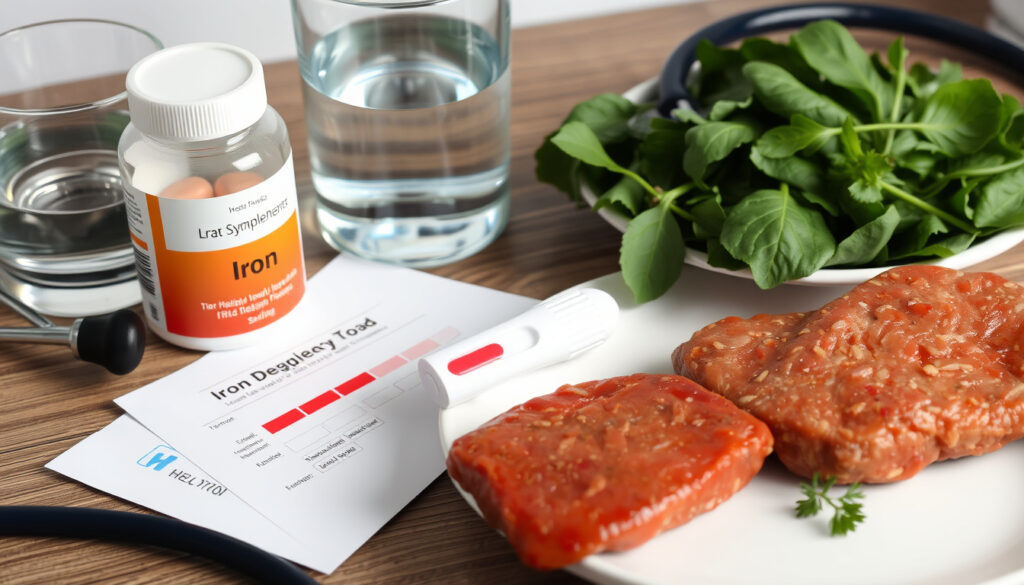
Signs of Low Iron: Symptoms, Causes, and Treatment
Anyone who has dragged through a day on three hours of sleep already knows what deep fatigue feels like. But when that same exhaustion sticks around for weeks, the cause may not be a busy schedule — it could be your body quietly running low on iron — and this guide breaks down the most telling signs, why they’re so easy to miss, and what you can do about it.
Global prevalence of iron deficiency: 2 billion people affected ·
Women of reproductive age with iron deficiency: 1 in 3 ·
Recommended daily iron intake for women (19–50): 18 mg ·
Most common symptom reported: Fatigue (80% of cases) ·
Iron deficiency anemia cases worldwide: Over 1.2 billion
Quick snapshot
- Fatigue, pale skin, weakness (Office on Women’s Health (U.S. government health agency))
- Shortness of breath, heart palpitations (American Society of Hematology (leading hematology society))
- Brittle nails, hair loss (Yale Medicine (academic medical center))
- Persistent tiredness (NHS (U.K. national health authority))
- Cold hands and feet (Cleveland Clinic (major academic medical center))
- Difficulty concentrating (American Society of Hematology (leading hematology society))
- Blood loss (menstruation, GI bleeding) (Office on Women’s Health (U.S. government health agency))
- Poor diet or absorption (Office on Women’s Health (U.S. government health agency))
- Increased needs (pregnancy) (Office on Women’s Health (U.S. government health agency))
- Iron supplements (NHS (U.K. national health authority))
- Iron-rich foods + vitamin C (NHS (U.K. national health authority))
- Avoid tea/coffee with meals (American Society of Hematology (leading hematology society))
Five key numbers, one pattern: iron deficiency is both extremely common and systematically underdiagnosed, especially in women.
| Metric | Value |
|---|---|
| Global prevalence of iron deficiency | 2 billion people affected |
| Women of reproductive age with iron deficiency | 1 in 3 |
| Recommended daily iron intake for women (19–50) | 18 mg |
| Most common symptom reported | Fatigue (80% of cases) |
| Iron deficiency anemia cases worldwide | Over 1.2 billion |
| Normal hemoglobin range for women | 12.0 to 15.5 g/dL (PubMed (peer-reviewed medical research database)) |
| Normal ferritin range for women | 20–200 ng/mL (PubMed (peer-reviewed medical research database)) |
| Anemia threshold (hemoglobin) | <12.0 g/dL (PubMed (peer-reviewed medical research database)) |
What are the 10 signs of low iron?
Iron fuels hemoglobin, the protein that ferries oxygen to every tissue. When levels drop, your body telegraphs the shortage through a surprisingly wide set of signals. Here are the ten most documented signs, backed by Office on Women’s Health (U.S. government health agency), Cleveland Clinic (major academic medical center), and American Society of Hematology (leading hematology society).
What are the first signs of iron deficiency?
- Extreme fatigue and weakness — The most common complaint, affecting up to 80% of people with iron deficiency. Your muscles and brain aren’t getting enough oxygen. (Office on Women’s Health (U.S. government health agency))
- Pale skin and pallor — Less hemoglobin means less red coloration in your blood, which shows in your face, gums, and nail beds. (American Society of Hematology (leading hematology society))
- Shortness of breath and heart palpitations — Your heart works harder to circulate the limited oxygen available. (NHS (U.K. national health authority))
What are the five unexpected signs of low iron?
- Brittle nails and hair loss — Iron is essential for keratin growth. Spoon-shaped nails (koilonychia) can signal chronic deficiency. (Yale Medicine (academic medical center))
- Restless legs syndrome — An overwhelming urge to move your legs, especially at night, is linked to low iron in the brain. (Yale Medicine (academic medical center))
- Pica (cravings for non-food items) — Craving ice, clay, dirt, or starch is an unusual but well-documented symptom. (Office on Women’s Health (U.S. government health agency))
- Cold hands and feet — Poor oxygen delivery to extremities affects temperature regulation. (Cleveland Clinic (major academic medical center))
- Sore or swollen tongue — Inflammation of the tongue (glossitis) can occur when iron levels are critically low. (American Society of Hematology (leading hematology society))
What is a red flag for anemia?
- Chest pain and fast heartbeat — When the heart is forced to pump harder for an extended period, chest discomfort and tachycardia are warning signs that require immediate medical evaluation. (Cleveland Clinic (major academic medical center))
- Dizziness or lightheadedness — Reduced oxygen supply to the brain can cause fainting spells. (Office on Women’s Health (U.S. government health agency))
Many of these signs — fatigue, irritability, brain fog — overlap heavily with thyroid disorders, sleep apnea, and depression. That overlap is exactly why iron deficiency is often dismissed as “just being busy.” A simple blood test is the only reliable way to separate them.
The implication: If you have several of these symptoms, especially fatigue plus one of the less common signs like pica or restless legs, it’s worth requesting a ferritin and complete blood count — not just a hemoglobin check.
The pattern: catching low iron early is a one-test, one-script fix; waiting turns it into a longer recovery.
How do you feel if your iron is low?
The experience goes deeper than just feeling tired. Patients describe it as a hollow, bone-level exhaustion that doesn’t improve with a good night’s sleep.
- Persistent tiredness and lack of energy — Tasks that used to be easy feel monumental. (NHS (U.K. national health authority))
- General weakness and difficulty concentrating — Brain fog, poor memory, and trouble focusing are common. (Yale Medicine (academic medical center))
- Feeling cold even in warm environments — Iron deficiency impairs thyroid function and circulation. (Cleveland Clinic (major academic medical center))
- Shortness of breath during normal activities — Walking up a flight of stairs can leave you winded. (American Society of Hematology (leading hematology society))
What this means: If your energy feels disproportionate to your sleep and lifestyle, iron deficiency should be high on the list of possibilities.
What causes low iron?
Iron deficiency rarely appears out of nowhere. There’s almost always a leak, a shortage, or an absorption problem behind it.
- Blood loss (heavy menstruation, gastrointestinal bleeding) — Heavy menstrual bleeding is the leading cause in premenopausal women. GI bleeding from ulcers, polyps, or colon cancer is more common in older adults. (Office on Women’s Health (U.S. government health agency))
- Inadequate dietary iron intake — Vegetarians, vegans, and people with restrictive diets are at higher risk. (American Society of Hematology (leading hematology society))
- Poor iron absorption (celiac disease, gastric surgery) — Conditions affecting the small intestine can block iron uptake. (Office on Women’s Health (U.S. government health agency))
- Increased iron needs (pregnancy, growth spurts) — Pregnancy increases blood volume and iron demand by about 50%. (Office on Women’s Health (U.S. government health agency))
- Chronic diseases (kidney failure, inflammatory conditions) — Inflammation can interfere with iron regulation and recycling. (PubMed (peer-reviewed medical research database))
What drains iron from your body?
- Heavy menstruation — Losing more than 80 mL of blood per period can deplete iron stores month after month. (Office on Women’s Health (U.S. government health agency))
- Frequent blood donation — Each donation removes about 200–250 mg of iron.
- Gastrointestinal bleeding — Caused by NSAID use, ulcers, or inflammatory bowel disease.
- Intense endurance exercise — Foot-strike hemolysis and sweating can increase iron loss in athletes.
The trade-off: Fixing the cause is just as important as replenishing iron. Treating deficiency without addressing heavy bleeding or absorption issues means the problem returns.
How do you fix low iron?
Good news: iron deficiency is treatable and often reversible. The approach depends on severity and underlying cause.
A practical sequence looks like this:
- Confirm the deficiency. Ask for a ferritin and complete blood count, not just hemoglobin.
- Start oral iron. Standard first-line therapy is ferrous sulfate or ferrous gluconate, often 200 mg ferrous sulfate three times daily for about 6 months.
- Pair iron with vitamin C. Take supplements on an empty stomach with orange juice or water; avoid tea, coffee, milk, and calcium around that time.
- Recheck and escalate if needed. If hemoglobin doesn’t respond or iron deficiency is severe, intravenous iron is the next step.
- Oral iron supplements (ferrous sulfate, ferrous gluconate) — Standard first-line therapy. The NHS typically prescribes 200 mg ferrous sulfate three times daily for about 6 months to rebuild stores. (NHS (U.K. national health authority))
- Dietary changes: red meat, leafy greens, legumes, fortified cereals — Heme iron (from animal sources) is absorbed 2–3 times better than non-heme iron. (American Society of Hematology (leading hematology society))
- Vitamin C enhances absorption — Drinking orange juice or eating bell peppers with an iron-rich meal can double absorption. (NHS (U.K. national health authority))
- Avoiding tea, coffee, and calcium with iron-rich meals — Tannins and calcium inhibit absorption by up to 60%. (American Society of Hematology (leading hematology society))
- In severe cases: intravenous iron therapy — Used when oral iron fails, isn’t tolerated, or when rapid correction is needed (e.g., severe anemia in late pregnancy). (Office on Women’s Health (U.S. government health agency))
A woman with heavy periods could lose 25 mg of iron per cycle — more than a full day’s recommended intake. Over a year, that adds up to a deficit that diet alone can’t close. Supplements aren’t optional in that scenario; they’re arithmetic.
What drink is high in iron?
- Orange juice with fortified breakfast cereal or leafy greens — The vitamin C in O.J. boosts non-heme iron absorption dramatically.
- Beetroot juice — Contains iron plus nitrates that support blood flow.
- Prune juice — One cup provides about 3 mg of iron, plus vitamin C for absorption.
- Smoothies with spinach + citrus fruits — A practical way to combine iron and vitamin C.
- Iron-fortified plant milks or cereals — Many brands now offer up to 4 mg per serving.
What is a low iron level for a woman?
Understanding your lab results is the key to catching deficiency before it becomes anemia.
- Normal hemoglobin for women: 12.0 to 15.5 g/dL (PubMed (peer-reviewed medical research database))
- Normal ferritin levels: 20–200 ng/mL (PubMed (peer-reviewed medical research database))
- Iron deficiency anemia: hemoglobin <12.0 g/dL (PubMed (peer-reviewed medical research database))
- Severe anemia: hemoglobin <8.0 g/dL
- Thresholds may vary by age, pregnancy, and altitude — Pregnant women need 27 mg daily; athletes at high altitude may have different reference ranges.
The pattern: Ferritin drops long before hemoglobin does. A “normal” hemoglobin can mask depleted iron stores. That’s why women who feel exhausted but are told their blood count is fine should still ask for a ferritin test.
Confirmed facts
Confirmed facts
- Iron deficiency causes fatigue and weakness (Office on Women’s Health (U.S. government health agency))
- Low iron is treatable with supplements and diet (NHS (U.K. national health authority))
- Heavy menstrual bleeding is a leading cause in women (Office on Women’s Health (U.S. government health agency))
What’s unclear
- Exact prevalence of pica behaviors in iron deficiency
- Long-term cognitive effects of mild untreated iron deficiency
- Optimal ferritin threshold for non-anemic iron deficiency
“Iron deficiency anemia signs and symptoms may include extreme fatigue, weakness, pale skin, chest pain, fast heartbeat, shortness of breath.”
“Symptoms of iron deficiency anaemia include tiredness and lack of energy, shortness of breath, noticeable heartbeats (heart palpitations), and paler than usual skin.”
For anyone who has been writing off that persistent fatigue as normal tiredness, the decision is straightforward: ask for a ferritin and hemoglobin test. The alternative is to let a treatable condition quietly worsen, exacting a cost on energy, focus, and long-term health that no amount of coffee can fix.
References
The pattern: for anyone with persistent fatigue, every source above points to the same conclusion — low iron is common, detectable, and treatable.
hemeoncall.com, resources.healthgrades.com, pmc.ncbi.nlm.nih.gov, ampath.com, pubmed.ncbi.nlm.nih.gov, nationalacademies.org
For a detailed breakdown of early warning signs, check out low iron symptoms and causes which also covers effective ways to boost your levels.
Frequently asked questions
Can low iron cause hair loss?
Yes. Iron helps produce hemoglobin, which carries oxygen to hair follicles. When iron is low, follicles enter a resting phase, leading to increased shedding. Yale Medicine (academic medical center) lists hair thinning as a common symptom in women.
Are there any natural remedies for low iron?
Yes. Increasing dietary iron from red meat, leafy greens, legumes, and fortified cereals is effective. Pairing these with vitamin C sources (citrus, bell peppers) improves absorption. However, moderate to severe deficiency typically requires oral supplements.
How long does it take to recover from low iron?
With consistent oral iron supplements, most people feel improvement in 2–4 weeks. The NHS (U.K. national health authority) reports that iron tablets are usually taken for about 6 months to fully rebuild stores.
Is low iron the same as anemia?
No. Iron deficiency is the state of depleted iron stores. Anemia is a more advanced condition where hemoglobin levels fall below normal. Iron deficiency often precedes anemia by weeks or months.
What foods are high in iron?
Red meat, liver, spinach, kale, lentils, chickpeas, kidney beans, fortified breakfast cereals, pumpkin seeds, and tofu. Heme iron (from meat) is absorbed 2–3 times better than non-heme iron (from plants).
Can low iron cause anxiety?
Possibly. Yale Medicine (academic medical center) notes that iron deficiency can affect mood regulation, with some women reporting increased anxiety and irritability.
Do men get low iron as often as women?
No. Women of reproductive age are affected at significantly higher rates due to menstrual blood loss. The Office on Women’s Health (U.S. government health agency) notes that 1 in 3 women of reproductive age have iron deficiency, compared with far fewer men.
What is the best time to take iron supplements?
On an empty stomach, about one hour before or two hours after meals, with a glass of orange juice or water. Avoid taking them with tea, coffee, milk, or calcium supplements, as these significantly reduce absorption.
The common thread: if you recognize more than one of these signs, a blood test is the fastest way to separate iron deficiency from other causes of fatigue.
Related reading: Normal Blood Sugar Levels Chart: Complete Guide (mmol/L & mg/dL) · How Many Paracetamol a Day? NHS Safe Dosage & Risks
More related posts
 What’s on TV Now and Next? Irish TV Guide Tonight
 Monopoly Go Free Rolls: Daily Dice Links & Redeem Guide
 Houses for Sale in Millstreet Cork – Listings & Prices
 How Much Is Rory McIlroy Worth? Net Worth, Caddie, Jet
 Car Hire Excess Insurance Ireland: Is It Worth It
 Last of the Summer Wine: Cast Deaths, Final Episode & Location
 How Effective Is the Morning After Pill – What Research Reveals
 16000 Pounds in Euros: Convert GBP to EUR Today | 2025