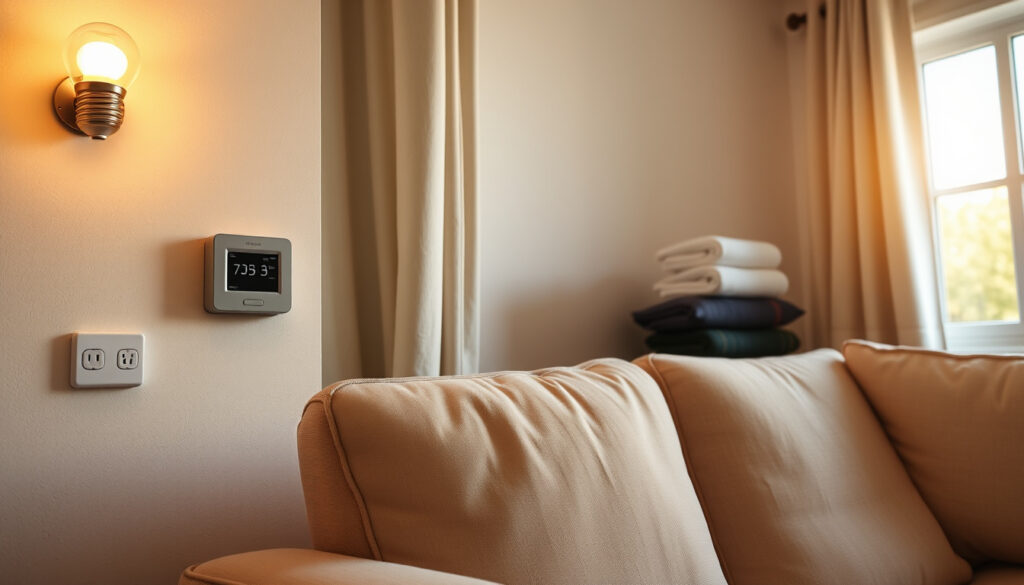
Easy Ways to Save Energy: 10 Proven Tips
Anyone who’s opened an electricity bill lately already knows the sting. The good news is that some of the most effective savings don’t require a big investment — just a few smart habits and a little planning.
Lower thermostat by 1°C: Saves up to 10% on heating ·
Replace five most-used bulbs with LEDs: Saves about $40 per year ·
Standby power: Can account for 10% of home electricity use ·
Heating and cooling: Nearly 60% of home energy consumption ·
Tumble dryer per load: Costs around €0.50 to €1.00 in Ireland
Quick snapshot
- Lowering thermostat by 1°C saves up to 10% on heating (Energia, Irish energy supplier)
- LED bulbs use 75% less energy than incandescent (Energy Star, US efficiency programme)
- Standby power accounts for up to 10% of home electricity (Electric Ireland, Irish utility)
- The ’30 minute heating rule’ — heating for 30 minutes may not be more efficient than letting a programmable thermostat manage the schedule; effectiveness depends on home insulation and heating type.
- Energy prices in Ireland have risen sharply since 2022, making efficiency upgrades more valuable than ever (SEAI, Ireland’s national energy authority).
- Smart meters and time-of-use tariffs will let households shift consumption to cheaper off-peak hours (Electric Ireland).
Five key facts at a glance, one pattern: heating and standby power alone account for the lion’s share of what you pay.
| Factor | Value | Source |
|---|---|---|
| Heating share of home energy | Up to 60% | SEAI |
| Savings from 1°C thermostat reduction | Up to 10% | Energia |
| Standby power contribution | Up to 10% of bill | Electric Ireland |
| Cost of a 10-minute shower in Ireland | €0.30 | Bonkers.ie, Irish price comparison site |
| Annual savings from replacing 5 bulbs with LEDs | $40 | Energy Star |
What are 10 ways to save energy?
Switch to LED lighting
- Replace your five most-used bulbs with ENERGY STAR certified LEDs and save about $40 a year in energy costs (Energy Star, US efficiency programme). Traditional bulbs use about six times as much electricity as LEDs (Bord Gáis Energy, Irish supplier).
- Make the most of natural daylight to reduce the need for artificial lighting (Energia).
Adjust thermostat settings
- Turning the thermostat down by 1°C can cut overall heating energy usage by up to 10% (Energia). Set heating and hot water to run only when needed (Electric Ireland).
- Keep doors closed and use curtains to trap heat indoors (Energia).
Unplug electronics
- Devices left on standby can account for up to 10% of a household electricity bill (Electric Ireland). Switch them off at the plug to stop that drain.
- Consider smart plugs to track energy-hungry appliances and find ways to cut back (Electric Ireland).
Use appliances efficiently
- Wait for a full load before running the washing machine or dishwasher (Consumer Council, UK consumer advice body). Wash clothes at 30°C if possible and use eco settings (Bord Gáis Energy). Using a cooler wash cycle (30°C) can cut washing machine energy use by up to 40% (Bonkers.ie).
- A-rated appliances use around 55% less energy than D-rated models (Electric Ireland).
Seal drafts and insulate
- Insulating a hot water tank with a lagging jacket can pay for itself in a few months (Electric Ireland).
- Check windows and doors for drafts — sealing them keeps heat in and reduces heating demand.
LEDs, thermostat tweaks, and killing standby power are the three highest-impact, lowest-cost changes you can make today. Together they can shave hundreds off your annual bill.
The strategy is clear: small adjustments to lighting, heat, and standby habits produce outsized savings without any major expense.
What runs your electric bill up the most?
Heating and cooling systems
Heating accounts for up to 60% of home energy use in Ireland (SEAI, Ireland’s national energy authority). That’s the single biggest slice of your bill.
Water heating
Electric water heating can be 12–15% of an electricity bill (SEAI). A 10-minute shower costs about €0.30 in Ireland (Bonkers.ie). Reduce to 5 minutes and save up to €50 per year (SEAI). Showers are five times more energy efficient than baths (Energia).
Appliances in standby mode
Standby power can contribute up to 10% of household electricity costs (Electric Ireland). Even a kettle in standby uses less than 0.5 W (less than €0.01 per year) but the real drain comes from older devices.
Old inefficient refrigerators
Older refrigerators (pre-2000) can use twice as much energy as modern Energy Star models (Energy Star). If your fridge is over 15 years old, replacing it with an A-rated model could save €50–100 annually.
Heating and water are the elephants in your bill. A programmable thermostat and shorter showers are the two quickest ways to attack them.
The implication: focus on the big three — heating, water heating, and standby — before worrying about minor gadgets.
How can I reduce my electricity bill in Ireland?
Switch to a cheaper energy tariff
Check whether you are on the cheapest tariff and billing method for your needs (Consumer Council, UK consumer advice body). Compare suppliers on sites like Bonkers.ie — switching can save €200–300 per year.
Use smart heating controls
Programmable thermostats let you heat only when needed. The ’30 minute heating rule’ is a simplification; experts recommend using timers and zone controls instead (Energy Saving Trust, UK energy advisory body).
Insulate your home
SEAI offers grants for attic insulation, cavity wall insulation, and heating controls. Improved insulation can reduce heating needs by 20–30%.
Reduce shower time and temperature
Reducing shower time from 10 to 5 minutes can save up to €50 per year (SEAI). Lowering water temperature from 60°C to 50°C saves energy while remaining safe.
Tariff switching offers immediate savings, but insulation improvements require upfront investment. Grants from SEAI can cover part of that cost — a trade-off worth taking for long-term gain.
The pattern is clear: quick wins from tariff switching and shower reductions complement deeper retrofits for lasting savings.
What is the 30 minute heating rule?
The idea that heating a room for 30 minutes is more efficient than leaving it on constantly is not universally supported. Experts advise using a programmable thermostat to heat only when you’re home (Energy Saving Trust). Turning off heating when not needed saves 10–15% on bills (SEAI).
The takeaway: rely on timers and controls, not a one-size-fits-all rule of thumb.
Does leaving a kettle plugged in use electricity?
How much standby power does a kettle use?
A typical kettle in standby consumes less than 0.5 W, costing less than €0.01 per year (Energy Saving Trust). The main energy use comes from boiling water, not standby (Bonkers.ie). So unplugging a kettle won’t make a noticeable difference — focus on the bigger standby culprits like TVs, game consoles, and set-top boxes.
The implication: prioritize switching off high-drain devices, not the kettle.
Which appliance is a real energy drainer?
Four appliances, one pattern: age and type determine how much they cost to run.
| Appliance | Typical energy use per cycle/ day | Estimated cost in Ireland | Source |
|---|---|---|---|
| Tumble dryer | Over 4 kWh per cycle | €0.50–€1.00 per load | Bonkers.ie |
| Washing machine (60°C cycle) | ~1.5 kWh per cycle | ~€0.30 per load | Energia |
| Refrigerator (old pre-2000) | ~2 kWh per day | ~€0.15 per day | Energy Star |
| Refrigerator (modern A-rated) | ~1 kWh per day | ~€0.07 per day | Energy Star / SEAI |
| Electric space heater (2 kW, 4 hours) | 8 kWh | ~€1.60 per session | SEAI |
The trade-off: tumble dryers and old fridges are the biggest energy hogs. Running a full load on a cold day might be unavoidable, but replacing a pre-2000 fridge with an A-rated model pays back within a few years.
Easy steps to start saving today
- Turn your thermostat down 1°C. That single degree can cut 10% off your heating bill (Energia).
- Switch to LED bulbs in the five rooms you use most. Save about $40 (€35) per year (Energy Star).
- Unplug devices not in use – or use a smart power strip to kill standby power. Standby can be 10% of your bill (Electric Ireland).
- Wash clothes at 30°C and only when full. Cooler washes cut machine energy use by up to 40% (Bonkers.ie).
- Replace your oldest refrigerator if it’s over 15 years old. Modern A-rated fridges use half the energy.
Confirmed facts
- Lowering thermostat by 1°C saves up to 10% (SEAI)
- LED bulbs use 75% less energy than incandescent (Energy Star)
- Standby power accounts for up to 10% of home electricity (Energy Saving Trust)
- Showers use five times less energy than baths (Energia)
What’s unclear
- Effectiveness of the ’30 minute heating rule’ depends on home insulation and heating type; not universally supported by all experts
Expert perspectives
Heating is the biggest single use of energy in Irish homes, accounting for up to 60% of consumption.
— SEAI energy advisor
Replacing your five most frequently used light fixtures with ENERGY STAR certified lights can save about $40 a year in energy costs.
— ENERGY STAR programme
For Irish households, the choice is clear: focus on heating controls, LED lighting, and standby power. Together they can cut a typical annual bill by €200–€300 without major expense. Or keep paying for heat that leaks out through drafts and devices that hum all night.
Related reading: Best Exercises for Energy
Learning how to lower your electricity bill starts with small changes, and knowing how to compare energy tariffs effectively can lead to even greater savings.
Frequently asked questions
How much does standby power actually cost per year?
Standby power can add up to 10% of your electricity bill – for a typical Irish household spending €1,200 a year on electricity, that’s about €120. Switching devices off at the plug eliminates that cost.
Is it cheaper to use a fan or an air conditioner?
A fan uses about 50–100 watts per hour, while a portable air conditioner uses 1,000–2,000 watts. For cooling, fans cost a fraction of air conditioning. In Ireland’s climate, a fan is usually sufficient.
How often should I replace my refrigerator for maximum efficiency?
Refrigerators older than 15 years should be replaced. New A-rated models use about half the electricity of a pre-2000 model. Look for the ENERGY STAR label.
What is the most energy-efficient type of water heater?
Heat pump water heaters are the most efficient, using 2–3 times less electricity than standard electric resistance heaters. For Ireland, a solar thermal system can also reduce water heating costs.
Does using a smart power strip save money?
Yes. Smart power strips cut power to devices when they are not in use, eliminating standby drain. They can save a typical household €30–50 per year.
Can solar panels really reduce my electricity bill to zero?
In Ireland, a well-sized solar PV system (4–6 kW) can cover 50–70% of annual electricity usage. With a battery, you can store excess for evening use. Complete zero is possible but depends on your consumption and export tariff.
More related posts
 Best Places to Camp Near Seattle: 20 Top Campgrounds (2026)
 Best English to Portuguese Translators: Google, DeepL & More
 What Is Bipolar Disorder? Symptoms, Types, Causes & Treatment
 Easy Moroccan Recipes at Home: Simple Dinners, Starters & More
 One Foot in the Grave: Meaning, Cast, Episodes, FAQs
 Translate English to Ukrainian: Tools, Tips & Phrases
 Charles Spencer, 9th Earl Spencer: Family, Net Worth, Bio
 สล็อต m.pglucky88.win: Verified Facts and Risks