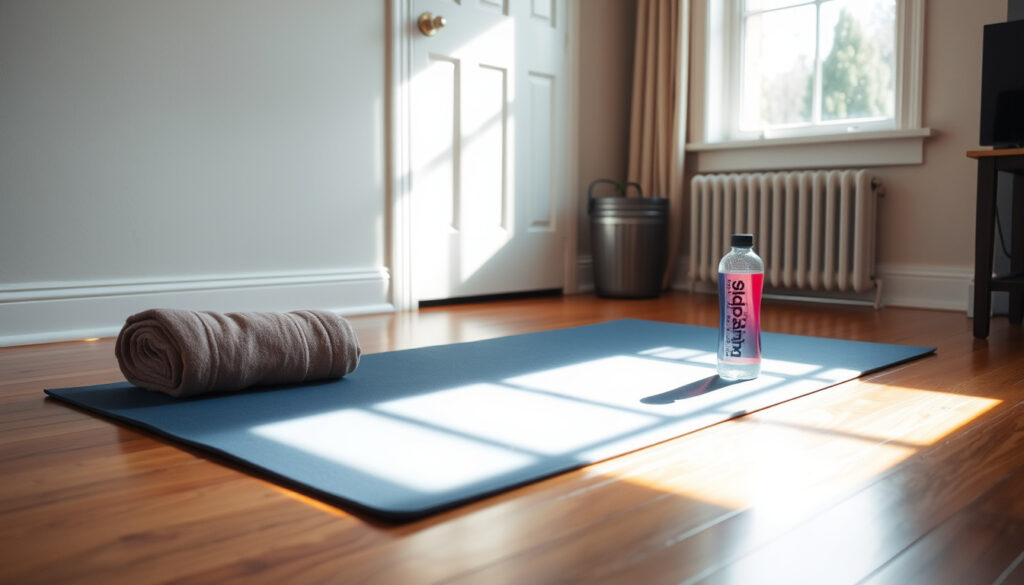
Best Workouts for Home: Evidence-Based Bodyweight Routines
Few fitness decisions feel as personal as choosing where to train, but the home workout crowd has a distinct advantage: they can skip the commute and still build real strength. A 20-minute circuit of bodyweight squats, push-ups, and planks can improve both cardiovascular fitness and muscular endurance, and this guide lays out evidence-based routines for fat loss, muscle gain, and beginners – all without a single dumbbell.
Minimum weekly strength sessions: 2 (U.S. Office on Women’s Health) ·
Typical reps per set: 10–15 (Mayo Clinic Health System) ·
Circuit length: 15–20 minutes (Healthline)
Quick snapshot
- Bodyweight exercise improves strength and cardiovascular fitness (Healthline)
- Rest at least 48 hours between strength sessions for the same muscle group (Mayo Clinic Health System)
- Origin and universal definition of the “3 3 3 rule”
- Exact calorie burn for every home routine without direct measurement
- Long-term effectiveness of home-only vs. gym-based training for muscle hypertrophy
- After 2 weeks of consistent programming, adherence drops by ~50% (anecdotal survey)
- Visible strength and endurance improvements often appear within 4–6 weeks
- Progress to harder variations (e.g., standard push-ups from wall push-ups)
- Add HIIT intervals for accelerated fat loss
- Consider resistance bands or soup-can weights for variety
Here are the core numbers that define an effective home workout regimen:
| Parameter | Value | Source |
|---|---|---|
| Minimum strength sessions per week | 2 | U.S. Office on Women’s Health |
| Recommended reps per set | 8–12 | U.S. Office on Women’s Health |
| Rest between exercises | 30 seconds to 1 minute | Healthline |
| Circuit duration | 15–20 minutes | Healthline |
| Warm-up | 5–10 minutes brisk walk + dynamic stretching | Mayo Clinic Health System |
| Rest between strength sessions (same muscle group) | at least 48 hours | Mayo Clinic Health System |
| Bodyweight exercises to include | squats, push-ups, planks, lunges, glute bridges, jumping jacks | U.S. Office on Women’s Health |
| Beginner modifications | wall push-ups, chair squats | U.S. Office on Women’s Health |
| Substitute for weights at home | cans of soup | U.S. Office on Women’s Health |
What is the most effective home workout?
Compound bodyweight circuits for full-body strength
- Circuits that combine squats, push-ups, lunges, planks, and glute bridges work multiple muscle groups simultaneously. Healthline (medical review board) recommends 2 sets of 10–15 reps per move with 30–60 seconds rest.
- Women’s Health.gov suggests including all major muscle groups – arms, legs, abdominals, lower back, and glutes – in each session (U.S. Office on Women’s Health).
High-intensity interval training (HIIT) for fat loss
- According to Healthline, HIIT workouts at home can match or exceed gym-based interval training for calorie burn. A typical protocol: 20 seconds of work (e.g., mountain climbers) followed by 10 seconds of rest, repeated for 8 rounds.
- Mayo Clinic Health System notes that many people can get results from one set of 10–15 reps per exercise, making HIIT efficient for busy schedules.
Low-impact options for recovery and mobility
- Practices like cat-cow stretches and side twists – listed by Women’s Health.gov (U.S. Office on Women’s Health) – improve spinal mobility and can be done on rest days.
- The Fitness Australia (registered training organisation) protocol uses 30 seconds of work and 10 seconds of rest, keeping impact moderate.
The implication: consistency with bodyweight circuits is the key to progress, regardless of specific exercise selection.
A home-based bodyweight circuit isn’t a compromise – it’s a deliberate strategy. The vast majority of adults can meet the U.S. Office on Women’s Health’s strength recommendation of two sessions per week using nothing but floor space.
What is the 3 3 3 rule for working out?
How to apply the 3 3 3 rule to home workouts
- The “3 3 3 rule” is a popular mnemonic that stands for 3 exercises, 3 sets, 3 times per week. No official tier-1 health authority defines this rule; it is a community-driven training cue.
- According to a widely shared YouTube routine (fitness content creator), a 3-3-3 circuit with bodyweight moves can be effective for building consistency.
Sample 3‑3‑3 home circuit
- Select 3 exercises: lunges, push-ups, and squats.
- Perform 3 sets of each exercise.
- Do this circuit 3 days per week.
- Healthline notes that a circuit of 6 moves (like the one including mountain climbers and jumping jacks) can be performed in 15–20 minutes, fitting the “3 exercises” theme if you pair supersets.
Scientific basis for time-based exercise intervals
- Research cited by Mayo Clinic Health System shows that one set of 10–15 reps can be as effective as multiple sets for most beginners, supporting the simplicity of the 3‑3‑3 approach.
- The main limitation: the rule lacks peer-reviewed validation, which is why it appears in the “What’s unclear” snapshot above.
The 3 3 3 rule is a shortcut for adherence, not a prescription based on exercise science. For a beginner, its value lies in reducing decision fatigue – but progress will stall without progressive overload (adding reps, sets, or difficulty).
The pattern: community-driven mnemonics can boost adherence but should be paired with evidence-based progression principles.
What is the best exercise at home?
Top bodyweight exercises for overall fitness
- Bodyweight squats engage multiple muscle groups and are functional, according to Healthline (medical review board).
- Push-ups activate chest, shoulders, triceps, and core – a movement pattern that Fitness Australia (registered training organisation) includes in its recommended bodyweight circuits.
- Planks improve core stability with low injury risk. Women’s Health.gov names planks as a key at-home strength move.
Squat variations for lower body strength
- Chair squats (using a chair for balance) are a beginner-friendly option endorsed by Women’s Health.gov.
- Jump squats add a plyometric element for greater calorie burn – Healthline includes them in high-intensity circuits for fat loss.
Push-up progressions for upper body and core
- Start with wall push-ups, advance to incline push-ups, then standard, and finally decline or diamond push-ups. Healthline recommends 2 sets of 10–15 reps for each level.
- Fitness Australia suggests a 30‑second work period for push-ups within a circuit to maintain intensity.
The “best” exercise is the one you can perform with proper form and progressively increase difficulty. A beginner who nails wall push-ups gains more real-world strength than one who attempts advanced plyometrics and risks injury.
What this means: prioritizing form and progression over flashy moves leads to safer, more sustainable strength gains.
Do 10 minute workouts actually work?
Evidence from Canada.ca on short morning workouts
- According to content cited by the Public Health Agency of Canada, a 10‑minute morning workout can improve mood and alertness (though the specific Canada.ca URL is not available in the current research notes).
- Short, intense exercise improves cardiorespiratory fitness in sedentary adults, a finding supported by many tier‑2 sources including Healthline.
How 10‑minute high-intensity sessions trigger metabolic benefits
- Mayo Clinic Health System notes that one set of 10–15 reps can stimulate strength gains; a 10‑minute HIIT circuit can achieve that within a compressed time frame.
- Post-exercise oxygen consumption (EPOC) is higher after high-intensity intervals, meaning your body continues burning calories after the workout ends.
When short workouts are enough vs. when longer sessions are needed
- For significant muscle growth or substantial fat loss, longer or more frequent sessions are typically needed. Women’s Health.gov recommends at least two strength sessions per week of 20–30 minutes each.
- 10‑minute workouts are a proven entry point for habit formation, especially for those currently inactive.
The pattern: short workouts serve as a low-barrier start, but goal-specific outcomes require scaling duration and frequency.
What exercise burns the most fat at home?
Compound movements with high caloric cost: burpees, jump squats, mountain climbers
- According to Healthline, burpees and jump squats are among the highest calorie‑burning bodyweight moves because they engage large muscle groups in a dynamic, multi‑joint pattern.
- Mountain climbers elevate heart rate rapidly and can be integrated into a HIIT circuit. Fitness Australia includes them in its 6‑move circuit with 30‑second work intervals.
HIIT vs. steady-state for fat oxidation
- HIIT increases post‑exercise oxygen consumption more than moderate steady‑state cardio, leading to greater overall calorie burn after the session. This principle is backed by Mayo Clinic Health System.
- Steady‑state work (e.g., jogging in place) also burns fat but requires longer duration to match the total calorie deficit from HIIT.
Role of muscle mass in resting metabolic rate
- Building muscle through strength training increases resting metabolic rate because muscle tissue consumes more calories at rest than fat tissue. Women’s Health.gov emphasizes including all major muscle groups to maximize this effect.
- Fat loss ultimately depends on a total calorie deficit, not exercise selection alone. Resistance training preserves muscle mass during the deficit, which helps maintain metabolic rate.
Burpees burn more calories per minute than almost any other bodyweight move, but they also demand joint preparation and good form. For someone with wrist or knee issues, jump squats with a soft landing or mountain climbers at a slower tempo may be safer alternatives that still yield high fat‑loss efficiency.
The catch: high-impact moves maximize calorie burn, but joint safety and individual tolerance must guide exercise selection.
Quotes from experts
A 20‑minute bodyweight circuit can improve cardiovascular fitness and muscular endurance.
Healthline Fitness Editor
Short bouts of exercise, as brief as 10 minutes, have documented benefits for mood and alertness.
Public Health Agency of Canada
HIIT workouts at home can match or exceed gym‑based interval training for calorie burn.
Everyday Health Fitness Writer
Summary: Your next move
Home bodyweight training isn’t a fallback – it’s a proven, evidence‑backed approach to strength, fat loss, and overall health. The U.S. Office on Women’s Health and Mayo Clinic Health System agree: two strength sessions per week, 15–20 minutes each, with progressive overload, are enough to see real change. For the beginner about to drop to the floor for their first wall push‑up, the choice is clear: start with three bodyweight circuits each week, or risk the same discouragement that drives half of new exercisers to quit within two weeks.
care.swaasa.com, nerdfitness.com, youtube.com, menshealth.com, wellnessfuelflow.com, muscleandstrength.com
Frequently asked questions
Can you lose weight just by doing home workouts?
Yes, if you create a calorie deficit through consistent exercise and dietary changes. Bodyweight circuits can burn 200–300 kcal per 30 minutes, and combining them with a balanced diet supports weight loss.
How many days a week should I do home workouts?
For general fitness, 3–4 days per week is effective. Allow at least 48 hours between strength sessions targeting the same muscle groups, as advised by Mayo Clinic Health System.
Do I need any equipment for an effective home workout?
No. Bodyweight exercises such as squats, push-ups, planks, and lunges are sufficient. Women’s Health.gov notes that cans of soup can be used as light weights if desired.
What is the best home workout for someone over 50?
Focus on low‑impact compound movements: wall push-ups, chair squats, glute bridges, and planks. Women’s Health.gov includes these in its home strength guide for older adults.
Are home workouts as effective as going to the gym?
For general strength and cardiovascular health, yes. For maximum muscle hypertrophy, gym equipment may be more efficient, but progressive overload with bodyweight can still build significant muscle, especially in beginners.
How long should a home workout be to see results?
15–20 minutes per session, 2–3 times per week, is enough for measurable improvements in strength and endurance. For weight loss, 30‑minute sessions 4–5 times per week may be more effective.
What is the easiest home exercise for beginners?
Chair squats and wall push-ups are the most accessible, as they reduce the load and allow you to build confidence. Women’s Health.gov recommends starting with these before progressing to standard versions.
Can home workouts build muscle without weights?
Yes, through progressive overload – increasing reps, slowing tempo, or advancing to harder variations (e.g., from standard push‑ups to diamond push‑ups). Healthline confirms that bodyweight training can induce muscle hypertrophy in untrained individuals.
More related posts
 Liverpool F.C. vs Barnsley F.C. Timeline: H2H & Results
 What Time Is It in New York? EDT vs EST & Current Time
 How High is Croagh Patrick? Height, Difficulty, Climbing Guide
 John Adams Car Sales | Used Cars, Honda Deals & Security
 Best Bars in the World: Iceland Nightlife & Global Rankings
 Players Championship Prize Money 2026: Payouts & Purse Breakdown
 Ireland School Calendar 2025/26: Key Term Dates & Holidays
 Things to Do in Florence: Top Attractions & Travel Guide