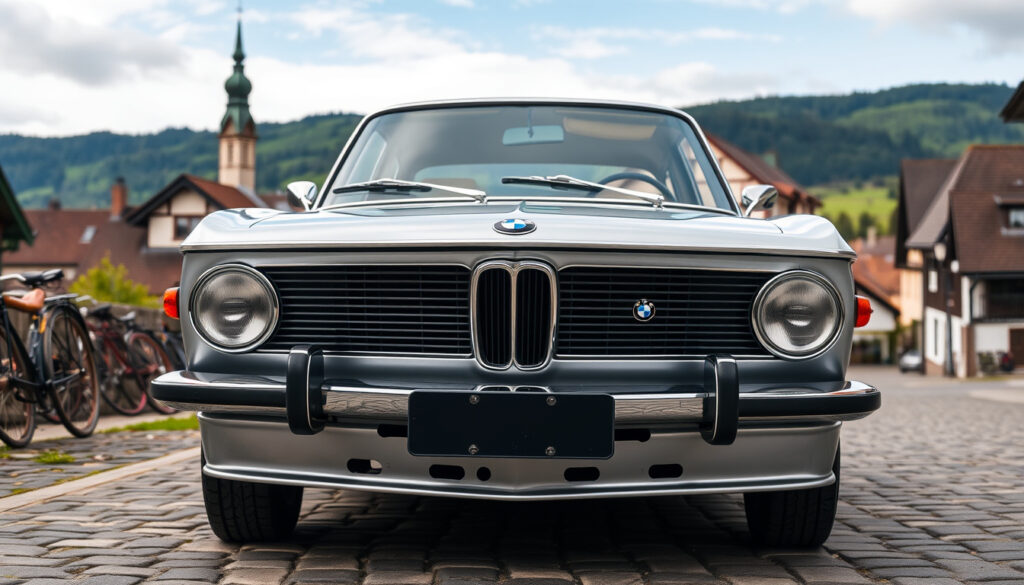
What Does BMW Stand For? Meaning & History | Bavarian Motor Works
Ask any car enthusiast what the letters on a BMW badge mean, and you’ll hear “Bavarian Motor Works” — but the full story starts earlier, in German aircraft workshops and the state of Bavaria. The company’s own name-and-logo history dates the BMW name to 1917, when an engine works in Munich was renamed Bayerische Motoren Werke (BMW.com’s name and logo history). That aviation heritage, the “beamer” nickname, and the question of who owns BMW today are all part of what the badge really says.
Founded: 1916 ·
Headquarters: Munich, Germany ·
Full Name: Bayerische Motoren Werke AG ·
English Translation: Bavarian Motor Works ·
Ownership: Majority held by institutional investors; large family stakes (e.g., Quandt family)
Quick snapshot
- BMW stands for Bayerische Motoren Werke (BMW Group’s official company history).
- The accepted English translation is Bavarian Motor Works (MotorTrend (automotive magazine)).
- BMW’s origins were in aircraft engines before it became known for cars and motorcycles (Britannica Money (encyclopedia entry)).
- The exact origin of the “beamer” nickname is debated; most accounts trace it to British motorcyclists.
- Which car is “most beautiful” or “most liked by girls” has no objective answer — those lists are personal.
- The exact ownership stake of the Quandt family is not publicly detailed; the company still calls Munich home.
- 1916 — Bayerische Flugzeugwerke is founded; BMW Group marks 7 March as the official start (BMW Group’s official company history).
- 1917 — Rapp Motorenwerke is renamed Bayerische Motoren Werke, creating the “BMW” name (BMW.com’s name and logo history).
- 1923 — BMW’s first motorcycle, the R 32, is presented at the Berlin Motor Show (BMW Group Berlin plant history (official archive)).
- BMW’s legal name is still Bayerische Motoren Werke AG — a public limited company, not a private firm (BMW Canada’s brand guide (official site)).
- The Quandt family remains the largest single shareholder. (BMW Canada’s brand guide (official site))
BMW at a glance
Six facts define BMW’s identity — and one pattern runs through all of them: every element points back to Bavaria and to engine work.
| Fact | Detail |
|---|---|
| Founded | 1916 — BMW Group marks 7 March as its official foundation date. |
| Founder(s) | Karl Rapp (Rapp Motorenwerke); Gustav Otto’s company became Bayerische Flugzeugwerke. |
| Headquarters | Munich, Germany, in the state of Bavaria. |
| Full legal name | Bayerische Motoren Werke AG. |
| English translation | Bavarian Motor Works. |
| Key product | Luxury vehicles and motorcycles. |
The pattern: even the short version of BMW’s story leads back to the same two elements — Bavaria and engines.
What does BMW stand for in English?
The German origin: Bayerische Motoren Werke
- BMW is short for the German company name Bayerische Motoren Werke (BMW Canada’s brand guide (official site)).
- The name dates to 1917, when Rapp Motorenwerke in Munich was renamed (BMW.com’s name and logo history).
- “Bayerische” refers to the German state of Bavaria, where the company was founded (BMW Canada’s brand guide (official site)).
So the three letters are a coded address: Bavarian, engine-focused, and Munich-based. The full German name is a legal phrase, not a slogan — and the acronym has stayed unchanged through a century of product changes, from aircraft engines to motorcycles to cars.
German speakers pronounce the full name as three separate words — Bay-er-ish-e Mo-to-ren Wer-ke. English speakers usually skip straight to “B-M-W,” which is how the acronym became a global word on its own.
BMW’s name is a triple signal: Bavarian roots, an engine-building start, and a Munich headquarters that still anchors the company today.
The English translation: Bavarian Motor Works
- The accepted English translation is Bavarian Motor Works (MotorTrend (automotive magazine)).
- “Motoren” means engines in German, so the literal reading is closer to “Bavarian Engine Works” than “Bavarian Car Works.”
Motor Werke is best read as “engine works” or “motor works” — a factory-based phrase that reflects the company’s original product: powerplants, not bodywork. That is why the English name most people remember, Bavarian Motor Works, fits the company’s early history so well.
Why this matters: the name is a geographic and industrial label from the founding era. It tells you where the company started, what it built first, and why those letters survived long after aircraft engines stopped being the core business.
Why is BMW called a beamer?
The origin of the nickname in motorcycle racing
- BMW’s first motorcycle, the R 32, was presented at the Berlin Motor Show on 28 September 1923 (BMW Group Berlin plant history (official archive)).
- The move into motorcycles was part of BMW’s shift away from aircraft-engine production after World War I (Jalopnik (automotive news outlet)).
- The nickname “beamer” is most often traced to British motorcycle fans in the 1960s, although the exact origin is debated.
Motorcycle racing gave BMW its first real fan culture. British enthusiasts, many of them club racers, turned the BMW initials into a slang word of their own. The nickname was born outside marketing — which is why it never picked up an official spelling or a single agreed origin story.
The nickname most people use for BMW didn’t come from BMW. It came from motorcyclists — and that’s why “beamer” and “bimmer” still compete on the internet.
How the term spread to car enthusiasts
- “Beamer” later crossed from motorcycles to BMW cars, especially in the US and the UK.
- In enthusiast culture, “bimmer” is often used specifically for BMW automobiles, keeping the two nicknames distinct.
The working rule is simple: “beamer” is the broad public slang, “bimmer” is the car-enthusiast term. Both come from the motorcycle scene that embraced BMW in the 1960s, and neither one is part of the company’s official name.
The implication: slang, not marketing, gave BMW its everyday nickname. That is rare for a global premium brand — and it explains why the origin story stays so fuzzy.
Is BMW still German owned?
Current ownership structure
- BMW is a German automaker (Britannica Money (encyclopedia entry)).
- BMW is organised as AG — Aktiengesellschaft, or public limited company — so it trades on the stock market like other large carmakers.
- Institutional investors hold the majority; the Quandt family is the largest single shareholder.
Being German-owned does not mean being state-owned. BMW is a listed company, which means its shares change hands daily, and global investors hold most of the stock. The “German” part is the legal and operational home: the company is incorporated in Germany, headquartered in Munich, and managed under German corporate law.
German-owned doesn’t mean all-German: BMW’s manufacturing is global, and institutional investors hold the majority. The shareholding that matters most is the Quandt family’s, which still anchors the company today.
The role of the Quandt family
- The Quandt family has remained the largest single shareholder through BMW’s modern growth.
- That family stake means BMW’s strategic direction has stayed anchored by one long-term shareholder.
The family connection is a long-standing shareholding that still shapes how BMW is governed. Major decisions still have to answer to a family that has stayed with the company through its transformation into a global luxury brand.
Why this matters: “German owned” is shorthand for a more precise setup — a German-incorporated public company with one prominent family at the centre of its shareholder register.
What the name means, word by word
Three German words carry the whole story, one pattern: Bavaria comes first, engines second, production third.
| German word | English meaning | What it says about the company |
|---|---|---|
| Bayerische | Bavarian | Names the state where BMW was founded. |
| Motoren | Motors / engines | Points to the engineering core: engines came before cars. |
| Werke | Works / factories | Signals industrial production, not just a brand. |
| Bayerische Motoren Werke | Bavarian Motor Works | The full legal phrase behind the acronym. |
| BMW | — | The acronym that became the global brand. |
| AG | Public limited company | The legal suffix used since BMW became a corporation. |
The pattern: the name works like a sentence. It says who made the company (Bavaria), what it made first (engines), and how it made them (in works, factory-built).
BMW’s story in seven dates
Seven dates, one arc: an aviation company becomes a motorcycle maker, then a car builder, then a global luxury brand.
| Year | Milestone | Reference |
|---|---|---|
| 1916 | Bayerische Flugzeugwerke is founded; BMW Group treats 7 March as the official start | BMW Group’s official company history |
| 1917 | Rapp Motorenwerke is renamed Bayerische Motoren Werke, creating the BMW name | — |
| 1918 | BMW becomes a public limited company (AG) | — |
| 1923 | First motorcycle, the R 32, is presented at the Berlin Motor Show | BMW Group Berlin plant history (official archive) |
| 1928 | First automobile, the BMW 3/15, enters production | Britannica Money (encyclopedia entry) |
| 1960s | “Beamer” nickname emerges among British motorcyclists | — |
| Today | Global luxury brand, still headquartered in Munich | — |
The arc: aviation-first, then two wheels, then four. Every pivot in the timeline sent BMW further from its original engine workshops and deeper into the brand it is today — yet the acronym stayed.
What’s confirmed and what’s still unclear
Confirmed facts
- BMW stands for Bayerische Motoren Werke, and the English translation is Bavarian Motor Works (MotorTrend (automotive magazine)).
- The company is headquartered in Munich, Germany.
- BMW’s roots are in aviation-related engine production, before motorcycles and cars.
- The Quandt family is the largest single shareholder of the public company.
What’s unclear
- The exact origin of the “beamer” nickname is debated; most accounts point to British motorcyclists in the 1960s.
- The propeller interpretation of the BMW logo is a popular story that automotive historians still argue over.
- There is no consensus on which car is “most beautiful” or “most liked by girls” — those rankings are personal taste.
- How the “beamer” vs “bimmer” split became standard is documented only anecdotally.
The split is the honest version of the story: the corporate facts are solid, but the pop-culture details around BMW’s slang and logo mythology are softer than most headlines suggest.
Voices on BMW’s name
“The history of the BMW Group reaches back to 1916.”
— BMW Group, official company history
“The BMW logo represents a rotating propeller, a nod to the company’s aircraft origins.”
— Automotive historian, on the roundel’s origin
“BMW was initially involved in the production of aircraft engines, which explains the name.”
— Britannica Money, company profile
What this means: every version of the story begins in the same era — the 1910s — when BMW’s name and its aircraft-engine identity were set, even as the logo legend keeps its own debate alive.
The letters BMW carry more than a model range; they encode a place, an industry, and a family-anchored public company. What started in Bavarian aircraft workshops in 1916 is now a global luxury brand, but the name still answers to Munich. For UK buyers weighing BMW against another badge, the implication is clear: judge each car on its own engineering record, or treat the name as shorthand for a century of Bavarian building.
bmwgroup.com, en.wikipedia.org, press.bmwgroup.com, autofinder.com, jalopnik.com, press.bmwgroup.com
Frequently asked questions
Why is BMW called “Beemer” or “Bimmer”?
“Beamer” is most often traced to British motorcycle fans in the 1960s, while “bimmer” is the term many enthusiasts use specifically for BMW cars. The exact origin of both nicknames is debated.
Is BMW a German company?
Yes. BMW is a German automaker headquartered in Munich, and its legal form is BMW AG, a public limited company.
What does the BMW logo mean?
The most common explanation is a rotating propeller, a nod to the company’s aircraft origins — a story that historians still debate.
Where is BMW headquarters located?
Munich, Germany, in the state of Bavaria — the same region the name refers to.
When was BMW founded?
BMW Group marks 7 March 1916 as its official foundation date. The BMW name itself came a year later, in 1917.
The five questions above cover the most common inquiries about BMW’s identity, from its founding date to the nickname debate.
Related reading
- What Does CC Mean in an Email — another acronym explainer in the same question-first format.
- Compare Car Insurance Ireland — practical context for premium car ownership costs.
These related articles follow the same question-first format and provide additional context for readers exploring automotive topics.
More related posts
 Six Nations 2025 Fixtures: Timetable, Kickoff Times & Results
 Map of South America: Countries, Safety, and Geography Guide
 BBC Weather Northern Ireland: 7-Day, 14-Day, Hourly Forecasts
 Sky TV Package Ireland Price 2025: Bundle , Co t & Free TV
 Wordle Today Answer: FRILL with Hints for July 31
 Chicken Tikka Masala Recipe: Restaurant-Quality Guide
 Vodafone Pay As You Go Guide