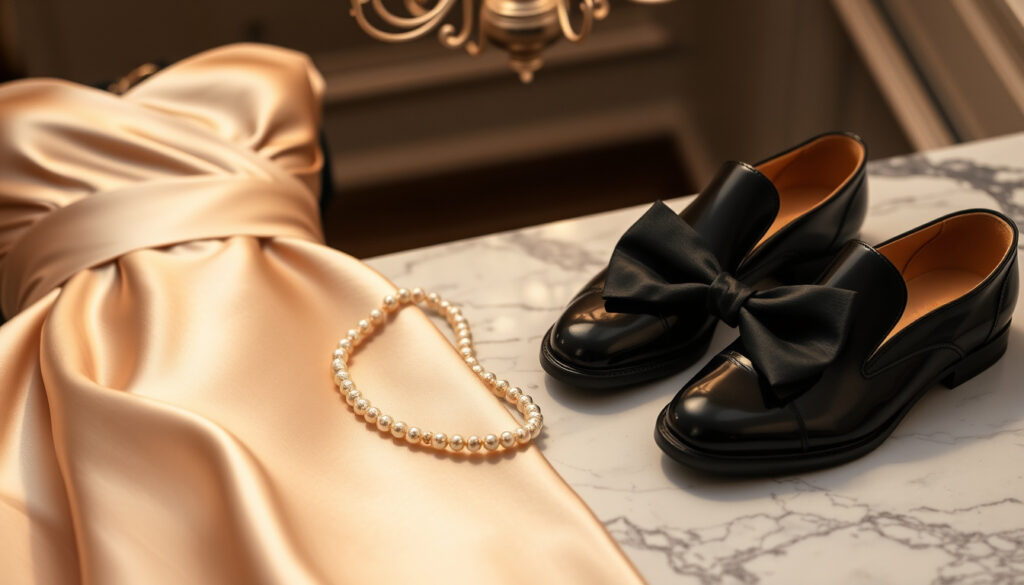
Black Tie Dress Code: Complete Guide for Men and Women
Getting an invitation that says “black tie” can be thrilling — and a little daunting. You want to look the part without making a costly mistake. This guide breaks down exactly what the dress code means, what men and women should wear, and the common pitfalls to avoid, drawing on etiquette sources from the UK and Ireland.
Events using black tie: Weddings, galas, awards ceremonies, formal dinners · Typical start time: After 6 p.m. · Men’s standard garment: Tuxedo or dinner jacket with bow tie · Women’s standard garment: Floor-length gown or formal evening dress · Common mistake: Wearing a regular business suit instead of a tuxedo
Quick snapshot
- Black tie is a formal evening dress code (Art of Manliness (men’s style authority))
- Men must wear a tuxedo or dinner jacket with a bow tie (Evening Standard (UK lifestyle publication))
- Whether a dark formal suit with a bow tie is ever acceptable without a tuxedo (Bench Clothing Ireland (Irish formalwear retailer))
- Exact flexibility for women’s attire – jumpsuits and two-piece sets are debated (Evening Standard)
- Events are typically held after 6 p.m. or after dark (Art of Manliness)
- No strict seasonal limitations – applicable year-round for formal evening occasions (Art of Manliness)
- Plan ahead: rent or buy a tuxedo well before the event
- Women should source a floor-length gown or formal dress that fits elegantly
Five defining details of the black tie dress code, one pattern: clarity on what’s required and what’s optional.
| Label | Value |
|---|---|
| Dress code name | Black tie |
| Formality level | Formal (second highest after white tie) |
| Typical time | Evening events, usually after 6 p.m. |
| Men’s required | Tuxedo or dinner jacket with bow tie |
| Women’s required | Floor-length gown or formal evening dress |
The table above captures the baseline rules. The rest of this guide unpacks the nuances and exceptions you need to know.
What exactly is the black tie dress code?
Formal evening dress code defined
Black tie is a formal evening dress code, traditionally worn after 6pm or after dark. According to Art of Manliness (men’s style authority), it demands a specific level of formality. It is less formal than white tie but more formal than semi-formal or cocktail attire, as noted by Gentleman’s Gazette (classic style resource). The Evening Standard (UK lifestyle publication) emphasises that a true black tie outfit centres on a dinner jacket or tuxedo, not a standard lounge suit.
When black tie applies (after 6 p.m.)
The code is reserved for evening events. Most guidelines state it applies after 6 p.m. (Art of Manliness). Common occasions include weddings, galas, awards ceremonies, and milestone birthdays.
Comparison to white tie and semi-formal
White tie is the highest level of formality, requiring a tailcoat, white waistcoat, and white bow tie. Black tie is one step down. Semi-formal allows for a dark suit and tie. The Evening Standard notes that many British-style guides describe black tie as semi-formal evening wear rather than full formal, yet it remains a distinct code with its own rules.
Black tie is not a suggestion – it’s a specified dress code with clear rules. Skirt them and you’ll stick out as either overdressed (white tie) or underdressed (business suit).
What this means: For guests in Ireland and the UK, understanding this hierarchy prevents the most common faux pas – wearing a standard suit when a tuxedo is expected.
What is black tie for a woman?
Floor-length gowns and formal evening dresses
Women are expected to wear a long (often floor-length) gown or formal evening dress. Vogue (fashion authority) confirms that floor-length dresses are the safest classic choice. The Evening Standard adds that in UK editorial guidance, knee-length dresses are sometimes acceptable but nothing shorter is traditional. Silk, satin, velvet, and other evening-appropriate materials are preferred.
Acceptable alternatives: dressy separates, jumpsuits
British advice notes that women may wear trousers at black tie events, but elegant cuts like palazzo-style are favoured over tight tailoring (Evening Standard). Jumpsuits are increasingly seen but not universally accepted; the grey area is part of what remains unclear.
Colors and fabrics recommended
ELLE UK (fashion magazine) states that black tie does not require women to wear black. Any formal colour is fine, but luxurious fabrics like silk, satin, and velvet are recommended. Avoid casual materials such as cotton or jersey.
Women often have more flexibility, but that flexibility can lead to uncertainty. The safest path: when in doubt, choose a floor-length gown in a rich fabric – you’ll never be wrong.
The pattern: traditional black tie for women leans towards floor-length elegance, but modern interpretations allow for more variety – as long as the overall impression remains formal.
What to wear if the dress code is black tie? (For men)
Tuxedo or dinner jacket with satin peaked lapels
Men should wear a tuxedo or dinner jacket with satin peaked or shawl lapels. The Evening Standard specifies a black dinner jacket with silk lapels as the classic. Trousers should be tailored and may include a braid or galon stripe along the outside seam (Evening Standard).
White dress shirt and black bow tie
A white evening shirt with a turn-down collar is standard – a wing-collar shirt is not preferred in classic British rules (Evening Standard). A black bow tie is required; a long necktie is not correct, as noted by Westwood Hart (formalwear specialist). The shirt should be made of cotton marcella or similar formal fabric.
Footwear: patent leather Oxfords or formal loafers
Black patent leather shoes are traditional. Standard dress shoes like Oxfords in polished leather are acceptable if not patent, but loafers or casual shoes are not.
The catch: details matter. A tuxedo with a plain black tie won’t cut it – the bow tie is non-negotiable, as are the satin lapels.
What not to wear for a black tie?
Avoid regular business suits
A regular business suit is not appropriate. The Evening Standard states that black tie centres on a dinner jacket, not a lounge suit. The difference is immediately visible.
Avoid casual footwear and accessories
Casual shoes like loafers or sneakers are forbidden. Similarly, avoid casual bags or backpacks. For women, tiaras are not appropriate under Debrett’s guidance, as reported by the Evening Standard.
Avoid overly casual fabrics and patterns
Cargo pants, jeans, t-shirts, and sportswear are forbidden. For women, overly revealing red-carpet dresses with dramatic thigh splits are warned against (Evening Standard).
What to watch: the biggest mistake is treating black tie as a “dark suit” event. Hosts expect full formality; anything less risks appearing disrespectful.
Is it okay to wear a regular suit to a black tie event?
When a dark suit might be accepted (with caveats)
In Ireland-focused guidance, a dark suit and bow tie may be used as a fallback when a full tuxedo is not possible (Bench Clothing Ireland (Irish formalwear retailer)). However, this is a concession, not the expectation. Art of Manliness advises that renting a tuxedo is the preferred solution if you don’t own one.
The importance of adhering strictly to the dress code
Hosts expect guests to follow the dress code; a suit will stand out as underdressed. The Evening Standard reinforces that no lounge suit can substitute the elegance of a tuxedo at a black tie event.
How to improvise if you don’t own a tuxedo
Options include renting from a formalwear shop, buying a second-hand dinner jacket, or wearing a very dark formal suit with a black bow tie as a last resort. Plan ahead to avoid the scramble.
The implication: borrowing a dark suit from your wardrobe is a gamble. For the price of a rental, you avoid being the only guest in a lounge suit.
Step-by-step guide to black tie dressing
- Check the event details: confirm the dress code explicitly says “black tie” (not “formal” or “semi-formal”).
- For men: rent or purchase a tuxedo with satin lapels two weeks before the event. Ensure proper fit through the shoulders and trousers (Evening Standard).
- For men: pair with a white formal shirt (turn-down collar) and a pre-tied or self-tied black bow tie. Black patent leather shoes complete the look (Evening Standard).
- For women: choose a floor-length gown or a formal cocktail dress that falls below the knee. Opt for silk, satin, or velvet in a solid, dark colour or jewel tone (Vogue).
- Accessories: men – cufflinks, a pocket square (optional but refined). Women – a clutch bag, elegant jewellery, and moderate heels.
- Final check: avoid anything from the “what not to wear” list. When in doubt, err on the side of formality.
What we know vs what’s uncertain
Confirmed facts
- Black tie is a formal evening dress code (Art of Manliness).
- Men must wear a tuxedo or dinner jacket with a bow tie (Evening Standard).
- Women should wear a floor-length gown or formal dress (Vogue).
- A regular business suit is not appropriate (Evening Standard).
- Common events include weddings, galas, and awards ceremonies (Art of Manliness).
What’s unclear
- Whether a dark formal suit with a bow tie is ever acceptable without a tuxedo (Bench Clothing Ireland).
- The exact degree of flexibility for women’s attire (jumpsuits, two-piece sets) (Evening Standard).
- Regional variations in strictness between Ireland and the UK.
- Whether knee-length dresses are acceptable for women at black tie events (Evening Standard).
- Whether a wing-collar shirt is acceptable for men at black tie events (Evening Standard).
Expert perspectives on black tie
“Black tie is a formal evening dress code, less formal than white tie but more formal than semi-formal attire.”
– Savile Row Company (bespoke formalwear specialist)
“For black tie weddings, a tuxedo with a bow tie is the expected choice for men – don’t substitute a lounge suit.”
– Moss Bros (UK formalwear retailer)
“A floor-length gown or elegant dress is the safest option for women attending black tie events.”
– Marks & Spencer (UK retail authority on formalwear)
For anyone invited to a black tie event in Ireland or the UK, the choice is clear: invest in a tuxedo or a floor-length gown, or risk standing out for the wrong reasons. Renting is a smart fallback; improvising with a business suit is not. Dress the part, and you’ll enjoy the evening with confidence.
Related reading: Brooks Runners Sale Clearance: Best Deals & Expert Picks · Glow For It Lash Serum Review: Does It Work? Ingredients & Results
suitablee.com, ever-pretty.com, alandavid.com, auscufflinks.com, blog.very.ie
Frequently asked questions
Can you wear a black dress to a black tie event?
Yes, black is perfectly appropriate. ELLE UK states that black tie does not require women to wear black, but black remains a classic choice.
Do you have to wear a tie with black tie?
Yes, a black bow tie is required for men. A long necktie is not correct (Westwood Hart).
Are jumpsuits acceptable for women at black tie events?
It depends on the event and the cut. British guidance favours elegant palazzo trousers over tight tailoring; jumpsuits occupy a grey area and may be accepted depending on formality.
What color shirt should men wear under a tuxedo?
A white dress shirt with a turn-down collar is standard (Evening Standard). Wing-collar shirts are less traditional for black tie.
Is it okay to wear a colored bow tie to a black tie event?
Traditional black tie calls for a black bow tie. Coloured or patterned bow ties are generally reserved for creative events or less formal occasions.
What should guests avoid wearing to a black tie wedding?
Avoid business suits, casual shoes, short dresses above the knee, and any overly revealing attire (Evening Standard).
Do women have to wear heels to a black tie event?
Heels are customary but not mandatory. Elegant flats or low heels are acceptable if they maintain the formal aesthetic.
More related posts
 Today Horse Racing Results – Fast Results & Dividends
 Members of Girls Aloud: Ages, Split, and Where They Are Now
 Best Budget Mechanical Keyboards: Top Picks & Answers
 SuperValu Gift Card Balance: Check Online or In-Store
 Killruddery House and Gardens: Hours, Tickets & Filming
 Mikey Madison Movies and TV Shows: Full Filmography & Oscar Win
 Pozole Blanco Near Me – Best Spots, Recipes and Guide