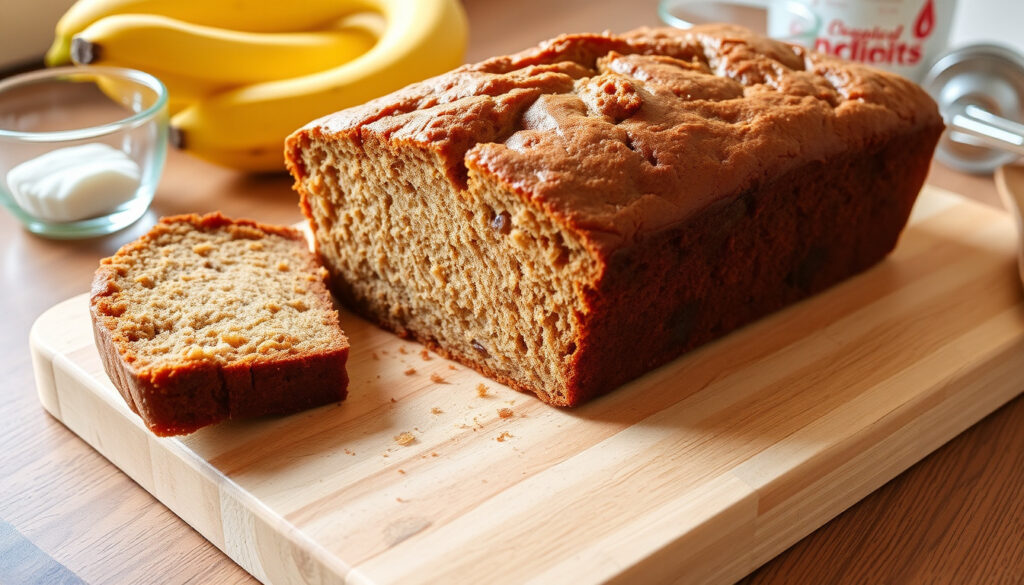
Simple Banana Bread Recipe: Basic, 3 & 4 Ingredient Versions
There’s something reassuring about pulling a loaf of banana bread from the oven — the kitchen smells like comfort, and you didn’t need a mixer or fancy technique. But getting that tender, moist crumb without ending up with a dry brick hinges on a few surprisingly specific choices.
Estimated time: 55 minutes (10 prep, 45 bake) ·
Servings: 1 loaf (about 10 slices) ·
Core ingredients: 3-4 ripe bananas, flour, sugar, egg, butter, baking soda ·
Oven temperature: 350°F (175°C)
Quick snapshot
- Using very ripe bananas increases sweetness and moisture (Allrecipes (home cook–tested recipes))
- Overmixing causes tough texture (Gemma’s Bigger Bolder Baking (popular baking blog))
- Baking at 350°F for about 50 minutes is standard (Preppy Kitchen (tested recipes))
- Whether 3-ingredient versions are as satisfying as classic recipes (subjective (Posh Plate (no-mixer method) suggests 10 minutes)
- Optimal rest time before slicing varies by source (Posh Plate (no-mixer method) suggests 10 minutes)
- Prep: 10 minutes
- Bake: 45–55 minutes at 350°F
- Cool in pan: 10–15 minutes before slicing
- Add mix‑ins like chocolate chips, nuts, or dried fruit (David Lebovitz (pastry chef and cookbook author))
- Store at room temperature up to 4 days (Simply Recipes (editor-tested banana bread))
- Freeze for up to 3 months (Simply Recipes (editor-tested banana bread))
Four facts every baker should keep in mind:
| Fact | Detail |
|---|---|
| Ideal banana ripeness | Yellow with brown spots (almost black skin) |
| Standard loaf pan size | 9 x 5 inches (23 x 13 cm) |
| Internal doneness temperature | 200-205°F (93-96°C) |
| Storage (room temp) | Up to 4 days in airtight container |
Chasing simplicity often sacrifices moisture. The baker who knows exactly why each ingredient matters gets the consistently better loaf.
What is the simplest way to make banana bread?
Step-by-step basic banana bread recipe
- Preheat oven to 350°F (175°C). Grease a 9×5-inch loaf pan (Preppy Kitchen (tested recipes)).
- Mash 3–4 very ripe bananas with a fork until smooth (Scattered Thoughts of a Crafty Mom (no-mixer method)).
- Melt ½ cup (1 stick) butter. Mix in ¾ cup granulated sugar, 1 egg, and 1 teaspoon vanilla (A Latte Food (blog recipe)).
- In a separate bowl, whisk 1½ cups all-purpose flour, 1 teaspoon baking soda, and ¼ teaspoon salt (Tastes Better From Scratch (blog recipe)).
- Fold the dry ingredients into the wet mixture until just combined — do not overmix (Gemma’s Bigger Bolder Baking (popular baking blog)).
- Pour batter into pan. Bake 45–55 minutes, until a toothpick comes out clean.
- Cool in pan for 15 minutes, then turn onto a wire rack (The Bittman Project (recipe from cookbook author)).
The implication: every step matters, but the order of combining wet and dry ingredients is the most forgiving part of the process.
What is a 4 ingredient banana bread recipe?
4-ingredient version: bananas, self-rising flour, sweetened condensed milk, butter
This shortcut skips the separate leavening agent and sugar. Self-rising flour already contains baking powder and salt, and sweetened condensed milk provides both sweetness and moisture. The result is denser and notably sweeter than a classic loaf. Melt ½ cup butter, mash 3 very ripe bananas, stir in 1 cup sweetened condensed milk and 1½ cups self-rising flour. Bake at 350°F for 40–45 minutes (Live Well Bake Often (blog recipe)).
The condensed milk adds so much sugar that the bread caramelizes faster on the edges while the center may stay underdone, threatening the even crumb most bakers want.
The pattern: condensed milk shortcuts add sugar that can unevenly bake the loaf, risking a raw center.
What are the three ingredients in banana bread?
3-ingredient version: bananas, cake mix, eggs
Yes, three items are all you need: one box of standard yellow cake mix (about 15–18 oz), 2 eggs, and 3 very ripe bananas. Mash the bananas, stir in eggs, then add the dry cake mix until incorporated. No extra fat — the mix already contains oil. Bake at 350°F for 40–50 minutes (Allrecipes (community recipe)). The texture is cakier and the flavor is consistent, but you surrender control over sweetness and fat content.
The cake mix can carry artificial flavors and preservatives that clash with the banana’s natural subtlety. A homemade loaf lets the fruit take center stage.
The trade-off: 3-ingredient banana bread trades depth for speed, and the cake mix’s artificial flavors can overshadow the fruit.
What is the secret to a good banana bread?
Using very ripe bananas with brown spots
Ripeness is the single most influential factor. As bananas ripen, their starches convert to sugar, and the flesh softens — both directly improve moisture and sweetness (David Lebovitz (pastry chef and cookbook author)). Look for skin that is mostly brown or covered with dark spots. Underripe yellow bananas produce bread that is bland and dry.
Do not overmix the batter
Overmixing activates gluten, making the bread tough rather than tender. Stir just until the flour disappears — a few streaks of flour are fine (Sugar and Charm (blog recipe using folding method)).
Baking soda freshness matters
Baking soda loses potency over time. If it’s more than six months old, the bread may not rise properly. Test it: drop ¼ teaspoon into vinegar — it should fizz vigorously (Simply Recipes (editor-tested banana bread)).
The pattern: the baker who treats ripeness, mixing technique, and leavening as interdependent variables will avoid the flat, dry result that plagues shortcut recipes.
What is the number one mistake made when making banana bread?
Using underripe bananas
Green or yellow bananas lack the sugar and moisture needed for a tender crumb. They also contain more starch, which can make the bread gummy or chalky (Simply Recipes (editor-tested banana bread)). The ideal banana is soft enough to mash easily with a fork and smells sweetly fragrant.
Overbaking the loaf
Even a few extra minutes can turn a moist interior into a dry one. Use an instant-read thermometer — the center should reach 200–205°F (93–96°C). A toothpick test works too, but err on the side of pulling the loaf slightly early; carryover heat will finish it (Preppy Kitchen (tested recipes)).
The trade-off: the line between perfectly baked and overbaked is thin. Trust temperature, not time.
What we know and what remains open
Confirmed facts
- Using very ripe bananas increases sweetness and moisture (Allrecipes (home cook–tested recipes))
- Overmixing causes tough texture (Gemma’s Bigger Bolder Baking (popular baking blog))
- Baking at 350°F for about 50 minutes is standard (Preppy Kitchen (tested recipes))
What’s unclear
- Whether 3‑ingredient versions satisfy as much as classic recipes (subjective taste)
- Optimal rest time before slicing varies — some recommend 10 minutes (Posh Plate (no-mixer method)), others 15–20 (The Bittman Project (recipe from cookbook author))
- Whether oil substitution changes texture enough to notice (mixed reports)
- Sweetened condensed milk works as sugar + liquid in 4‑ingredient versions (Live Well Bake Often (blog recipe))
- Boxed cake mix eliminates need for separate flour, sugar, leavening (Allrecipes (community recipe))
“Moist and delicious, it’s easy to make—one bowl, no need for a mixer.”
— Simply Recipes (editor-tested banana bread)
“Smoothest, most domestic of baking projects—and one where ripe bananas are the only currency that matters.”
— David Lebovitz (pastry chef and cookbook author)
The most successful banana bread recipes share one trait: they treat simplicity as an outcome of careful choices, not as a starting point. For the home baker who wants a reliable everyday loaf, the classic seven-ingredient method offers the best balance of moisture, texture, and forgiveness. The 4‑ingredient shortcut is viable when you have self-rising flour and a sweet tooth. The 3‑ingredient version is a fun experiment, but it trades depth for speed. Make your choice based on what you have on hand and how willing you are to let the banana’s natural flavor lead.
For an even quicker approach, try this simple one-bowl banana bread version that uses just a single bowl and basic pantry staples.
Frequently asked questions
How ripe should bananas be for banana bread?
Bananas should be very ripe with brown spots or even fully brown skin. The darker the skin, the more sugar and moisture the fruit contains.
Can I use oil instead of butter in banana bread?
Yes. Replace melted butter with an equal amount of neutral oil such as vegetable or canola. Oil produces a slightly more tender crumb but less buttery flavor.
Can I add nuts or chocolate chips?
Absolutely. Fold in up to 1 cup of walnuts, pecans, or chocolate chips after incorporating the dry ingredients.
How do I keep banana bread from sticking to the pan?
Grease the pan thoroughly with butter or nonstick spray, then dust with a thin layer of flour or line with parchment paper.
Can I make banana bread without eggs?
Yes. Substitute each egg with ¼ cup unsweetened applesauce or 1 mashed banana (if you don’t mind a stronger banana flavor).
How long does banana bread stay fresh?
At room temperature in an airtight container, it stays fresh for up to 4 days. Refrigeration extends this but may dry it out slightly.
Can I freeze banana bread?
Yes. Wrap the fully cooled loaf tightly in plastic wrap and then foil, or use a freezer bag. Freeze for up to 3 months. Thaw overnight at room temperature.
Why did my banana bread sink in the middle?
Sunken middles usually indicate too much liquid (bananas too large or extra added) or the pan was overgreased, causing batter to slip down. It can also happen if the oven door is opened too early.
More related posts
 Flamengo vs Chelsea F.C. Lineups: Confirmed Teams & Recap
 Best Places to Fly Drones in Ireland: Legal Spots & Rules
 How Many Paracetamol a Day? NHS Safe Dosage & Risks
 Task (Miniseries) 2025: Cast, Episodes, and Season 2
 How to Fix Flickering Lights: Common Causes and Easy Fixes
 Irish to English Translate: Tools, Dictionary & Language Guide
 Shamrock Rovers vs Celje 3-1: Extra-Time Aggregate Win
 99 Nights in the Forest Codes – Active List April 2026