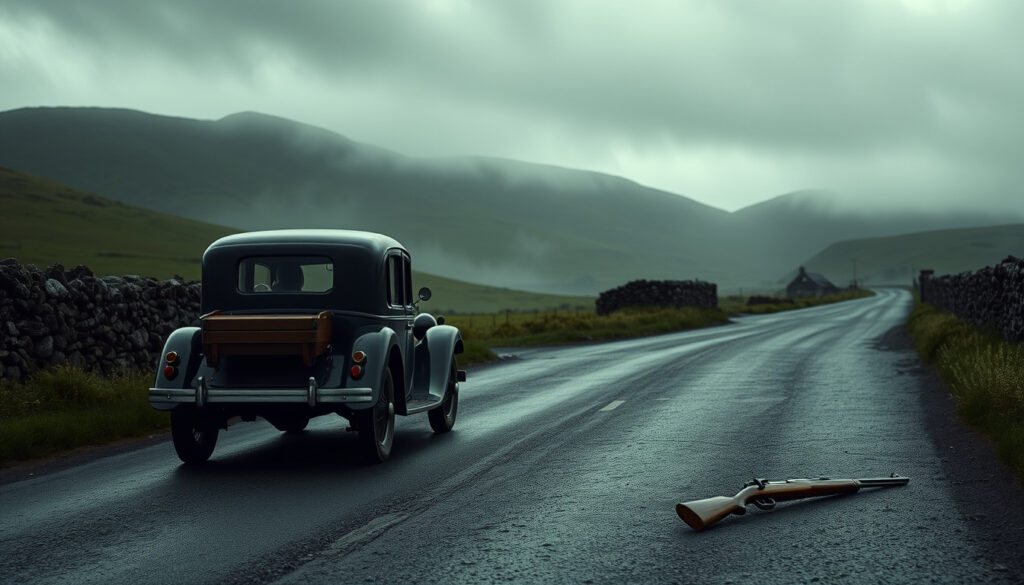
Who Killed Michael Collins? The Assassination of an Irish Revolutionary
The question of who killed Michael Collins has haunted Irish history for over a century. On a dusty road in County Cork, the revolutionary leader who helped forge a nation was gunned down at age 31, leaving an ambush scene where even today the identity of the shooter remains unsettled. This article sifts through the strongest evidence, the persistent gaps, and the legacy of that August afternoon in 1922.
Age at death: 31 ·
Date of death: August 22, 1922 ·
Location: Béal na mBláth, County Cork, Ireland ·
Alleged shooter: Denis “Sonny” O’Neill ·
Role: Irish revolutionary leader and Treaty negotiator ·
Conflict: Irish Civil War
Quick snapshot
- Michael Collins died from a gunshot wound in an ambush at Béal na mBláth on August 22, 1922 (Discover Ireland (tourism authority))
- The ambush was carried out by Anti-Treaty IRA forces (Wikipedia (historical reference))
- Collins was Chairman of the Provisional Government and Commander-in-chief of the National Army at the time of his death (Wikipedia (historical reference)) (Discover Ireland (tourism authority))
- The exact identity of the person who fired the fatal shot (Wikipedia (historical reference)) (Commonwealth Forces (documentary clip))
- Whether Collins was killed by a single marksman or by a volley, and if it was deliberate or accidental (Commonwealth Forces (documentary clip))
- The precise wording of Collins’ last words (Wikipedia (historical reference)) (Commonwealth Forces (documentary clip))
- Just days before his death, Collins had inspected troops in Cork and was returning to Dublin when the ambush was sprung (Wikipedia (historical reference)) (Magill (Irish investigative magazine))
- A report of Collins’ death came about 21 hours after the ambush party was called off (Magill (Irish investigative magazine))
- The Civil War continued until May 1923 with no prosecution for Collins’ killing (Wikipedia (historical reference))
- Denis “Sonny” O’Neill, the alleged shooter, lived in obscurity until his death in the 1950s (Commonwealth Forces (documentary clip))
The table below summarizes key biographical details about Michael Collins.
| Full name | Michael John Collins |
| Born | 16 October 1890, Clonakilty, County Cork, Ireland |
| Died | 22 August 1922 (aged 31), Béal na mBláth, County Cork, Ireland |
| Cause of death | Gunshot wound in ambush |
| Political party | Sinn Féin (1918-1922), Pro-Treaty after 1921 |
| Military service | Irish Volunteers, IRA (commander), National Army (commander-in-chief) |
| Spouse/partner | Kitty Kiernan (fiancée) |
Who Killed Michael Collins?
Of the many unanswered questions around the Béal na mBláth ambush, one name surfaces most often: Denis “Sonny” O’Neill. A former British Army marksman who had fought in World War I, O’Neill was an Anti-Treaty IRA fighter at the time of the ambush. Some accounts claim he boasted later that “I dropped one man” (Commonwealth Forces (documentary clip)). Yet the evidence remains circumstantial. No prosecution was ever brought, and O’Neill died in the 1950s without a formal verdict (Wikipedia (historical reference)).
What happened to the man who shot Michael Collins?
- Denis “Sonny” O’Neill never faced legal consequences for his alleged role (Wikipedia (historical reference))
- He lived quietly in County Cork and died in the 1950s, taking any exact knowledge of what happened to his grave (Commonwealth Forces (documentary clip))
The absence of a prosecution leaves the historical record incomplete. The implication: the shooter’s anonymity allowed the myth to grow, but it also prevented the closure that a trial might have brought.
Was Michael Collins shot in the head?
Eyewitness accounts describe Collins being struck in the head while standing in the open and working the bolt of his rifle (Commonwealth Forces (documentary clip)). He was the only fatality in the ambush, though another member of his party suffered a neck wound. The exact angle of fire remains disputed – some believe a single marksman took the shot, others argue a volley hit him.
Naming O’Neill as the shooter satisfies the desire for a single culprit, but the evidence is too thin for a historian to rest on. The uncertainty itself may tell us more about the fog of the Civil War than any name could.
The implication: the uncertainty surrounding the shooter illustrates the complexities of civil war history.
Why Did Michael Collins Get Assassinated?
The ambush did not happen in a vacuum. Collins had become a prime target for Republicans who saw him as a traitor for accepting the Anglo-Irish Treaty, which created the Irish Free State but left Northern Ireland within the UK and required an oath of allegiance to the Crown (Wikipedia (historical reference)). By August 1922, the Irish Civil War was in its third month, and pro-Treaty leaders were being hunted.
Was Michael Collins in the IRA?
- Collins was a key figure in the Irish Republican Army during the War of Independence (1919-1921), serving as Director of Intelligence (Wikipedia (historical reference))
- After the Treaty split, he led the pro-Treaty National Army against his former comrades (Wikipedia (historical reference))
What was the context of the Irish Civil War?
The conflict pitted those who supported the Treaty against those who rejected it. The ambush at Béal na mBláth was part of a wider campaign by Anti-Treaty forces to eliminate pro-Treaty leaders. Collins’ death hardened the resolve of the pro-Treaty side, and the war continued until May 1923 (Wikipedia (historical reference)).
The assassination was not personal – it was a calculated act of war. The shooter was a soldier in a civil war, and Collins was the highest-profile target on the other side.
The pattern: Collins became a symbol of the Treaty split, and his death hardened the pro-Treaty resolve.
What Were the Last Words of Michael Collins?
Accounts of Collins’ final moments vary, but a recurring version has him saying “Let them have their way” or “Let them see what they have done” (Wikipedia (historical reference)). He reportedly urged his comrades not to blame anyone and to continue the fight against the Anti-Treaty forces. No definitive record exists, and eyewitness recollections differ.
What did Michael Collins say before he died?
- “Let them have their way” is one widely repeated version (Wikipedia (historical reference))
- Another account claims “Let them see what they have done” (Wikipedia (historical reference))
The lack of a reliable transcript leaves room for myth-making. The pattern: when a leader dies dramatically, the last words often become a legend, not a record.
What Happened After Michael Collins Died?
Collins’ death sent shockwaves through Ireland and abroad. The pro-Treaty side used his martyrdom to rally support, and the Civil War dragged on for another nine months. Two prominent figures expressed reactions that have echoed through history: Winston Churchill and Eamon de Valera.
What did Churchill say about Michael Collins?
Winston Churchill, then British Colonial Secretary, paid tribute in the House of Commons, describing Collins as “a significant force” and expressing regret at his loss. Churchill had worked closely with Collins during the Treaty negotiations and admired his abilities.
What did Eamon de Valera say about Michael Collins?
De Valera, the leader of the Anti-Treaty forces, publicly expressed regret over Collins’ death and later called it “a great loss to the nation” (Magill (Irish investigative magazine)). According to the Magill article, de Valera was in the Béal na mBláth area on the day of the ambush and may have known that an ambush was being prepared (Magill (Irish investigative magazine)).
Who was Michael Collins’ wife?
Collins was engaged to Kitty Kiernan, a young woman from Longford. They never married. Collins’ letters to Kiernan reveal a deeply romantic side, and her grief after his death was widely reported.
Did Michael Collins have children?
No. Collins and Kitty Kiernan had no children. His death at 31 ended the family line.
Collins’ personal life was cut short by a bullet that also changed the course of Irish politics. Without an heir, his memory was left to be shaped by history’s many hands.
What this means: Collins’ legacy was shaped by a bullet that also reshaped Irish political memory.
Who Was Michael Collins?
To understand the assassination, you need the man behind the legend. Michael Collins was born in a small farmhouse in Clonakilty, County Cork, and rose to become the most wanted man in the British Empire before pivoting to build a free state.
Where was Michael Collins born?
Collins was born on 16 October 1890 at Woodfield, near Clonakilty, County Cork (Discover Ireland (tourism authority)). He was the youngest of eight children.
Was Michael Collins in the IRA?
- Yes – he was a senior leader in the Irish Republican Army during the War of Independence, masterminding intelligence operations and guerrilla tactics (Wikipedia (historical reference))
- After the Treaty split, he became Commander-in-chief of the pro-Treaty National Army (Wikipedia (historical reference))
Collins’ trajectory from revolutionary to statesman ended abruptly, but his role as both IRA leader and Treaty negotiator remains central to his legacy.
Timeline: Key events before and after the assassination
- 1890 – Michael Collins born in Clonakilty, County Cork. (Discover Ireland (tourism authority))
- 1916 – Participates in the Easter Rising; imprisoned. (Wikipedia (biography))
- 1919-1921 – Director of Intelligence for the IRA during the Irish War of Independence. (Wikipedia (biography))
- December 1921 – Signs the Anglo-Irish Treaty, leading to the Irish Free State. (Wikipedia (biography))
- June 1922 – Outbreak of the Irish Civil War between pro- and anti-Treaty forces. (Wikipedia (biography))
- August 22, 1922 – Collins killed in an ambush at Béal na mBláth. (Discover Ireland (tourism authority))
- May 1923 – Anti-Treaty forces cease fighting; Civil War ends. (Magill (Irish investigative magazine))
- 1930s-1950s – Alleged shooter Denis “Sonny” O’Neill lives in obscurity; dies in the 1950s. (Commonwealth Forces (documentary clip))
This timeline highlights the rapid progression from birth to assassination and the enduring aftermath.
What we know – and what we don’t
Confirmed facts
- Collins died from a gunshot wound during an ambush at Béal na mBláth on August 22, 1922 (Discover Ireland (tourism authority))
- The ambush was carried out by Anti-Treaty IRA forces (Wikipedia (historical reference))
- Collins was a major figure in the Irish revolutionary period and the Treaty negotiations (Wikipedia (historical reference))
- A monument at Béal na mBláth marks the spot where Collins fell (Discover Ireland (tourism authority))
What’s unclear
- The exact identity of the person who fired the fatal shot (Wikipedia (historical reference))
- Whether Collins was killed by a single marksman or by a volley, and whether it was deliberate or accidental (Commonwealth Forces (documentary clip))
- The precise wording of Collins’ last words (Wikipedia (historical reference))
- Whether de Valera directly ordered or knew the specifics of the ambush (Magill (Irish investigative magazine))
The pattern: the confirmed facts provide a foundation, but the uncertainties underscore the historical fog of civil conflict.
Voices from the time
He was a significant force, and his loss is deeply regretted.
– Winston Churchill, British Colonial Secretary, 1922
His death was a great loss to the nation.
– Eamon de Valera, leader of the Anti-Treaty forces, in later memoirs (Magill (Irish investigative magazine))
I dropped one man.
– Alleged boast attributed to Denis “Sonny” O’Neill (Commonwealth Forces (documentary clip))
The question “who killed Michael Collins?” remains unresolved by a jury of historians, but the evidence points clearly to a civil war that turned former comrades into enemies. For Ireland, the consequence of that single bullet was a deeper scar in an already fractured society – one that still shapes the island’s politics a century later. For the people of County Cork, the ambush site stands as a reminder that even a nation’s founder could not escape the logic of fratricide.
Frequently asked questions
Was Michael Collins married?
No, he was engaged to Kitty Kiernan but never married.
How old was Michael Collins when he died?
He was 31 years old.
What was Michael Collins’ role in the IRA?
He served as Director of Intelligence during the War of Independence and later commanded the pro-Treaty National Army (Wikipedia (historical reference)).
Where is Michael Collins buried?
He is buried in Glasnevin Cemetery, Dublin.
What happened to the anti-Treaty forces after Collins’ death?
The Civil War continued until May 1923, when Anti-Treaty forces called a ceasefire (Wikipedia (historical reference)).
Is there a monument at Béal na mBláth?
Yes, a monument erected in 1924 marks the spot where Collins fell (Discover Ireland (tourism authority)).
What was the Treaty of 1921?
The Anglo-Irish Treaty created the Irish Free State, ended the War of Independence, but required an oath of allegiance to the British Crown and allowed Northern Ireland to opt out (Wikipedia (historical reference)).
More related posts
 M&S Womenswear: Buy Online, Over 60s Discount, Latest Trends
 Ginny & Georgia Cast – Full List Across Seasons
 How Deep Is the Mariana Trench? Depth, Facts & Exploration
 Players Championship Prize Money 2026: Payouts & Purse Breakdown
 How to Translate English to Russian: Best Free Tools & Tips
 Dingle v St Finbarrs: Conor Geaney Free Wins Munster Title
 Where to Travel in Summer: Best Destinations for July & August
 Clothing Stores Near Me: Dublin & Killarney Shopping Guide