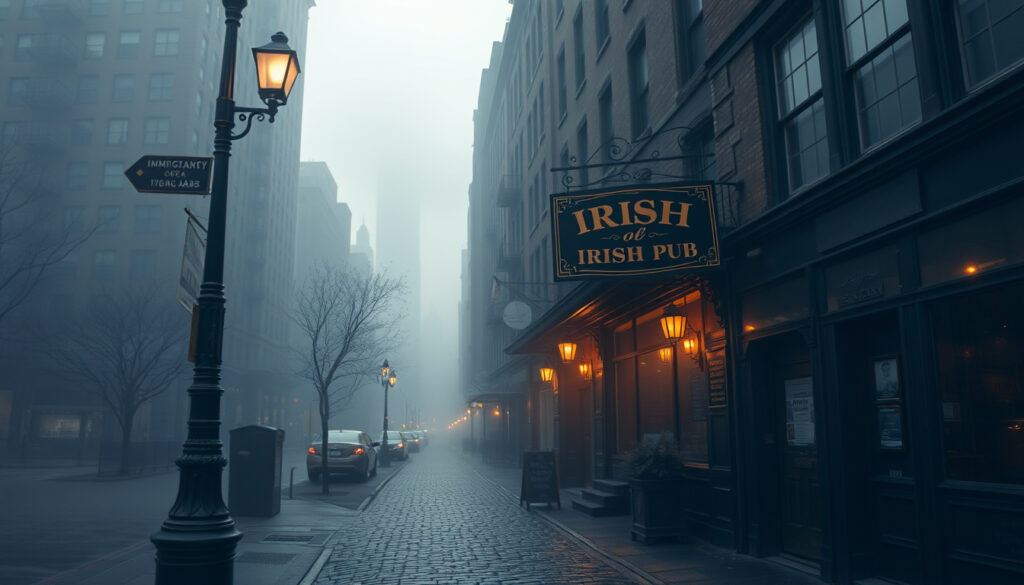
Wolfe Tones ‘The Streets of New York’ Lyrics: Meaning & Writer
Some songs travel better than the people who carry them. “The Streets of New York” has made that crossing for decades — a ballad about an 18-year-old leaving Dublin that The Wolfe Tones rode to No. 1 in Ireland in 1981, according to Irish Number Ones (Irish chart-history site). If you’ve hummed the chorus but never learned who wrote it, what the uncle in Brooklyn has to do with the story, or why it keeps getting mixed up with “New York, New York,” here’s the full route.
Song: The Streets of New York ·
Songwriter: Liam Reilly ·
Original act: Bagatelle ·
Wolfe Tones version: The Wolfe Tones ·
Associated New York song: The Sidewalks of New York (1894) ·
Theme: Irish emigration to New York and Irish-NYPD ties
Quick snapshot
- Liam Reilly wrote the song; Bagatelle is credited as the original performer (Genius lyric entry)
- The Wolfe Tones’ version reached No. 1 in Ireland in 1981 (Irish Number Ones (Irish chart-history site))
- The song’s core themes are emigration and homesickness (LyricsMeanings (song-interpretation archive))
- The exact recording date of the Wolfe Tones version isn’t pinned down in the reviewed sources
- Genius lists the album as “Spirit of the Nation,” but the original Bagatelle release year isn’t documented in the same detail (Genius lyric entry)
- How lyrics shifted between Bagatelle’s original and later performances is unverified
- 1894: “The Sidewalks of New York” was written by Lawlor and Blake
- 1981: The Wolfe Tones’ “The Streets of New York” hit No. 1 in Ireland, with chart history dating the No. 1 period to 25 July (Irish Number Ones (Irish chart-history site))
- Listen to Bagatelle’s original first, then The Wolfe Tones’ 1981 No. 1
- Use the key facts and timeline below to separate “Streets” from “Sidewalks” and “New York, New York”
- Follow the lyric study in the FAQ for the full narrative breakdown
Six facts anchor this song’s record, and one pattern holds across all of them: the credit trail leads to Liam Reilly and Bagatelle, not to the band most listeners hear first.
| Attribute | Detail | Source |
|---|---|---|
| Song title | The Streets of New York | — |
| Wolfe Tones version | The Wolfe Tones | Genius lyric entry |
| Original songwriter | Liam Reilly | Genius lyric entry |
| Original performer | Bagatelle | Genius lyric entry |
| Related song | The Sidewalks of New York (1894) | — |
| Primary theme | Irish emigration to New York and Irish-NYPD ties | LyricsMeanings (song-interpretation archive) |
What songs do the Wolfe Tones sing?
Search for “Wolfe Tones The Streets of New York lyrics” and the text appears fast — the Genius lyric entry and LyricsMeanings (song-interpretation archive) both carry it. Search for who wrote the song and the record gets hazier. The Wolfe Tones have spent decades as one of Ireland’s most durable folk acts, and their catalog leans heavily toward ballads and rebel songs; this ballad was the one that handed the band its 1981 Irish No. 1, a run the chart-history site Irish Number Ones (Irish chart-history site) documents.
The catch: The Wolfe Tones’ best-known New York song wasn’t written by The Wolfe Tones. The words and melody belong to Liam Reilly and Bagatelle; the band’s 1981 recording is the version that made a cover into a classic.
How does ‘The Streets of New York’ fit The Wolfe Tones’ style?
- Much of the band’s catalog is political: rebel songs and historical ballads
- “The Streets of New York” is personal: a first-person emigration story
- Both threads share one root — Irish identity under pressure
The contrast matters. Where a typical rebel song names a battle or a martyr, this one names a family: the narrator, his father, and Benjy, a Brooklyn policeman. The Genius lyric entry tracks the whole route — Dublin, Kennedy Airport, an apartment on East 53rd Street in Brooklyn — before the song’s central shock lands: Benjy has been shot and killed.
Who originally wrote ‘The Streets of New York’?
- Writer: Liam Reilly
- Original act: Bagatelle
- Most heard version: The Wolfe Tones, 1981
Liam Reilly wrote the song, and he was also the lead singer of Bagatelle, the band that first performed it. Irish Number Ones (Irish chart-history site) credits Reilly as Bagatelle’s lead singer, and the Genius lyric entry credits the original version to that group. The Wolfe Tones’ recording, released in 1981 per the same entry, is the interpretation that turned the song into a standard at Irish gatherings.
Which version should listeners start with?
- First listen: The Wolfe Tones’ 1981 No. 1 — the version with the chart pedigree (Irish Number Ones (Irish chart-history site))
- Writer’s intent: Bagatelle’s original — the version Reilly wrote (Genius lyric entry)
- Text study: the full lyric transcript is on the same Genius page
Keep the two versions straight and the listening order sorts itself. Bagatelle gives you the song as Reilly wrote it; The Wolfe Tones give you the song as Ireland heard it in 1981.
What is the most iconic New York song?
Ask most people to name the great New York song and the answer arrives fast: “New York, New York.” Liza Minnelli introduced it in the 1977 film of the same name, and Frank Sinatra’s later recording turned it into a celebratory standard.
Is ‘The Streets of New York’ as well known as ‘New York, New York’?
- “New York, New York”: a show-business anthem, inseparable from Sinatra’s live performances
- “The Streets of New York”: an Irish folk ballad about emigration and loss
- Different functions — one celebrates the city, the other reckons with it
It’s not a love letter to the skyline; it’s a story about what the city does to one immigrant family. The song’s opening carries the narrator out of Dublin with “a fistful of money and a cartload of dreams,” as the lyric summary in the Genius lyric entry puts it — and within a few verses the plan is already broken.
What role did Frank Sinatra play in making ‘New York, New York’ famous?
Why this matters: every search for “The Streets of New York” lyrics that lands on “New York, New York” misses the actual story — a Brooklyn policeman shot before his nephew ever reaches East 53rd Street.
Sinatra didn’t write “New York, New York” and didn’t sing it first. He adopted it, made it his own, and welded it to his image so completely that casual references now credit him with the song — the same misattribution pattern that surrounds The Wolfe Tones and “The Streets of New York.”
What are the most famous Irish-American songs about New York?
- “The Streets of New York” — emigration, family loss, and a Brooklyn policeman
- “The Sidewalks of New York” — an 1894 vaudeville tune with a nostalgic view of the city
The two Irish-flavored New York songs get tangled because their titles rhyme in memory. They were written 87 years apart, by different writers, with different narrators — one a period portrait, the other a first-person immigrant tale.
The pattern: the city gets two kinds of anthems — the ones that celebrate it and the ones that survive it. “The Streets of New York” belongs to the second group, which is why it has lasted among Irish audiences who don’t need a skyline to feel homesick.
The catch: if the title is all a listener has, the three New York songs blur; the credits are what separate them.
Who wrote the song ‘Sidewalks of New York’?
“The Sidewalks of New York” — also known as “East Side, West Side” — was written by Charles B. Lawlor and James W. Blake. The two were songwriters of the vaudeville era, and their tune became a lasting piece of New York popular song.
What is the history of ‘The Sidewalks of New York’?
- Writers: Charles B. Lawlor and James W. Blake
- Alternate title: “East Side, West Side”
- Era: late-19th-century vaudeville
Lawlor and Blake wrote for a city that was growing fast, and their song captured a sentimental view of Manhattan neighborhoods. It became a standard of its era and stayed in the culture long enough that its title still surfaces in searches meant for The Wolfe Tones’ ballad.
How is ‘Sidewalks of New York’ different from ‘The Streets of New York’?
- “Sidewalks”: a nostalgic period portrait, written in 1894
- “Streets”: a first-person story of emigration, written by Liam Reilly
- Shared DNA: New York and Irish associations; no shared lyrics, writer, or melody
The differences are easy to hear once you know them. “The Sidewalks of New York” is a stroll through an old city; “The Streets of New York” is a narrative about an immigrant who loses his uncle, sells the family farm, and stays in America for 22 years — a detail the Genius lyric entry spells out. One is a postcard; the other, a short story in verse.
The catch: title confusion does real damage here. A search for “streets of new york lyrics” keeps pulling up “Sidewalks” and “New York, New York” because the names blur. The credits are the cure: Lawlor and Blake wrote one; Liam Reilly wrote the other.
What year was The Sidewalks of New York written?
1894 — that’s the date song histories give for Lawlor and Blake’s song, which makes it a product of the vaudeville era rather than the Irish-folk revival that produced “The Streets of New York.”
Why was 1894 significant for New York songs?
- Vaudeville was the mass entertainment of the day
- Songwriting was becoming a commercial business
- Immigration was reshaping the city’s neighborhoods
In the 1890s, popular song was finding its first mass market, and New York was the center of it. “The Sidewalks of New York” rode that wave, and its “East Side, West Side” chorus became the kind of tune people hummed without ever checking the composer credits.
Who made ‘The Sidewalks of New York’ popular?
- Vaudeville performers spread it through theaters across the city
- Revivals and recordings kept it familiar for decades
The song’s popularity outlived its writers. It kept appearing in revivals well into the 20th century, which is why it still holds a small corner of the American songbook while “The Streets of New York” speaks to a specifically Irish experience.
What this means: the gap between the two songs is the whole story. “Sidewalks” imagines New York as a spectacle; “Streets” imagines it as a test. Listeners looking for the Irish version don’t need 1894 — they need 1981 and The Wolfe Tones’ chart run.
Who originally sang the song ‘New York’?
The question usually means: who sang “New York, New York” first? That’s Liza Minnelli, in the 1977 film of the same name. The sharper question for this article has a second answer — the original singer of “The Streets of New York” was Bagatelle.
Which singer is associated with the definitive version of ‘New York, New York’?
- First performance: Liza Minnelli, 1977
- Definitive version: Frank Sinatra’s later recording
- Result: Sinatra gets the credit in most casual references
Minnelli introduced the song on screen, but Sinatra made it a standard. That’s why it’s routinely described as Sinatra’s song even though he neither wrote it nor sang it first. The same misattribution pattern surrounds “The Streets of New York” — most listeners assume The Wolfe Tones wrote it because The Wolfe Tones made it famous.
How did The Wolfe Tones version of ‘The Streets of New York’ come to be?
- Liam Reilly wrote the song and first performed it with Bagatelle
- The Wolfe Tones recorded it and released it in 1981
- It reached No. 1 in Ireland, making the cover the better-known version
The Wolfe Tones’ version arrived in 1981, per the Genius lyric entry, and the chart-history site Irish Number Ones (Irish chart-history site) records that it climbed to No. 1. The result is a rare case where the cover outran the original in public memory — but not in the credits.
What to watch: lyric sites give you the words fast, but they rarely tell you that the narrator ends up in New York law enforcement himself, as the song-meaning archive LyricsMeanings (song-interpretation archive) reads it — a detail that turns a homesick ballad into a generational saga about Irish-American police families.
Song file: ‘The Streets of New York’ at a glance
Twelve details, one pattern: a song that behaves like a short story while the world treats it like a folk anthem.
| Attribute | Detail | Source |
|---|---|---|
| Title | The Streets of New York | — |
| Writer | Liam Reilly | Genius lyric entry |
| Original performer | Bagatelle | Genius lyric entry |
| Famous version | The Wolfe Tones, 1981, on the album “Spirit of the Nation” | Genius lyric entry |
| Irish chart peak | No. 1 in Ireland (1981) | Irish Number Ones (Irish chart-history site) |
| Narrator | An 18-year-old leaving Dublin | Genius lyric entry |
| Route | Dublin → Kennedy Airport → Brooklyn | Genius lyric entry |
| Uncle’s address | East 53rd Street, Brooklyn | Genius lyric entry |
| Family twist | Benjy, a Brooklyn policeman, is shot and killed | Genius lyric entry |
| Time elapsed | 22 years from departure to reflection | Genius lyric entry |
| Ending detail | The narrator sells the family farm and carries Irish earth to America | Genius lyric entry |
| Themes | Emigration, homesickness, identity, aspiration vs. reality | LyricsMeanings (song-interpretation archive) |
The pattern: the song’s details are precise — a street number, an airport, an age — and that precision is why it feels less like a chorus and more like testimony.
Timeline: three New York songs, three eras
The quickest way to stop confusing the three songs is to line them up by date.
- — “The Sidewalks of New York” is written by Charles B. Lawlor and James W. Blake.
- — Liza Minnelli introduces “New York, New York” in the film of the same name.
- — The Wolfe Tones’ “The Streets of New York” reaches No. 1 in Ireland; chart history dates the No. 1 period to 25 July (Irish Number Ones (Irish chart-history site)).
- — Rebel Voice publishes a feature on Ryan McMullan’s version of the song and The Wolfe Tones’ original.
What this means: “The Streets of New York” is the newcomer of the three, yet it’s the only one told in first person — and the only one with a family tragedy at its center.
What’s confirmed and what’s not
Every lyric page reviewed agrees on the song’s emotional arc. The hard dates and credits are thinner.
Confirmed facts
- The Wolfe Tones performed and recorded the song (Genius lyric entry)
- Liam Reilly wrote it; Bagatelle performed the original (Genius lyric entry)
- The Wolfe Tones’ version reached No. 1 in Ireland in 1981 (Irish Number Ones (Irish chart-history site))
What’s unclear
- The exact recording date of the Wolfe Tones version isn’t specified in the lyric pages reviewed
- The original Bagatelle release year isn’t documented in the chart history cited above
- How lyric details changed between Bagatelle’s original and later performances is unverified
- The narrator’s own career in New York law enforcement is a reading from LyricsMeanings (song-interpretation archive) rather than a line in every lyric transcript
The implication: treat the credits as solid and the biographical reading as useful but softer. The song says what it says; some interpretations — like the narrator ending up in law enforcement — come from analysis, not from the lyric sheet itself.
The song in its own words
Two voices carry the song’s argument: the narrator’s, and the press coverage that rediscovered it.
I was eighteen years old when I went down to Dublin…
Lyric narrator, opening of “The Streets of New York” (Genius lyric entry)
The song pays homage to the relationship between the Irish and the New York Police Department.
Rebel Voice, 2018 feature on the song
The gap between those two voices is the song’s whole engine: a young man’s plan on one side, a community’s memory on the other.
The takeaway
Read “The Streets of New York” with the credits beside you and it stops being a generic city anthem. It becomes a specific Irish story — an 18-year-old, a Brooklyn uncle named Benjy, a farm sold, a handful of Irish earth carried back across the Atlantic. For Irish-American listeners who grew up hearing The Wolfe Tones’ version at every family gathering, the distinction is worth the effort: start with Liam Reilly’s original for Bagatelle, then let The Wolfe Tones’ 1981 No. 1 set the volume — otherwise the most Irish New York song in the canon keeps getting filed under the wrong city’s anthem.
Related reading
- Joy to the World Lyrics: Original Text, Chords & History
- Irish Immigration Contact Number: Official Contacts & Stamps
The pattern: one link follows the song’s historical route, the other follows the immigrant’s practical one.
irelandmediahub.com, es.wikipedia.org, irish-folk-songs.com, music.apple.com, wolfetonesofficialsite.com
Frequently asked questions
What are the exact lyrics to ‘The Streets of New York’ by The Wolfe Tones?
The full text is on the Genius lyric entry linked in the snapshot above. In short, the song follows an 18-year-old who leaves Dublin for New York, carries a note to his uncle Benjy — a Brooklyn policeman — and arrives to learn Benjy has been shot. He stays in America, returns to Ireland only after his father’s death, sells the family farm, and carries a handful of Irish earth back with him.
Is ‘The Streets of New York’ by The Wolfe Tones the same as ‘New York, New York’?
No. “New York, New York” was introduced by Liza Minnelli in the 1977 film and made famous by Frank Sinatra. “The Streets of New York” is a separate song written by Liam Reilly and first performed by Bagatelle; The Wolfe Tones took it to No. 1 in Ireland in 1981.
Who originally performed ‘The Streets of New York’?
Bagatelle performed the original version, per the Genius lyric entry. Liam Reilly, the band’s lead singer, wrote the song.
What is ‘The Streets of New York’ about?
It’s a first-person story about Irish emigration: leaving Dublin, arriving at Kennedy Airport, losing an uncle who was a Brooklyn policeman, and building a life in America while never quite leaving Ireland behind. The central themes are homesickness, family sacrifice, and the gap between aspiration and reality, as LyricsMeanings (song-interpretation archive) summarizes.
Why is ‘The Streets of New York’ associated with the Irish and the NYPD?
The song’s uncle figure, Benjy, is a Brooklyn policeman, and the narrator’s own later career in New York law enforcement is noted in one common reading of the lyrics. Rebel Voice’s 2018 feature described the song as paying homage to the Irish-NYPD relationship.
Where can I find ‘The Streets of New York’ lyrics online?
The Genius entry for The Wolfe Tones’ version — linked in the snapshot above — carries the full lyric text for the version that hit No. 1 in Ireland.
More related posts
 All-Ireland Hurling Winners: Full Roll of Honour
 Who Called Me Ireland – Free Reverse Lookup Guide
 Ireland World Cup Qualifying Group: Standings, Schedule & Chances
 Ipswich Town vs Arsenal Timeline: All Matches Since 2000
 Car Rental Malaga Airport: Compare No Deposit & Insurance Options
 How Long Until Tomorrow? Live Countdown & Time Math
 Nerja Weather Forecast 21 Days: Monthly Averages & Travel Tips
 An Post Tracking Contact Number: Phone, WhatsApp Guide