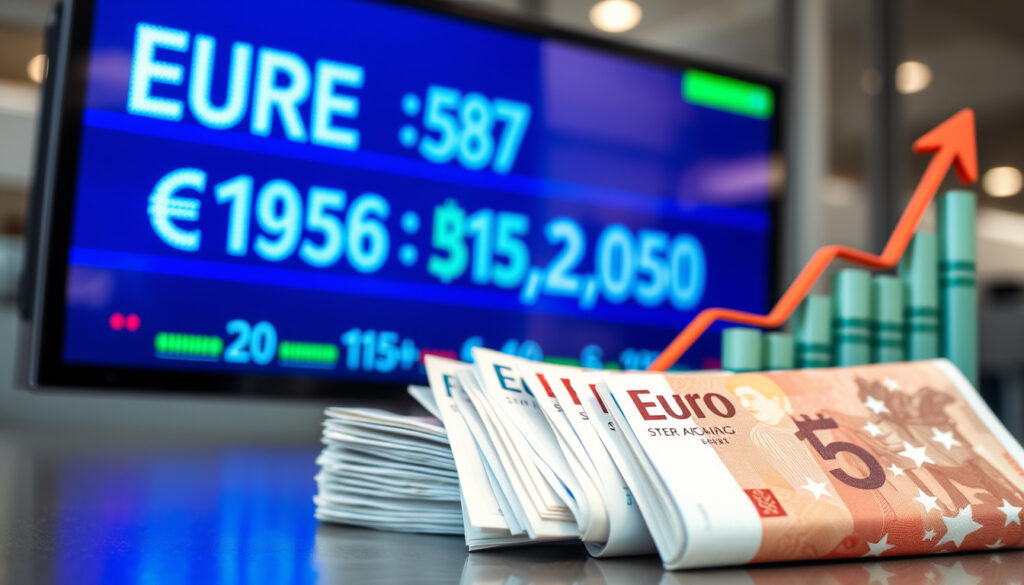
Convert Euro to Sterling – Live Rates and Savings Guide
For anyone travelling between the eurozone and the United Kingdom, or managing payments across borders, understanding the current euro to sterling exchange rate is essential. The EUR/GBP pair remains one of the most actively traded currency combinations in Europe, and even small fluctuations can significantly impact the real value of transfers, purchases, or holiday budgets.
As of early April 2026, the exchange rate hovers around 0.871 pounds per euro, reflecting a period of relative stability following years of post-Brexit adjustment. Whether you are converting a few hundred euros for a weekend trip or moving larger sums for business purposes, knowing where to find reliable rates—and understanding why they differ between providers—can save both time and money.
This guide brings together current data from multiple authoritative sources, including the European Central Bank, Revolut, Wise, and Investing.com, to give readers a clear, fact-based picture of the euro to sterling landscape. Below you will find live rate information, practical conversion tools, historical context, and guidance on minimising fees when exchanging currencies.
What is the current euro to sterling exchange rate?
The euro to sterling rate stands at approximately 0.871 GBP per EUR as of mid-April 2026, according to the European Central Bank’s official reference rate. Multiple platforms, including Wise and Revolut, report figures within a narrow range of 0.869 to 0.881, with minor variations reflecting different fee structures and data update frequencies.
1 EUR = 0.871 GBP
0.8746 GBP
0.8637 GBP
+0.10%
Key insights on the EUR to GBP rate
- The mid-market rate—often called the “real” or interbank rate—sits at approximately 0.871 as of April 10, 2026, according to the European Central Bank.
- Recent daily volatility ranges from -0.58% to +0.32%, indicating generally low short-term movement outside major economic announcements.
- The pair has traded between 0.8624 and 0.8746 over the past month, with monthly averages clustering around 0.867–0.872.
- Converting 100 euros yields roughly 87 pounds, while 1,000 euros converts to approximately 878–881 pounds depending on the provider used.
- The inverse rate—1 GBP to EUR—stands at approximately 1.13–1.15 euros, though this also varies slightly by platform.
- Banks typically add 3–5% markups over the mid-market rate, while fintech services such as Wise or Revolut charge only 0.1–0.5%.
- The ECB reports a year-on-year change of +0.1% for the rate as of early April 2026.
For quick reference: 1 euro equals roughly 0.87 pounds; 50 euros converts to approximately 43.5 pounds; 200 euros to around 174 pounds; and 500 euros to about 435.5 pounds. These are mid-market estimates and do not include provider fees.
Rate snapshot table
| Metric | Value |
|---|---|
| Current ECB Reference Rate | 0.87105 GBP per EUR |
| Wise Mid-Market Rate | 0.8691–0.87105 GBP |
| Revolut Rate | 0.88090 GBP |
| TradingView Spot | 0.87114 GBP |
| Past Week High | 0.8746 GBP |
| Past Week Low | 0.8637 GBP |
| Last ECB Update | April 10, 2026 |
How do I convert euros to sterling?
Converting euros to sterling is straightforward with the right tools, but the method you choose can significantly affect the final amount received. Online currency converters, mobile banking apps, and dedicated fintech platforms all offer ways to exchange currency, each with distinct advantages in terms of speed, cost, and convenience.
Using online currency converters
Online converters aggregate rates from multiple sources and display the current mid-market value. Leading tools include Xe, which offers a 10-year historical chart, and the ECB’s official database, which publishes daily reference rates. Wise provides a straightforward converter showing the mid-market rate alongside any applicable transfer fees.
For those who prefer real-time tracking via mobile, Revolut allows users to monitor rate changes throughout the day, set alerts for specific thresholds, and execute conversions within the app. These tools update continuously, meaning the displayed rate at the moment of conversion is what you receive.
Minimising conversion fees
The difference between providers can be substantial. Banks frequently apply markups of 3–5% above the mid-market rate, which means converting 1,000 euros could cost an extra £30–50 compared to using a specialist service. Fintech platforms like Wise and Revolut typically operate much closer to the interbank rate, with transparent fees ranging from 0.1% to 0.5%.
For larger transfers, services such as OFX offer dedicated accounts with historical rate analysis and dedicated support, making them suitable for businesses or individuals making regular, substantial conversions. Comparing the effective rate—including all fees—rather than simply the advertised rate, is the most reliable way to identify the best option.
Small, urgent transfers suit mobile apps with instant execution. Large or infrequent transfers benefit from forward contracts or dedicated transfer services that lock in a rate. Always verify the final amount before confirming, as advertised rates sometimes exclude transfer fees.
Currency conversion for travellers
Travellers crossing between eurozone countries and the United Kingdom should consider whether to exchange cash in advance or use card payments abroad. Many credit and debit cards offer competitive exchange rates, though some impose foreign transaction fees of 1–3%. Prepaid travel cards loaded with euros and set to auto-convert at favourable rates can also reduce costs. Those seeking additional financial tools and utilities may find relevant resources in our guide to translation and audio tools.
What affects the euro to sterling exchange rate?
Exchange rates between major currencies fluctuate in response to a wide range of economic, political, and market factors. Understanding these drivers helps explain why the EUR/GBP rate changes over time and what to watch for when monitoring the market.
Central bank monetary policy
The European Central Bank and the Bank of England set benchmark interest rates that directly influence currency strength. As of early 2026, the ECB rate stands at 4.25%, while the Bank of England rate is at 3.75%. This differential affects capital flows: higher rates in the eurozone tend to support the euro against sterling, while closer alignment reduces directional pressure.
Rate decisions, inflation data, and forward guidance from both central banks can trigger sharp, short-term movements. Sessions following major policy announcements have shown daily swings of up to 0.58%, well above the typical range of 0.05–0.3%.
Brexit and trade relationships
The United Kingdom’s exit from the European Union continues to shape the euro-sterling relationship. Sterling peaked near 0.90 against the euro before the 2016 referendum and has since stabilised at lower levels. Ongoing trade friction, regulatory divergence, and adjustments to supply chains continue to introduce volatility into the pair.
Post-Brexit inflation differentials between the UK and EU have also widened at times, contributing to asymmetric monetary policy responses and additional exchange rate pressure.
Inflation and macroeconomic conditions
Divergent inflation trajectories affect purchasing power parity and influence central bank policy expectations. When UK inflation exceeds EU levels, sterling may weaken as real returns diminish. Conversely, tighter UK monetary conditions relative to the eurozone can support the pound.
Economic data releases—including GDP growth figures, employment reports, and manufacturing indices—can all move markets. Investors tracking EUR/GBP should monitor announcements from both the Office for National Statistics and Eurostat.
Daily volatility typically ranges between 0.05% and 0.3%, but policy announcements, election results, or unexpected economic data can produce much larger swings. Relying on a single snapshot rate for large transactions carries risk; monitoring trends over several hours or days is advisable.
EUR to GBP rate timeline
Tracking how the euro to sterling rate has evolved provides useful context for setting expectations. The following table summarises key periods over the past year, based on data from OFX, Investing.com, and the European Central Bank.
| Period | Low | High | Average / Close |
|---|---|---|---|
| Past week | 0.8637 | 0.8746 | ~0.869 |
| March–April 2026 | 0.8624 | 0.8726 | 0.867–0.872 |
| February 2026 | — | — | 0.8709 |
| January 2026 | — | — | 0.8681 |
| December 2025 | — | — | 0.8751 |
| November 2025 | — | — | 0.8797 |
| 2025 average | — | — | 0.872 |
| 2022 peak reference | — | ~0.90 | — |
The pair has generally trended downward from post-2022 highs near 0.90, settling into a 0.86–0.88 range over the past twelve months. Detailed daily and monthly data spanning two decades is available through platforms such as OFX and Xe for those seeking deeper historical analysis. Those interested in network performance metrics may also find our internet speed testing guide useful for ensuring reliable connectivity during online transactions.
Live rates: What to know before converting
When converting euros to sterling, it is important to recognise that exchange rates are not static. They fluctuate continuously throughout trading sessions, and the rate you see when you initiate a conversion may differ slightly from the rate shown moments earlier or later.
Established information
- Current mid-market rate is approximately 0.871 GBP per EUR.
- Rates fluctuate continuously during market hours.
- ECB publishes a daily official reference rate.
- Fintech providers consistently offer rates closer to mid-market than traditional banks.
- Bank markups typically range from 3% to 5% above mid-market.
Information that varies
- Exact rate at the moment of your transaction.
- Specific fees charged by individual providers.
- Availability of forward contracts or rate locks.
- Processing time for bank transfers versus fintech platforms.
- Exchange rate offered at physical currency exchange kiosks.
Using a live conversion tool at the time of the transaction is the most reliable way to obtain an accurate figure. Tools such as those provided by Xe and the ECB offer real-time or near-real-time data suitable for planning purposes.
Factors influencing euro to sterling in context
Beyond central bank policy and Brexit, several structural and cyclical factors shape the long-term trajectory of the euro-sterling pair. These include differences in economic growth rates, fiscal policy decisions, energy price fluctuations, and political developments on both sides of the Channel.
Energy costs have a particularly strong influence, given that the UK is a net energy importer while the eurozone includes major producers. Shifts in energy prices affect inflation, trade balances, and ultimately currency valuations. Political uncertainty—whether general elections, referendums, or diplomatic tensions—can also introduce premium or discount pricing into the exchange rate.
For most practical purposes, the short-term drivers matter most: monitoring daily rate movements, understanding fee structures, and choosing reputable providers with transparent pricing are the steps that deliver the most tangible savings.
Sources and data used in this guide
This article draws on data from the following authoritative sources, updated as of April 2026:
- European Central Bank official reference exchange rates
- Revolut live currency converter and historical data
- Wise mid-market rate and fee comparison tools
- Investing.com historical EUR/GBP price data
- TradingView real-time spot rate information
- OFX monthly and annual average exchange rate summaries
- Xe currency charts covering ten years of EUR/GBP history
These platforms represent a mix of official reference sources, fintech services, and financial data aggregators, providing a balanced view across different methodologies and update frequencies.
Next steps for converting euros to sterling
For those ready to convert, the process can be completed in minutes using a reputable online service. Begin by comparing the effective rate—including all fees—from at least two or three providers before committing to a transaction.
If you are making a large transfer, consider setting up a rate alert to notify you when the EUR/GBP pair reaches a target level. Some services also offer forward contracts, allowing you to lock in a favourable rate for a future date, which can be valuable if you need to budget with certainty.
For travellers, loading a prepaid currency card with euros before departing can help avoid poor rates at airport kiosks. Many apps also offer the option to track rates and convert at a moment of your choosing, giving greater control over the timing of the transaction.
Staying informed about broader economic developments—including central bank decisions, inflation releases, and trade data—helps contextualise rate movements and supports smarter, more confident decisions when converting currency.
Frequently asked questions
What is the best place to exchange euros for pounds?
Fintech platforms such as Wise and Revolut generally offer the most competitive rates with transparent fees. Banks tend to add significant markups. For large transfers, dedicated services like OFX may offer additional features such as rate locks and dedicated support.
How much is 1 euro in sterling pounds?
As of early April 2026, 1 euro is worth approximately 0.871 pounds according to the ECB reference rate. Providers may offer slightly different rates after fees are applied.
Do exchange rates change on weekends?
The forex market operates 24 hours a day, five days a week. Rates continue to fluctuate during weekend trading, though the volume of transactions is lower. Some providers update their rates less frequently on Saturdays and Sundays.
How can I get the best euro to sterling rate?
Compare mid-market rates from multiple providers, check for transparent fee structures, and consider timing your conversion when rates are favourable. Using a rate alert tool can help you act when the rate reaches a target level.
Are bank exchange rates worse than online services?
Yes, in most cases. Banks commonly apply markups of 3–5% above the mid-market rate, while fintech services typically charge 0.1–0.5%. The difference is especially noticeable on larger amounts.
Can I lock in an exchange rate for a future date?
Some currency transfer services and banks offer forward contracts, allowing you to fix a rate for a transaction occurring days or weeks in the future. This is useful for budgeting or managing currency risk on known future payments.
What affects the euro to sterling rate on a given day?
Central bank announcements, inflation data, GDP reports, employment figures, and political events in the UK and EU can all cause short-term rate movements. Daily volatility typically ranges from 0.05% to 0.3% but can spike higher during major announcements.
Is the EUR/GBP rate expected to rise or fall?
Currency forecasts are inherently uncertain. The rate has stabilised within a 0.86–0.88 range over the past year, but future movements will depend on developments in monetary policy, trade relationships, and broader macroeconomic conditions in both regions.
For related reading on currency tools and online utilities, see the guide to Translate Spanish to English Audio – Best Free Tools 2025 and the Test Internet Speed – Accurate Guide for 2025 for additional resources.
More related posts
 How to Post on Instagram from Desktop: Complete Guide
 Lidl Leaflet This Week – Offers, Staff Pay & Digital Access
 BBC Weather Northern Ireland: 7-Day Forecast & Comparison with Met Office
 What Are the Northern Lights? Causes, Viewing & Myths
 PUMA King Football Boots: 2025 Review, Pros & Who Wears Them
 What Age is Michael Murphy? Gaelic Footballer & Journalist
 Irish Horses Running Abroad: Today’s Runners, Results & Tips
 Camper for Sale Ireland: Prices, Dealers & Buying Guide