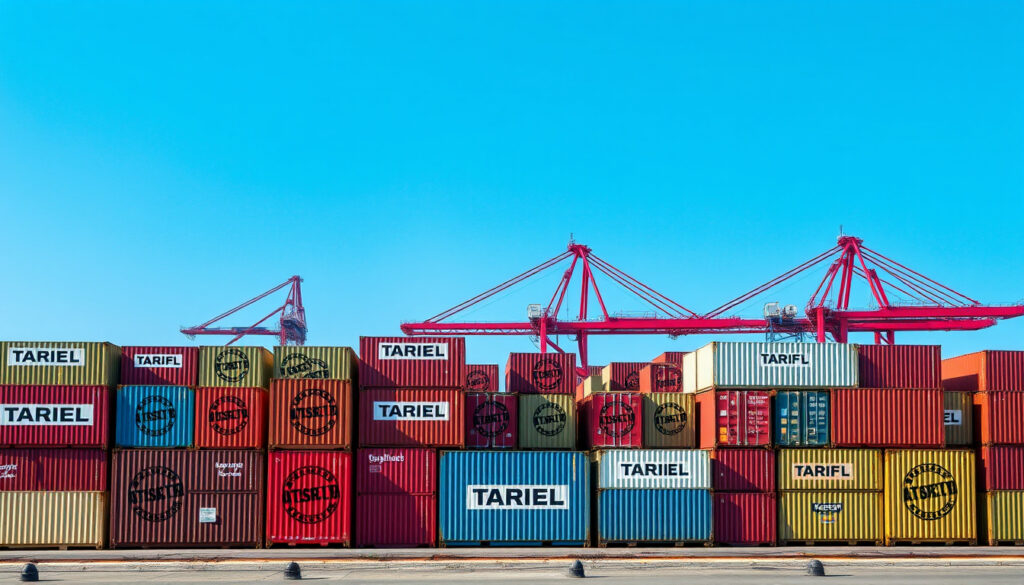
What Is a Tariff? Simple Definition, How It Works & Trump Plans
If you’ve bought anything made overseas recently—a phone, an appliance, a car part—you’ve probably heard the word “tariff” thrown around in the news. It shows up in trade debates, campaign speeches, and now your grocery receipt. But here’s the thing most people don’t realize: a tariff is simply a tax, and the person who walks out of the store holding the bag often ends up paying it—even though the government collects it at the border.
Definition: Tax on imported goods · Primary Purpose: Protect domestic industries · Who Pays: Importers, passed to consumers · Top User: US under Trump proposals · Highest Tariff Country: Bahamas
Quick snapshot
- Tariffs are taxes on imports (Harvard Kennedy School)
- Importers pay at the border, then pass costs to buyers (Institute for Government)
- Most affected sectors: metals, electrical equipment, vehicles, computers (Wikipedia)
- Exact consumer cost pass-through varies by product category
- Net long-term economic impact remains contested
- Tariff policy has escalated sharply since early 2025 (Wikipedia)
- US average effective rate hit 27% in April 2025 (Wikipedia)
- Supreme Court invalidated IEEPA tariffs on February 20, 2026 (Atlantic Council Geoeconomics Center)
- Section 122 universal 10% tariff expires July 24, 2026 (Atlantic Council Geoeconomics Center)
- Ongoing court challenges may reshape tariff authority (Atlantic Council Geoeconomics Center)
Key tariff figures show how US trade policy shifted dramatically between 2025 and 2026.
| Label | Value |
|---|---|
| Legal Basis | WTO rules allow |
| US Average (pre-2025) | 2.5% on dutiable imports |
| US Average (April 2025 peak) | 27% — highest in over a century |
| US Average (February 2026) | 13.7% after court rulings |
| Trump Proposal | 10–60% on various goods |
| China Fentanyl Tariff (initial) | 10% from February 1, 2025 |
| China Fentanyl Tariff (increased) | 20% from March 4, 2025 |
| Steel Tariff (first term) | 25% from March 2018 |
| Steel Tariff (second term) | 50% from June 4, 2025 |
| Universal Tariff (Section 122) | 10%, expires July 24, 2026 |
What is a tariff in simple terms?
A tariff is a tax that a government imposes on goods coming into the country from abroad. Think of it as a toll booth at the border: when a foreign-made product crosses into the United States, the importer pays a fee to US Customs before it can continue on its way to stores and homes.
Tariffs are taxes on imported goods, paid by the importer to the customs authority of the importing country (Harvard Kennedy School). They’re built into the cost of doing business internationally, and they serve multiple purposes at once. Governments use them to raise revenue, to protect domestic industries from cheaper foreign competition, and sometimes as leverage in negotiations with other countries over issues like drug trafficking or immigration.
Tariff definition
At its most basic, a tariff adds money to the price of anything imported from outside the US. The rate is usually expressed as a percentage of the product’s declared value, though some tariffs are set as fixed dollar amounts per unit. A 25% tariff on steel means every ton of foreign steel that enters the US costs 25% more before it reaches American manufacturers.
Types of tariffs
Tariffs come in two main forms. Specific tariffs are set dollar amounts per unit—a fixed fee per barrel of oil, per ton of soybeans, or per automobile. Ad valorem tariffs are percentage-based, calculated on the customs-assigned value of the goods. The US uses a mix of both, depending on the product and the trade relationship involved.
How do tariffs work?
The mechanics are straightforward. An American company wants to import electronics from China. When the shipment arrives at a US port, Customs and Border Protection assesses the cargo, applies the applicable tariff rate, and collects the duty before releasing the goods. The importer—this could be the electronics company itself or a middleman like Walmart—covers that cost first.
Evidence shows tariffs are largely passed through to consumers via higher prices rather than absorbed by foreign exporters (Harvard Kennedy School). Exporters may try to lower their own prices to stay competitive despite the tariff, but studies from 2018–2019 found complete pass-through to US retailers and consumers (Brookings Institution via YouTube). That means the price tag in the store reflects the tariff, not just the manufacturer’s original cost.
Process of imposition
Tariffs typically begin with a presidential proclamation or executive order citing legal authority. The administration identifies the products, countries, and rates, then Customs implements enforcement at ports of entry. On February 1, 2025, Trump declared national emergencies and imposed 25% tariffs on Mexico and Canada goods, with 10% on China via the International Emergency Economic Powers Act (Wikipedia). The administration later raised China’s fentanyl tariff to 20% on March 4, 2025 (Wikipedia).
Impact on prices
The price chain moves fast. When a tariff kicks in, importers face higher costs immediately. They typically raise their own prices to retailers within weeks, and retailers pass those increases along to shoppers within months. Harvard researchers estimate that typical US households could face $2,000 to $4,000 in additional annual costs from proposed tariffs (Harvard Kennedy School). That’s the mechanism at work—importers like Walmart pay the tariff at the border, then pass costs to consumers within 6–8 months (University of Colorado Boulder).
Foreign countries do not foot the bill—the burden falls largely on US importers and consumers. “It’s simply false to believe or argue that exporters will pay the cost of these tariffs. Domestic consumers and businesses pay them,” according to economists at the University of Colorado (University of Colorado Boulder).
Who pays for tariffs?
Here’s the core confusion. Legally, the importer pays the tariff. Practically, the shopper pays it. This gap between legal incidence and economic incidence is where most of the misunderstanding happens.
The importer legally pays the tariff at the border, then typically passes it to consumers or businesses (Institute for Government). When Walmart stocks its shelves with tariffed goods, Walmart paid the duty upfront—but Walmart recovers that money by charging higher prices to the people buying those goods. The foreign manufacturer isn’t writing a check to the US government; the American consumer is.
Importer responsibility
Importers are the ones on the hook legally. They must file entry documentation with US Customs, pay the assessed duties, and absorb any delays or disputes. Large retailers with sophisticated supply chains often have more flexibility to source alternatives, but smaller businesses importing specific components have fewer options and feel the pinch harder.
Consumer pass-through
Tariffs have regressive incidence, disproportionately affecting lower-income households who spend more of their income on goods (Harvard Kennedy School). Low-income households bear higher tariff burden as a share of consumption (University of Colorado Boulder). A family buying budget-friendly imported products every week sees a larger percentage of its income redirected to higher prices than a wealthy household that spends proportionally less on goods.
The people least able to absorb higher prices bear the biggest share of the tariff burden. That’s not a side effect—it’s baked into how regressive import taxes work.
The implication for policymakers is that tariff increases function as regressive taxes on American consumers, with the heaviest burden falling on households least able to afford higher prices.
Are tariffs good or bad for the economy?
The honest answer is: it depends on what you’re trying to achieve, who you ask, and how you measure success. There’s a real tension between the goals tariff supporters cite and the evidence on the ground.
Tariffs can protect domestic industries from foreign competition, potentially saving jobs in sectors like steel and manufacturing. But they also raise costs for businesses that rely on imported parts, and they translate into higher prices for everyday shoppers. Trump’s first-term tariffs led to a trade war with China via escalating measures (Wikipedia), showing that retaliatory tariffs can hit American exporters too.
Upsides
- Shield domestic industries from foreign competitors with lower labor costs
- Generate government revenue from international trade
- Provide negotiating leverage on issues like drug trafficking or unfair trade practices
- Encourage domestic production and reshoring of manufacturing jobs
Downsides
- Increase consumer prices across affected product categories
- Hit lower-income households hardest as a share of spending
- Risk retaliatory tariffs that damage US exporters
- Create uncertainty that discourages long-term business investment
- Tariffs conflict as revenue tools if they successfully reduce imports via substitution (Institute for Government)
The tariff revenue used to potentially cut other taxes comes with a catch: the overall system remains regressive. Harvard Kennedy School researchers note that while tariff revenue could fund tax cuts, the distributional impact of that trade-off still disadvantages lower-income households.
Why does Trump want tariffs?
Trump has framed tariffs as a versatile tool—revenue former, leverage giver, job creator—all rolled into one. Looking at both his terms, the pattern shows a consistent preference for using import taxes to achieve goals that more conventional trade tools typically address.
Tariffs serve multiple purposes under Trump: revenue raising, leverage on foreign governments around issues like fentanyl and immigration, and leveling the playing field for American workers (Harvard Kennedy School). The administration has explicitly tied tariffs to reducing trade deficits and reviving manufacturing in swing states.
Political goals
Trump has called tariffs “the greatest thing ever” and suggested they’ll make America wealthy. The political appeal is straightforward: tariffs sound like a way to make foreign countries pay, which resonates with voters who see globalized trade as rigged against American workers. The administration has used the threat of escalating tariffs to extract concessions, though outcomes have varied.
Trade imbalance fixes
The stated goal is reducing the US trade deficit by making imports more expensive relative to domestically produced goods. By April 5, 2025, a 10% baseline tariff on most countries went into effect (C.H. Robinson). The de minimis exemption for China low-value shipments ended on May 2, 2025 (C.H. Robinson), closing a loophole that had allowed cheap shipments to bypass duties.
The evidence suggests that, by and large, tariffs are likely to be passed through to American consumers.
— Harvard Kennedy School economist
In most cases, the tariff is paid by the importer and then passed through to the consumer.
— Joshua P. Meltzer, Brookings Institution expert (Brookings Institution via YouTube)
The tariff landscape shifted dramatically with the Supreme Court ruling on February 20, 2026, that IEEPA does not authorize presidential tariffs (Atlantic Council Geoeconomics Center). That decision invalidated many of the highest-profile tariffs of the second term. The administration responded with a 10% universal tariff under Section 122 of the Trade Act of 1974, which carries a hard expiration date of July 24, 2026 (Atlantic Council Geoeconomics Center).
Confirmed
- Tariffs are taxes on imports
- Importers pay directly to US Customs
- Costs get passed to consumers via higher prices
- Lower-income households face disproportionate burden
- US average effective tariff rate spiked to 27% in April 2025
- Supreme Court struck down IEEPA tariffs in February 2026
Unclear
- Exact consumer cost pass-through rates by product category
- Net long-term employment impacts from recent tariffs
- Final outcomes of state lawsuits against Section 122 tariffs
- Precise revenue figures generated by 2025–2026 tariff implementations
Tariffs can shield specific industries while enriching the Treasury—but that shield comes with a price tag attached to every consumer purchase. The question isn’t whether tariffs work; it’s who ends up holding the receipt.
The universal 10% tariff under Section 122 exposes a fundamental contradiction. On one side, the administration calls it a negotiating tool. On the other, it applies to nearly every country, which means American shoppers are absorbing the cost across the board while the diplomatic leverage remains theoretical. States led by New York sued to block these tariffs, with oral arguments heard April 10, 2026, suggesting the legal battle is far from over.
Related reading: Non-Contributory Pension Means Test · Convert Euro to Sterling
Trump’s tariff strategies rest on core concepts like the definition types economic impacts of these import taxes, which influence global trade dynamics and domestic markets alike.
Frequently asked questions
What country has the highest tariffs?
According to World Population Review data cited in the stats plan, the Bahamas holds the distinction of the highest tariffing country. Most developed economies maintain relatively low average rates under international trade agreements, while smaller or more protected economies often impose higher barriers to shield domestic industries.
What is a tariff in history?
Tariffs have existed for centuries as a primary source of government revenue. The US relied on tariffs for most of its first century of existence, funding the federal government before the income tax was introduced in 1913. The Smoot-Hawley Tariff Act of 1930 raised US rates dramatically and is widely blamed for worsening the Great Depression through retaliatory trade actions.
What is a tariff example?
In the first Trump term, a 25% tariff on steel imports raised the cost of American steel by a quarter for every foreign supplier. Automakers using imported steel faced higher production costs, and those increases eventually showed up in vehicle prices. A washing machine tariff of 30–50% starting in January 2018 similarly raised costs before household appliances reached store shelves.
Who benefits from a tariff?
Domestic producers in tariffed industries benefit directly—they face less foreign competition at lower prices. American steelworkers, for instance, theoretically gain from reduced competition. The government also benefits from increased revenue. However, downstream businesses using those inputs face higher costs, and consumers pay more for finished goods.
What is a tariff in electricity?
In energy markets, “tariff” can refer to regulated electricity rates set by utilities or regulatory commissions. These are pricing structures for power delivery, distinct from trade tariffs, though both involve regulated fees. Context determines whether the term refers to import taxes or energy pricing.
What does Donald Trump mean by tariffs?
Trump has described tariffs as a tool to correct trade imbalances, generate revenue, and pressure foreign governments. He’s proposed a range of rates from 10% baseline tariffs to targeted rates exceeding 100% on specific countries. The approach in his second term has been notably broader than his first, with rates hitting levels not seen in over a century before court rulings adjusted the landscape.
Are tariffs good or bad for the economy?
The answer depends on perspective and time frame. Short-term, tariffs can protect jobs in specific industries and generate revenue. Long-term, they typically raise consumer prices, risk retaliatory measures against US exporters, and reduce overall economic efficiency by diverting resources from comparative advantage. Most mainstream economists view broad tariffs as a net negative for economic growth.
For American shoppers, the tariff story has a clear and uncomfortable ending: the person who walks out of the store carrying imported goods pays the tax, even though the government collected it from the importer at the border. The universal 10% tariff won’t last forever—its expiration date is July 24, 2026—but the legal and political battles over tariff authority may reshape trade policy for years. Americans face an immediate choice: absorb higher prices now, or push back through the courts and the ballot box.
More related posts
 Houses for Sale in Ballinteer: 2024 Market Guide
 Compare Car Insurance Ireland: 2024 Guide to Cheapest Quotes & Providers
 AA Insurance Phone Number – Official NZ Contacts and Hours
 How to Watch The Lord of the Rings in Order
 M&S Womenswear: Buy Online, Over 60s Discount, Latest Trends
 Tea vs Coffee Benefits: Which Brew Is Better for You?
 Value My Car Ireland Free: Best Websites & Scrap Value
 Laser Hair Removal Cork: Costs, Clinics, and Expert Guide