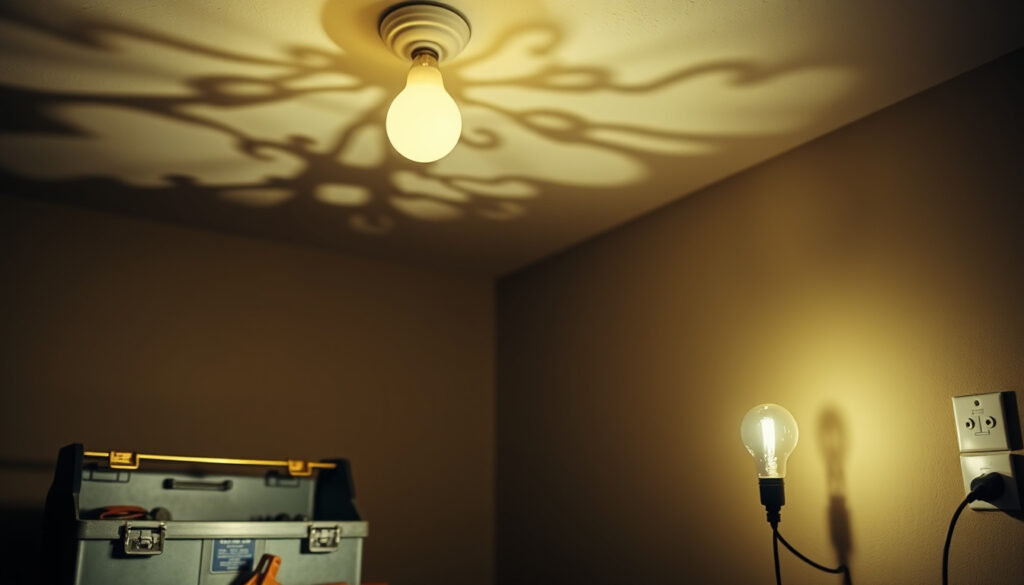
How to Fix Flickering Lights: Common Causes and Easy Fixes
Anyone who has settled into a quiet evening only to spot a light flickering overhead knows the uneasy feeling. Is it just a loose bulb or a sign of something deeper? This guide walks through the most common causes, the quickest fixes, and the clear cutoff when it’s time to call a licensed electrician—so you can stop the flicker safely and confidently.
Most common cause of flickering lights: Loose bulb or connection (Bob Vila (home improvement expert)) ·
Easiest DIY fix: Tighten the bulb snugly (CNET (tech and home editorial)) ·
When to call an electrician: Multiple lights flickering or burning smell (The Light Superstore (lighting retailer)) ·
Fire risk of flickering LED lights: Flickering alone is rarely a fire hazard, but loose wiring can be (e-conolight (LED lighting manufacturer))
Quick snapshot
- A single flickering light most often points to a loose bulb or fixture connection (Learn Metering (electrical education)).
- Tightening the bulb resolves the majority of flickering cases (Martins Electrical (licensed electrician guide)).
- Incompatible dimmer switches are the top cause of LED-specific flicker (Mirsky Electric (residential electrician)).
- Exact health effects of flickering light on vertigo are not well documented.
- Spiritual meanings of flickering lights are subjective and not scientifically validated.
- The precise percentage of flickering issues caused by each factor is unknown.
- If flickering persists after five minutes of basic DIY checks, wiring may be the culprit – call a licensed electrician promptly (Martins Electrical (electrician safety guide)).
- Try DIY fixes: tighten the bulb, check dimmer compatibility, replace with a quality LED. If that fails, call a professional.
Four key facts, one pattern: most flickering problems are simple loose connections, but the severity escalates quickly when multiple lights or warning signs appear.
| Fact | Detail |
|---|---|
| Most common cause | Loose bulb or connection |
| Quickest fix | Tighten the bulb (solves majority of cases) |
| LED flicker top reason | Incompatible dimmer switch |
| Fire risk | Flickering alone is low risk, loose wiring is a hazard |
Why Are Lights Flickering in My Home?
Loose bulb or fixture connection
- A loose bulb is the single most common cause. Learn Metering (electrical education) notes that a single flickering light often points to a bulb, socket, or fixture issue rather than a whole-home wiring fault.
- If only one fixture flickers, the first DIY step is to replace the bulb and see whether the problem stops (Learn Metering).
Faulty or incompatible dimmer switch
- An incompatible dimmer is the top cause of LED flicker. Mirsky Electric (residential electrician) emphasizes that a compatible LED-rated dimmer is important because an incompatible dimmer can cause flicker.
- Check whether the flicker is triggered by dimming – if so, the dimmer is likely the issue.
Overloaded electrical circuit
- Overloaded circuits are listed as a cause by multiple sources (Mirsky Electric).
- Flickering that coincides with large appliance operation (e.g., washing machine, AC) often points to voltage fluctuations from heavy loads.
Old or damaged wiring
- Loose neutral connections are widely identified as a common cause of flickering and dimming lights (Learn Metering).
- Corrosion, discoloration, cracks, or burn marks around a fixture or socket are warning signs of overheating or damage (Martins Electrical (electrician safety guide)).
Bottom line: Most flickering is harmless and fixable in minutes. But when multiple lights or burn marks appear, a loose neutral or damaged wire may be the real culprit. Homeowners who see widespread flickering should treat it as a potential wiring fault, not just a bulb issue.
How do you stop your lights from flickering?
Tighten the bulb securely
- Turn off power at the circuit breaker before handling the bulb. Martins Electrical advises tightening a bulb if it is loose in the socket – and the circuit is off.
- Screw the bulb in snug – not too tight – to avoid damaging the socket.
Replace with a compatible bulb
- For flickering LEDs, try replacing the bulb with one designed to smooth AC power and output stable DC current (Waveform Lighting (LED engineering)).
- If a new quality bulb stops the flicker, the old bulb was faulty.
Check and replace the dimmer switch
- If the flicker originates from a PWM dimmer or controller, the dimmer unit should be replaced (Waveform Lighting).
- Look for dimmers labeled “LED rated” to ensure compatibility.
Test a different fixture
- If the bulb and dimmer check out, move the bulb to a different fixture. Flickering that follows the bulb confirms the bulb is bad; if it stays with the fixture, the socket or wiring is at fault.
- Checking whether flicker is triggered by a dimmer, appliance load, or a single bulb helps narrow the cause before any repair starts (Rainbow Restores (fire restoration specialists)).
A homeowner with a flickering single fixture can typically resolve it in under five minutes with a basic bulb swap. The catch: LED flicker that persists after replacing the bulb is almost always a dimmer mismatch – swapping that dimmer for an LED-rated model fixes most cases.
Are Flickering Lights Dangerous?
Fire hazard considerations
- Flickering alone is rarely a fire hazard (Rainbow Restores). However, when the cause is a faulty electrical component or a loose connection, those same issues can create a fire hazard.
- Loose wiring can arc and generate enough heat to ignite surrounding materials.
Electrical shock risk
- Any time the fixture or wiring is damaged, the risk of shock increases. Choates HVAC (home electrical safety) notes that if a loose neutral is suspected, the conservative recommendation is to shut off power and consult a licensed electrician.
When to worry – signs of serious issues
- Persistent flickering with heat or burning smell requires immediate electrician attention (The Light Superstore).
- If flickering happens in every room, the problem may be at the service level and may require the electric utility or a licensed electrician (Learn Metering).
LED flicker itself is not a fire risk – but the loose connection that sometimes causes it is. The distinction matters because a homeowner who ignores a flickering light thinking “it’s just an LED issue” could be missing a potentially dangerous wiring fault.
Should I call an electrician for flickering lights?
Multiple lights flickering at once
- Call if more than one light flickers (The Light Superstore). Multiple fixtures flickering together point to a loose neutral or broader wiring problem (Mirsky Electric).
Flickering accompanied by heat or smell
- Burning smell or warm outlets indicate a serious problem that needs a professional (Rainbow Restores).
- If multiple rooms flicker and the behavior is not linked to appliance use, turn off the main breaker and call a licensed electrician immediately (Martins Electrical).
After simple DIY fixes fail
- DIY tightening and bulb replacement should be tried first. If flickering continues, an electrician can diagnose overloaded circuits or loose wiring.
- A qualified electrician typically charges between $80 and $150 for a diagnostic visit, a small price compared to the risk of fire or shock.
Bottom line: Homeowners who have tried tightening the bulb and swapping for a quality LED but still see flickering – especially in multiple fixtures – should schedule an electrician visit. The cost is modest, and the peace of mind is significant.
Can LED lights cause vertigo?
Eye strain and headaches from LED flicker
- Rapid LED flicker (often invisible to the naked eye) can cause eye strain and headaches in sensitive individuals.
- The Illuminating Engineering Society provides guidelines on acceptable flicker levels, but many low-cost LEDs exceed them.
Vertigo and its relation to flicker
- Vertigo from flickering lights is rare but possible in people with certain vestibular conditions. The exact health effects are not well documented in peer-reviewed literature.
- If you experience dizziness or disorientation near flickering lights, the Mayo Clinic recommends consulting a doctor to rule out other causes.
Light sensitivity and underlying medical conditions
- Sudden sensitivity to light may indicate a medical issue – consult a doctor if it persists.
- Spiritual interpretations of flickering lights (e.g., a presence in the room) are not medically supported and should not replace practical diagnosis.
Quality LEDs with high-frequency drivers eliminate flicker and the associated eye strain, but they cost more upfront. For homeowners who spend hours under LED lighting, investing in flicker-free bulbs is a health consideration worth the extra dollars.
Upsides of DIY fixes
- Saves cost of an electrician service call
- Tightening a bulb takes seconds and often works
- No risk if power is turned off before handling
- Immediate resolution for simple bulb or dimmer issues
Downsides of DIY only
- May miss deeper wiring faults that pose a fire hazard
- Risk of shock if circuit is not properly de-energized
- False sense of security if flicker is temporarily solved but underlying issue remains
- Not suitable for situations involving multiple lights, heat, or smell
Step-by-step guide to fix flickering lights
- Turn off power at the circuit breaker for the affected room.
- Tighten the bulb – screw it in snugly. If that stops the flicker, you are done. (Martins Electrical)
- Replace the bulb with a quality LED from a reputable brand. Test if flicker stops.
- Check the dimmer – if you have a dimmer, ensure it is rated for LEDs. Swap to an LED‑compatible model if needed. (Waveform Lighting)
- Inspect the fixture for corrosion, cracks, or burn marks. If present, call an electrician. (Martins Electrical)
- Test a different fixture – move the bulb to another socket. If flickering follows the bulb, replace bulb; if stays in fixture, socket or wiring is at fault.
- If multiple lights flicker or there is a burning smell, skip the remaining DIY and call a licensed electrician immediately. (Mirsky Electric)
What remains uncertain about flickering lights
Confirmed facts
- Loose bulb is the most common cause of flickering.
- Tightening the bulb often fixes the issue.
- LED flicker can be caused by incompatible dimmers.
- Persistent flickering with multiple lights warrants an electrician.
What’s unclear
- Exact health effects of flickering lights on vertigo are not well-documented.
- Spiritual meanings are subjective and not scientifically validated.
- The exact percentage of flickering issues caused by each factor is unknown.
Expert perspectives on flickering lights
A loose bulb is often the first thing to check – it solves the majority of cases.
– Bob Vila (home improvement expert)
Tightening the bulb and checking dimmer compatibility are the two most effective first steps.
– CNET (tech and home editorial)
A loose connection is the most common reason for LED flicker in T8 fixtures.
– LEDVance (lighting manufacturer)
If flickering is widespread or accompanied by a burning smell, call an electrician right away.
– The Light Superstore (lighting retailer)
For the average homeowner, the decision is clear: if a simple bulb tightening and replacement doesn’t stop the flicker within five minutes, and especially if multiple lights or a burning smell are present, call a licensed electrician immediately. The cost of a service call is far less than the risk of an electrical fire.
reddit.com, hi-hyperlite.com, sociallifemagazine.com, instagram.com, reddit.com, how-to-fix-flickering-lights.pages.dev
Frequently asked questions
How do I know if my dimmer switch is compatible with LED bulbs?
Check the dimmer’s label or packaging – it should state “LED rated” or “compatible with LEDs.” If unsure, consult the manufacturer or replace with a known LED‑compatible dimmer.
Why do LED lights flicker when dimmed?
Most standard dimmers are designed for incandescent bulbs and do not provide the correct voltage waveform for LEDs. An LED‑rated dimmer solves the issue (Waveform Lighting).
Is it safe to leave a flickering light on overnight?
Not recommended. While flickering alone is rarely a fire hazard, the underlying cause – such as a loose connection – can generate heat and start a fire. Turn it off and investigate during the day.
What should I do if flickering continues after tightening the bulb?
Try replacing the bulb with a quality LED. If the flicker persists, check the dimmer compatibility and fixture condition. If multiple lights flicker, call an electrician.
Can a flickering light bulb cause a power outage?
Yes, if a loose connection causes arcing, it can trip a circuit breaker or damage the fixture. Persistent flickering should be addressed to avoid a potential outage.
How much does an electrician cost to fix flickering lights?
A typical service call ranges from $80 to $150, plus any parts needed. Most electricians offer a diagnostic fee that covers the visit.
Do smart bulbs flicker more than regular LEDs?
Smart bulbs use integrated electronics that can sometimes flicker if the Wi‑Fi signal is weak or the bulb is not fully compatible with the hub. However, quality smart bulbs from reputable brands are generally flicker-free.
What does it mean spiritually when lights flicker?
Some believe flickering lights signal a spiritual presence or energy shift. These interpretations are subjective and not scientifically supported – always rule out electrical causes first.
Related reading: How to Clean an Oven: 6 Methods Tested · Easy Ways to Save Energy: 10 Proven Tips
More related posts
 FC Barcelona vs Borussia Dortmund Stats: Head-to-Head Record
 What Did Diane Keaton Die Of? Cause: Bacterial Pneumonia
 Thandie Newton Movies and TV Shows: Full Filmography & Biography
 Liverpool F.C. vs Barnsley F.C. Timeline: H2H & Results
 Little Fires Everywhere Episodes: Full Guide and Questions Answered
 Nord VPN Promotion Codes: 77% Off + 3 Months Free 2026
 Dublin Airport Live Departures: Real-Time Flight Status & Updates
 Cars Ireland for Sale 2025: Best Sites & Buyer’s Guide