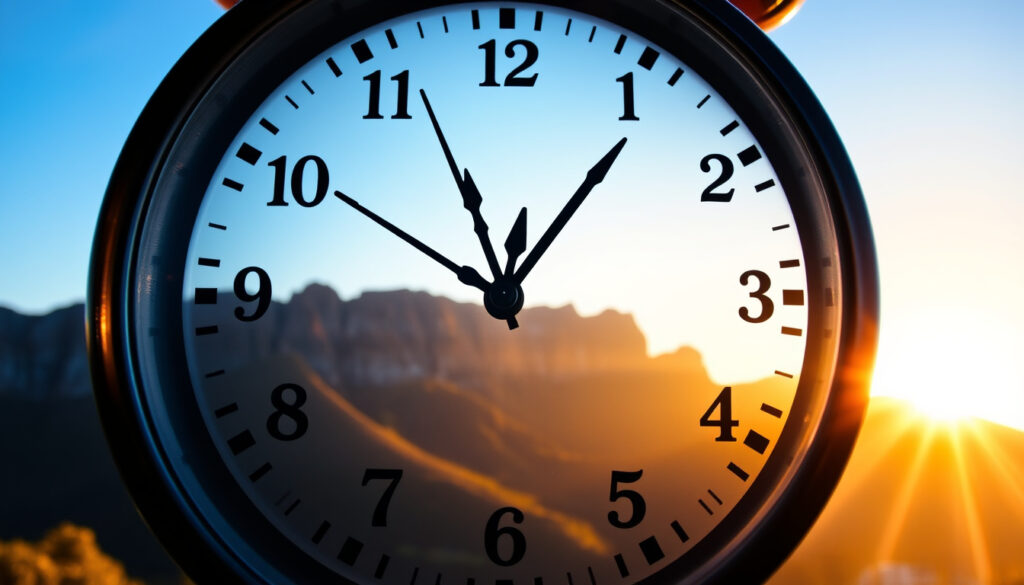
Time in South Africa: Current Time, Zone & Greetings
You’re probably wondering what time it is in South Africa right now — or maybe you’re planning a call and want to know the time difference. The answer is refreshingly simple: the country uses South Africa Standard Time (SAST) year-round, staying at UTC+02:00 with no daylight saving shifts.
Current local time in South Africa: 8:09:49 PM (example) on Wednesday, August 19, 2026 ·
Time zone used: South Africa Standard Time (SAST) – UTC+02:00 ·
Daylight saving time: None observed ·
Number of time zones in South Africa: 1 (all territory uses SAST) ·
Population: 57,780,000 (2026 estimate)
Quick snapshot
- South Africa uses SAST (UTC+02:00) year-round (timeanddate.com time zone database)
- No daylight saving time observed (time.is precision clock)
- Same time nationwide (timeanddate.com world clock)
- Hardest language for English speakers is subjective; Mandarin Chinese is commonly cited by the Foreign Service Institute, but rankings vary (Wikipedia language difficulty page)
- Exact time difference to New York fluctuates due to DST in other regions (timeanddate.com Johannesburg page)
- South Africa has not observed daylight saving time since 1944 (time.is historical note)
- No DST changes planned for 2026 or beyond (timeanddate.com DST status page)
- Travelers can use neutral English greetings like “Hello” safely (Tripadvisor community advice)
- Learn basic Afrikaans phrases like “Hallo” and “Totsiens” for a warm reception (iExplore travel guide)
Six key facts about South Africa’s time, from its official zone to the cities it covers, show a consistent picture.
| Label | Value |
|---|---|
| Official time zone name | South Africa Standard Time (SAST) |
| UTC offset | UTC+02:00 |
| DST observed | No |
| Number of time zones | 1 |
| Population | 57,780,000 |
| Major cities | Cape Town, Johannesburg, Pretoria, Durban |
The pattern: South Africa is one of the few countries that spans a large landmass yet uses a single time zone, making it simpler for travelers and businesses than many other regions.
Is South Africa 1 or 2 hours ahead?
What is the current UTC offset for South Africa?
South Africa operates on South Africa Standard Time (SAST), which is UTC+02:00 year-round. That means it is consistently 2 hours ahead of Coordinated Universal Time (timeanddate.com time zone definition). Unlike countries that shift between offsets, South Africa’s offset never changes. The IANA time zone identifier commonly used for South Africa is Africa/Johannesburg (time.is IANA database).
For anyone scheduling a call from New York or London, the math is easy: South Africa is 7 hours ahead of Eastern Standard Time during winter and 6 hours ahead during summer in the U.S., because South Africa itself never shifts.
Does South Africa observe daylight saving time?
No. South Africa does not observe daylight saving time. The country has not changed its clocks since 1944 (time.is historical record). The South African National Government Gazette No. 40125 of 8 July 2016 officially defined SAST as UTC+02:00, with no provision for DST (Wikipedia South Africa Standard Time page).
The implication: if you’re planning a meeting with someone in Cape Town or Johannesburg, you never need to ask, “Is it daylight saving time there?” — the answer is always no.
Are there two time zones in South Africa?
No. South Africa uses a single nationwide time zone for all civilian purposes. The entire territory — from Cape Town in the west to Durban in the east, and from Johannesburg in the north to Port Elizabeth in the south — runs on SAST (UTC+02:00) (timeanddate.com city list).
This is notable because South Africa’s geographic width spans roughly 15 degrees of longitude, which would normally allow for two standard time zones. Yet the country chose to keep one, likely to streamline commerce and national coordination (timeanddate.com time zone history).
The same time zone is also used by Lesotho and Eswatini, two small landlocked countries that are entirely surrounded by South Africa (timeanddate.com SAST scope).
For business travelers and logistics planners, the single time zone eliminates the confusion that plagues multi-zone countries like the U.S. or Australia. A single time zone means a single schedule for the whole country.
How do I say ‘hi’ in South Africa?
What is a typical Afrikaans greeting?
South Africa has 11 official languages, so greetings vary by community and setting (South African Government country profile). The safest and most widely understood greeting is a simple English “Hello” or “Hi”. In Afrikaans, the most common greeting is “Hallo” (pronounced hah-loh) or “Goeie dag” (good day) (iExplore greeting etiquette page).
In business settings, “Good morning”, “Good afternoon”, or “Good day” are polite and appropriate depending on the time of day. The phrase “Howzit” is a common informal greeting, especially in urban areas, similar to “How’s it going?” in other English-speaking countries.
What does ‘shap shap’ mean?
“Shap shap” is a township slang expression meaning “okay”, “cool”, or “all good”. It’s widely used in informal conversation, especially among younger South Africans, and is a classic example of the country’s vibrant, hybrid street language that blends English, Afrikaans, and local languages.
How do you say ‘goodbye’ in Afrikaans?
The most common Afrikaans farewell is “Totsiens” (pronounced tot-seens), which literally means “until we see”. Another informal option is “Sien jou later” (see you later). Both are easy to pronounce for English speakers and are widely understood across the country (iExplore Afrikaans phrases page).
The pattern: South Africa’s greeting culture is layered — you can use English for safety, Afrikaans for warmth, and slang for local connection. The key is to match the setting.
What’s confirmed vs. what’s unclear
Confirmed facts
- South Africa uses a single time zone SAST (UTC+02:00) (timeanddate.com)
- No daylight saving time is observed (time.is)
- SAST is also used by Lesotho and Eswatini (timeanddate.com)
- Elon Musk was born in Pretoria, South Africa, and understands Afrikaans but does not speak it fluently (Business Insider interview)
What’s unclear
- Exact ranking of hardest language is subjective; Mandarin Chinese is commonly cited by the Foreign Service Institute, but other sources rank Arabic or Japanese higher (Wikipedia language difficulty page)
- The precise time difference between South Africa and New York varies depending on whether New York is on DST; the difference can be 6 or 7 hours (timeanddate.com Johannesburg page)
Quotes on South Africa time and culture
“South Africa does not observe daylight saving time.”
— timeanddate.com (time zone data provider)
“South African Standard Time is defined as UTC+02:00 in the South African National Government Gazette No. 40125 of 8 July 2016.”
— Wikipedia (South Africa Standard Time)
“I understand Afrikaans but I don’t speak it fluently.”
— Elon Musk (born in Pretoria, South Africa)
For travelers planning a trip to South Africa, the takeaway is clear: set your watch to SAST once, learn a few local greetings, and you’ll be ready to connect. The country’s single time zone eliminates the clock confusion, and its multilingual greeting culture rewards a little effort with genuine warmth.
timeanddate.com, worldtimeserver.com, worldtimeserver.com, utctime.net, worldtimeserver.com, time.now
Frequently asked questions
What time zone does South Africa use?
South Africa uses South Africa Standard Time (SAST), which is UTC+02:00 (timeanddate.com SAST definition).
Is South Africa 2 hours ahead of UTC?
Yes, SAST is permanently UTC+02:00, so South Africa is 2 hours ahead of Coordinated Universal Time (WorldTimeServer SAST page).
Does South Africa have multiple time zones?
No, South Africa has a single nationwide time zone (SAST) for all civilian use (timeanddate.com time zone history).
What is the most common greeting in South Africa?
English “Hello” or “Hi” is the safest and most widely understood greeting, given the country’s 11 official languages (South African Government profile).
How do you say ‘thank you’ in Afrikaans?
“Dankie” (pronounced dahn-kee) is the standard Afrikaans word for thank you (iExplore Afrikaans phrases).
What does ‘lekker’ mean?
“Lekker” is an Afrikaans word meaning “nice”, “good”, or “tasty”. It is used in everyday conversation to express approval (WorldData.info Afrikaans language).
Is Afrikaans similar to Dutch?
Yes, Afrikaans and Dutch are mutually intelligible to a large degree, though Afrikaans grammar is simpler. It is considered one of the easiest languages for English speakers to learn (WorldData.info language comparison).
More related posts
 Untitled Alejandro G. Iñárritu Film: Digger 2026
 Benjamin Guinness, 3rd Earl of Iveagh: Biography & Facts
 Social Welfare Payment Date Change Ireland 2025-2026
 One Foot in the Grave: Meaning, Cast, Episodes, FAQs
 Ryder Cup Fan Behavior: Heckling of Rory McIlroy
 Everton F.C. vs Leeds United Standings: H2H & Results
 Best Bars in the World: Iceland Nightlife & Global Rankings
 Slavia Prague vs Arsenal: Head-to-Head, Prediction & Stats