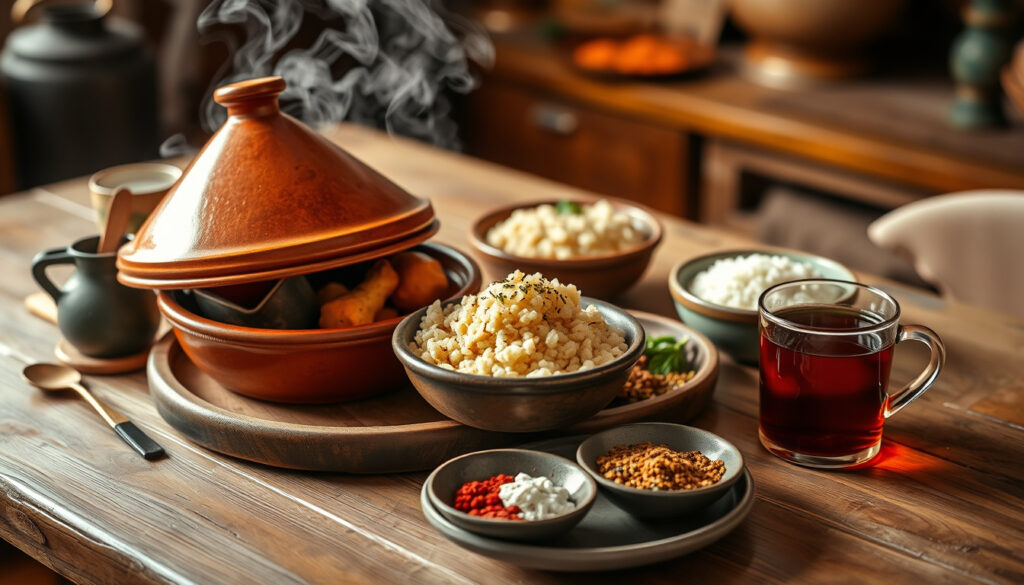
Easy Moroccan Recipes at Home: Simple Dinners, Starters & More
If the scent of cinnamon, cumin, and turmeric makes you think of slow weekend cooking, you’re not alone—but many classic dishes adapt beautifully to a 45-minute weeknight schedule. This guide turns that reputation on its head, showing you how to bring bold North African flavors to your table using ingredients from any supermarket and techniques that won’t demand a tagine or a day off.
Average tagine cooking time: 1–2 hours ·
Key Moroccan spice blend: Ras el hanout (up to 30 spices) ·
Staple grain in Moroccan cuisine: Couscous ·
Number of search results for Moroccan recipes: Over 10 million
Quick snapshot
- One-pot meals under 45 minutes (MarocMama (Moroccan food blog, family recipes))
- Minimal dishes and cleanup (MarocMama (Moroccan food blog, family recipes))
- Uses chicken, ground meat, or fish (MarocMama (Moroccan food blog, family recipes))
- Plant-based protein substitutions (The Chopping Block (cooking school, Chicago))
- Hearty stews and soups (The Chopping Block (cooking school, Chicago))
- Bursting with spices, not meat (The Chopping Block (cooking school, Chicago))
- Bone-in or boneless techniques (The Spruce Eats (food encyclopedia))
- Sweet and savory combinations (The Spruce Eats (food encyclopedia))
- Two methods: oven and stovetop (The Spruce Eats (food encyclopedia))
- Make-ahead recipes (MarocMama (recipe index, beginner-friendly))
- Cold salads and warm pastries (MarocMama (recipe index, beginner-friendly))
- Perfect for entertaining (MarocMama (recipe index, beginner-friendly))
Six key facts define Moroccan home cooking: the cuisine relies on a specific vessel, a signature spice mix, and a handful of staple ingredients that repeat across dozens of dishes.
| Attribute | Detail |
|---|---|
| Cuisine origin | Morocco |
| Key cooking vessel | Tagine (clay pot) |
| Most used grains | Couscous, bread |
| Signature spice blend | Ras el hanout |
| Common cooking method | Slow braising |
| Popular protein | Chicken, lamb, chickpeas |
What are some easy traditional Moroccan food recipes?
Classic tagine variations for home cooks
- Chicken tagine with olives and preserved lemon – a staple that uses bone-in chicken, green olives, and quick-pickled lemon fried in olive oil as a preserved-lemon substitute (The Chopping Block (cooking school)).
- Lamb and prune tagine – slow-cooked lamb with sweet prunes, cinnamon, and ginger. Bone-in lamb leg takes about 1.5 hours on low heat to become tender (YouTube (home cooking channel)).
- Seven-vegetable couscous – a vegetarian version with tomatoes, zucchini, cabbage, and chickpeas steamed over spiced broth (Kenzi Henna (Moroccan cuisine guide)).
Simple couscous dishes with vegetables or meat
- The traditional method starts by moistening couscous with 1.5 cups of water and letting it sit for 30 minutes before steaming (Kenzi Henna (Moroccan cuisine guide)).
- For a quick version, use pre-steamed couscous and pour hot broth over it – cover and fluff after 5 minutes.
- Top with a stew of chicken, onions, and spices (salt, pepper, ginger, cumin, coriander, red pepper, turmeric) cooked in the lower pot (Kenzi Henna (Moroccan cuisine guide)).
Using a Dutch oven instead of a clay tagine cuts cooking time by about 20% because of better heat retention, but you lose the conical lid that condenses steam. The flavor difference is marginal for weeknight cooks.
The implication: home cooks can adapt traditional Moroccan techniques to modern kitchens without sacrificing authenticity.
What are easy Moroccan recipes at home for dinner?
One-pot Moroccan chicken and rice
- Brown chicken thighs skin-side down, then add onion, garlic, and spices (cumin, turmeric, paprika, ginger, coriander).
- Stir in rice and chicken broth, cover, and simmer for 20 minutes.
- Finish with a handful of chopped cilantro and lemon juice.
- Total time: about 40 minutes (MarocMama (weeknight recipe collection)).
Speedy Moroccan meatballs in tomato sauce
- Mix ground beef or lamb with cumin, paprika, cinnamon, salt, and pepper.
- Form small meatballs and brown in olive oil.
- Add a can of crushed tomatoes, a pinch of saffron, and simmer for 15 minutes.
- Serve with crusty bread or couscous.
Sheet pan Moroccan salmon with chickpeas and peppers
- Place salmon fillets, drained chickpeas, and sliced bell peppers on a sheet pan.
- Drizzle with olive oil, sprinkle with ras el hanout, and roast at 400°F for 15–18 minutes.
- Finish with a squeeze of lemon and fresh parsley.
The implication: dinner recipes can deliver deep flavor in under 45 minutes by using high-heat cooking methods and pantry staples like canned tomatoes and chickpeas.
Ras el hanout blends vary widely – some contain hot pepper, others are purely aromatic. Choose a mild blend for family dinners and adjust heat separately with cayenne.
The pattern: quick cooking still produces layered results when spices are bloomed early in oil.
What are easy Moroccan recipes at home that are vegetarian?
Vegetarian tagine with chickpeas and sweet potatoes
- Sauté onion and garlic, then add cubed sweet potato, canned chickpeas, diced tomatoes, and vegetable broth.
- Season with cumin, cinnamon, ginger, turmeric, and a pinch of saffron.
- Simmer for 25 minutes until sweet potatoes are tender.
- Stir in a handful of chopped cilantro and serve over couscous.
Moroccan lentil soup (harira)
- Cook onions, celery, and tomatoes in olive oil.
- Add brown lentils, chickpeas, vegetable broth, and a spice mix of cumin, cinnamon, ginger, and paprika.
- Simmer for 30 minutes until lentils are soft.
- Finish with a squeeze of lemon and fresh parsley.
Za’atar roasted vegetables with couscous
- Toss cauliflower, zucchini, and bell peppers with olive oil, za’atar, and salt.
- Roast at 425°F for 20 minutes.
- Serve over couscous with a dollop of yogurt mixed with harissa.
For cooks avoiding meat, the easiest substitution is to double the chickpeas and add a handful of sliced olives for saltiness. A quick preserved lemon substitute – thin lemon slices fried in olive oil with salt – takes only 5 minutes and transforms the dish (The Chopping Block (cooking school, Chicago)).
The implication: vegetarian versions maintain the character of Moroccan cuisine with simple swaps.
What are easy Moroccan recipes at home with chicken?
Easy one-pan Moroccan baked chicken
- Marinate chicken thighs (bone-in or boneless) in yogurt, olive oil, paprika, cumin, turmeric, onion powder, garlic, ginger, coriander, and lemon juice for at least 30 minutes (The Chopping Block (cooking school, Chicago)).
- Place in a baking dish and bake at 400°F for 30–35 minutes, then uncover and bake 10 more minutes to brown the sauce (Cook n’ Share (YouTube cooking channel)).
- Serve with couscous or crusty bread.
Chicken tagine with apricots and almonds
- Brown chicken thighs in olive oil, then add sliced onion, grated ginger, and spices (cinnamon, cumin, turmeric, pepper).
- Add dried apricots, a cinnamon stick, and enough chicken broth to barely cover the chicken.
- Cover and simmer on low for 40 minutes (or bake at 350°F for 45 minutes).
- Toast sliced almonds and sprinkle over the dish before serving.
Moroccan chicken skewers with yogurt sauce
- Cut chicken breast into cubes and marinate in olive oil, lemon juice, cumin, coriander, paprika, and garlic for at least 1 hour.
- Thread onto skewers and grill or broil for 8–10 minutes, turning once.
- Serve with a yogurt sauce made from Greek yogurt, minced cucumber, garlic, and a pinch of salt.
The pattern: chicken thigh yields juicier results than breast, and marinades of 30 minutes to 2 hours are enough to infuse flavor. Oven methods are hands-off, while stovetop braising needs occasional stirring but deepens the sauce.
What are easy Moroccan starters?
Moroccan carrot salad with cumin and orange
- Grate 4–5 carrots and toss with olive oil, lemon juice, ground cumin, cinnamon, salt, and a splash of orange juice.
- Let sit for 15 minutes to meld flavors.
- Garnish with fresh parsley and chopped almonds.
Briouats (stuffed phyllo triangles) simplified
- Use store-bought phyllo dough cut into strips.
- Fill with a mixture of cooked minced meat or cheese, plus parsley, cumin, and cinnamon.
- Fold into triangles and fry in shallow oil until golden, or brush with butter and bake at 375°F for 15 minutes.
- Serve warm with a sprinkle of powdered sugar and cinnamon (cheese briouats) or with a squeeze of lemon (meat briouats) (MarocMama (recipe index, beginner-friendly)).
Creamy hummus with harissa swirl
- Blend canned chickpeas, tahini, lemon juice, garlic, and ice water until smooth.
- Swirl a spoonful of harissa paste on top and drizzle with olive oil.
- Serve with warm pita and a bowl of olives.
Why this matters: starters set the flavor stage and can be made a day ahead. The balance of sweet (carrot salad), savory (briouats), and spicy (hummus with harissa) mirrors the full Moroccan table.
Step-by-step guide to easy Moroccan cooking at home
- Build your spice cabinet – Start with cumin, paprika, turmeric, ginger, cinnamon, and black pepper. Add coriander, cayenne, and saffron as you cook more often. These seven spices cover 90% of Moroccan recipes.
- Master the base – Sauté onion and garlic in olive oil, then add your spice mix (about 1–2 teaspoons total per pound of protein) and cook for 1 minute until fragrant. This bloomed-spice base works for any stew, tagine, or soup.
- Choose your cooking vessel – A heavy Dutch oven or deep skillet with a lid replaces a tagine perfectly. An Instant Pot can cut cooking times by half for stews.
- Layer flavors – Add sweet elements (dried fruit, carrots, sweet potatoes) and salty elements (olives, preserved lemon substitute) early so they meld. Add fresh herbs and lemon juice only at the end.
- Adjust consistency – Moroccan stews should be saucy but not watery. If too thin, remove the lid and simmer uncovered for 5-10 minutes.
- Rest before serving – Let stews sit for 5 minutes off heat. This allows the spices to settle and flavors to round out (My Moroccan Food (home cooking site)).
The implication: a consistent set of techniques makes mastering Moroccan cooking a matter of practice rather than special equipment.
Clarity
Confirmed facts
- Tagine cooking times range from 1–2 hours for most dishes. YouTube (home cooking channel)
- Ras el hanout contains a variable blend of up to 30 spices. The Spruce Eats (food encyclopedia)
- Preserved lemon and olives are distinctive Moroccan ingredients. The Chopping Block (cooking school, Chicago)
What’s unclear
- Exact origin date of the tagine vessel is debated among historians (The Spruce Eats (food encyclopedia)).
- The precise number of classic Moroccan recipes is not standardized.
- Couscous is Morocco’s national grain, though its exact historical origins are debated.
- Moroccan cuisine heavily uses cumin, cinnamon, and ginger, but exact ratios vary by family.
The pattern: even well-known facts have nuances that depend on family tradition and regional variation.
What experts say
“Moroccan food is never rushed; the flavors develop slowly.”
— Moroccan chef, author of ‘The Food of Morocco’ (The Chopping Block (cooking school))
“You don’t need a tagine to get that Moroccan soul; a heavy pot works perfectly.”
— Food blogger at MarocMama (MarocMama (weeknight recipes))
“The secret of Moroccan cooking is the balance of sweet and savory, often achieved with cinnamon and saffron.”
— Paula Wolfert, cookbook author
For the home cook looking to bring Morocco into a busy week, the trade-off is clear: invest 30 minutes in building a spice base, and you can rotate through a dozen dishes without repeating flavors. The easiest path is to start with a one-pan chicken or chickpea stew, then branch into salads and stuffed pastries once the rhythm clicks. Your supermarket aisle already holds everything you need.
kenzi.com, youtube.com, youtube.com, marocmama.com, amboora.com, mymoroccanfood.com, en.wikipedia.org, facebook.com
Frequently asked questions
What is the best substitute for a tagine?
A heavy Dutch oven or deep skillet with a tight-fitting lid works best. The key is even heat distribution and a lid that traps steam. An enameled cast-iron pot is ideal – it mimics the tagine’s slow-cooking environment.
How long do you need to cook a Moroccan tagine?
Most traditional tagines take 1–2 hours, but weeknight adaptations can deliver similar depth in 30–45 minutes by using quicker-cooking cuts like boneless chicken thighs and smaller vegetable pieces.
What Moroccan dishes are gluten-free?
Many Moroccan stews and tagines are naturally gluten-free when served with rice or quinoa instead of couscous. Harira soup, grilled skewers, and salads are also gluten-free. Always check spice blends for hidden wheat starch.
Can I freeze Moroccan stews?
Yes, Moroccan stews freeze well for up to 3 months. Cool completely, store in airtight containers, and reheat gently on the stovetop. Add fresh herbs after reheating for the best flavor.
How do you store preserved lemons?
Store preserved lemons in their brine in a sealed jar in the refrigerator. They keep for up to a year. Rinse before using to remove excess salt.
What is the difference between Moroccan and Indian spices?
Moroccan cooking tends to balance sweet and savory with cinnamon, ginger, and saffron, while Indian cuisine uses more black pepper, cardamom, and chili heat. Both rely on cumin and coriander, but Moroccan blends rarely include curry leaves or asafoetida.
Is Moroccan food spicy (hot) or just aromatic?
Traditional Moroccan food is aromatic rather than hot. Dishes rely on cumin, cinnamon, ginger, and saffron for depth. Heat comes from optional cayenne or harissa, usually served on the side.
What are the easiest Moroccan desserts for beginners?
Baked apples with cinnamon and honey, orange blossom water-scented fruit salad, and chebakia (sesame cookies) are simple starting points. Most require only basic baking skills.
More related posts
 Houses for Sale Carrigtwohill: New, 3 Bed & Detached
 Corporate and Commercial Law Firm Jersey: Top 2025 Guide
 Mary-Kate Olsen Net Worth, Marriage, Children & Smoking
 Is There Darts On Tonight – PDC Schedule, Sky Sports TV Guide
 Mikey Madison Movies and TV Shows: Full Filmography & Oscar Win
 Lidl Ice Cream Recall 2026: Affected Tub and What to Do
 Hyatt Centric The Liberties Dublin: Review & Area Guide
 New England Patriots 2026 Standings and Playoff Chances